

Six Winter Classics for Young Readers
The Arabian Nights
Earthsea, The First Four Books
Tales from Shakespeare
Malgudi Days
Where the Wild Things Are
Five Children and It
Copies of all the books included in our 15 Reads in 2025 are available to borrow through Dumfries and Galloway Libraries
‘Classics help us understand who we are,’ Italo Calvino tells us in his collection of essays Why Read the Classics. For younger readers, he suggests, they can be formative; a work of classic fiction ‘leaves its seed in us’, giving ‘form to future experiences, providing models, terms of comparison, schemes for categorising them, scales of value…’
The literary canon enjoyed by younger readers is vast, ranging in scope and global reach from The Hungry Caterpillar to Animal Farm; from To Kill a Mockingbird to Noughts and Crosses; from The Tiger Who Came to Tea to Pippi Longstocking and the wealth of myths and fairytales from around the world.
Alice’s Adventures in Wonderland, perhaps the founding book of modern literature for younger readers, is not included in these reads, but it is a precursor to them, as it was to other classics such as C.S. Lewis’s The Lion, the Witch and the Wardrobe and Phillip Pullman’s His Dark Materials. Alice’s story enmeshed childhood experiences with a life of the imagination as never before, giving power to curiosity and sparking a ‘negotiation between realism and fantasy’ that Sam Leith suggests has played out on our childhood bookshelves ever since.
We begin the National Year of Reading with these six classics, each of which hold reality, adventure and enchantment in many lands between their covers. Our forthcoming 15 Reads over spring, summer and autumn will emphasise world classics for all ages.
Wafa’ Tarnowska
The Arabian Nights
Dating back to 800 BCE these tales, also known as ‘The Thousand and One Nights’ or ‘Alf Layla wa Layla’, span China, India, Persia and the Arabic-speaking world.
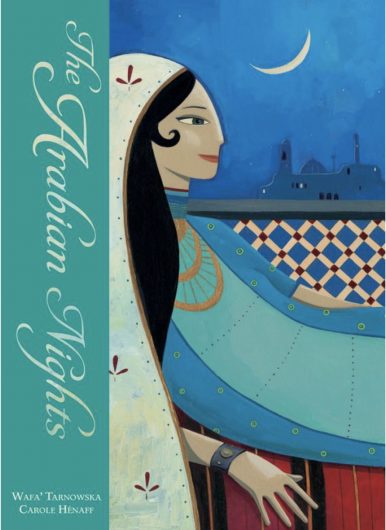
Wafa’ Tarnowska, illustrated by Carole Hénaff, The Arabian Nights, Barefoot Books, 2010
Dating back to 800 BCE these tales, also known as ‘The Thousand and One Nights’ or ‘Alf Layla wa Layla’, span China, India, Persia and the Arabic-speaking world.
Sheherazade, the narrator of these tales, seeks to captivate the King’s imagination with the wonderous stories she spins for him each night. Rather than meeting her death in the morning, which has been the fate of his previous wives, Sheherazade lives to see another day, as long as she has another story to tell.
Tales involving flying horses, beautiful princesses, speaking birds, and singing trees are woven into the fabric of everyday life where, for instance, an ordinary boy suddenly finds himself master of a powerful genie or a gardener unknowingly adopts royal children. Retold for younger readers and enhanced by Carole Hénaff’s vibrant illustrations, Wafa’ Tarnowska’s writing achieves a timeless quality, ensuring that these ancient tales still captivate our imagination and enrich our daydreams.
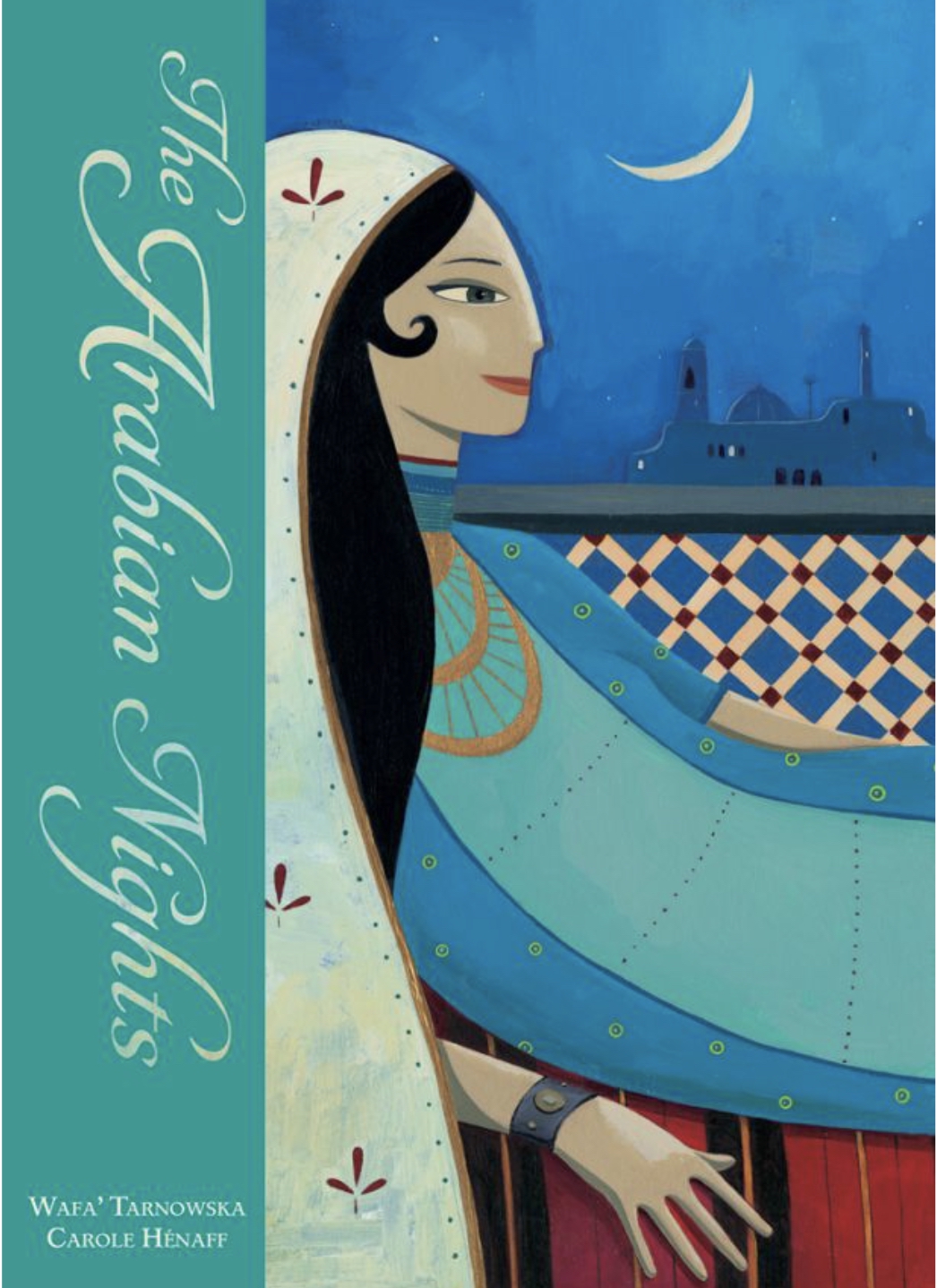
Wafa’ Tarnowska, illustrated by Carole Hénaff, The Arabian Nights, Barefoot Books, 2010
Dating back to 800 BCE these tales, also known as ‘The Thousand and One Nights’ or ‘Alf Layla wa Layla’, span China, India, Persia and the Arabic-speaking world.
Sheherazade, the narrator of these tales, seeks to captivate the King’s imagination with the wonderous stories she spins for him each night. Rather than meeting her death in the morning, which has been the fate of his previous wives, Sheherazade lives to see another day, as long as she has another story to tell.
Tales involving flying horses, beautiful princesses, speaking birds, and singing trees are woven into the fabric of everyday life where, for instance, an ordinary boy suddenly finds himself master of a powerful genie or a gardener unknowingly adopts royal children. Retold for younger readers and enhanced by Carole Hénaff’s vibrant illustrations, Wafa’ Tarnowska’s writing achieves a timeless quality, ensuring that these ancient tales still captivate our imagination and enrich our daydreams.
Ursula K. Le Guin, Earthsea, The First Four Books
Hailing from Gont, an island of goat herders, wizards and pirates, Ged is apprenticed at a young age to the masters of Roke from whom he learns the glory of the magic arts and the dangers that acquiring such knowledge entails.
Ursula K. Le Guin, Earthsea, The First Four Books, (1968 – 1992), Penguin, 2012
Hailing from Gont, an island of goat herders, wizards and pirates, Ged is apprenticed at a young age to the masters of Roke from whom he learns the glory of the magic arts and the dangers that acquiring such knowledge entails.
Drawing upon world mythologies, philosophies and religions, Le Guin weaves captivating adventures involving perilous journeys to the farthest reaches of Earthsea. Both ancient and strangely prescient the novels can be read on many levels: as engaging epics or as philosophical tales they explore how equilibrium can be restored to a world faced with evil, in which truths have become corrupted, and how love and friendship can ultimately overcome all.
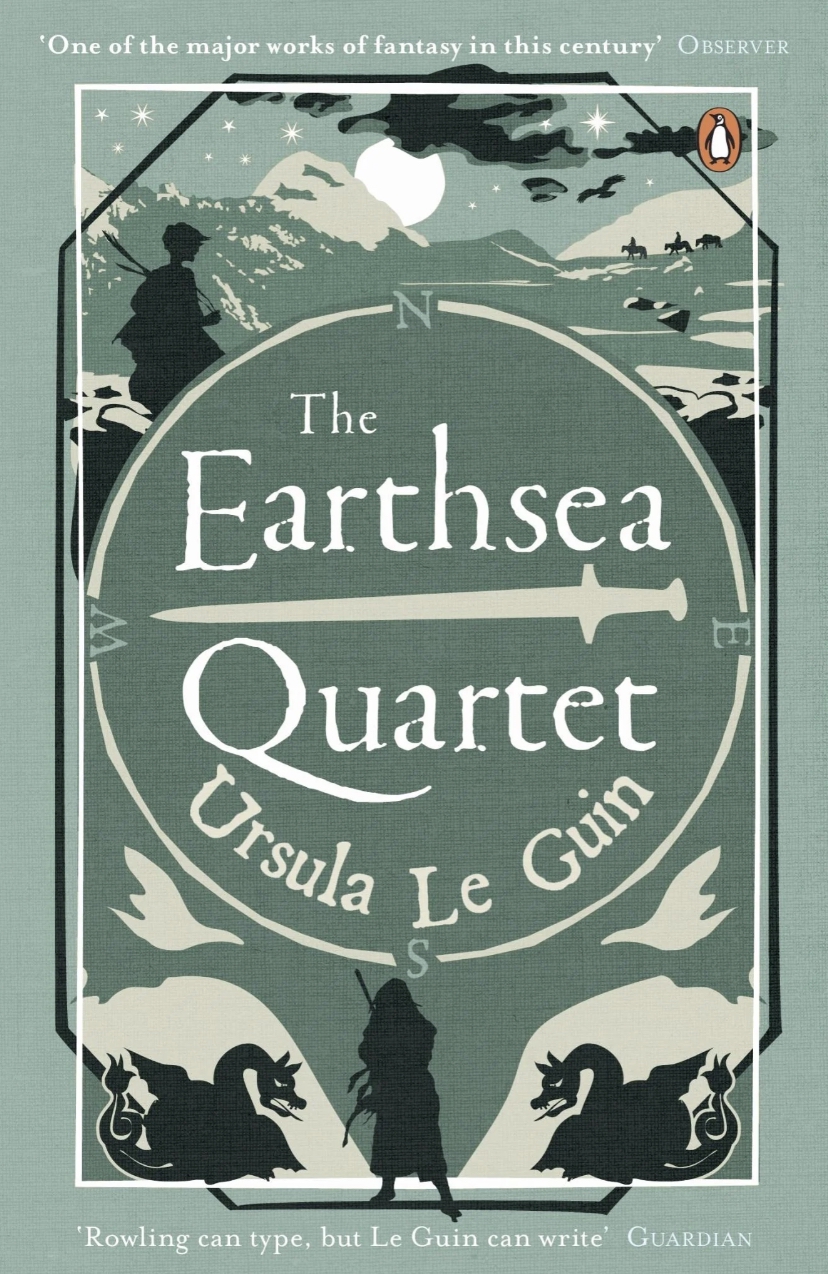
Ursula K. Le Guin, Earthsea, The First Four Books, (1968 – 1992), Penguin, 2012
Hailing from Gont, an island of goat herders, wizards and pirates, Ged is apprenticed at a young age to the masters of Roke from whom he learns the glory of the magic arts and the dangers that acquiring such knowledge entails.
Drawing upon world mythologies, philosophies and religions, Le Guin weaves captivating adventures involving perilous journeys to the farthest reaches of Earthsea. Both ancient and strangely prescient the novels can be read on many levels: as engaging epics or as philosophical tales they explore how equilibrium can be restored to a world faced with evil, in which truths have become corrupted, and how love and friendship can ultimately overcome all.
Michael Morpurgo
Tales from Shakespeare
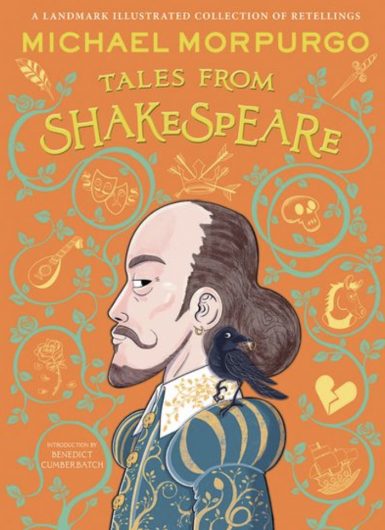
Life and all its twists and turns, loves, dreams and betrayals are captured in Michael Morpurgo’s retelling of ten of Shakespeare’s plays.
Michael Morpurgo, Tales from Shakespeare, Harper Collins Children’s Books, 2023
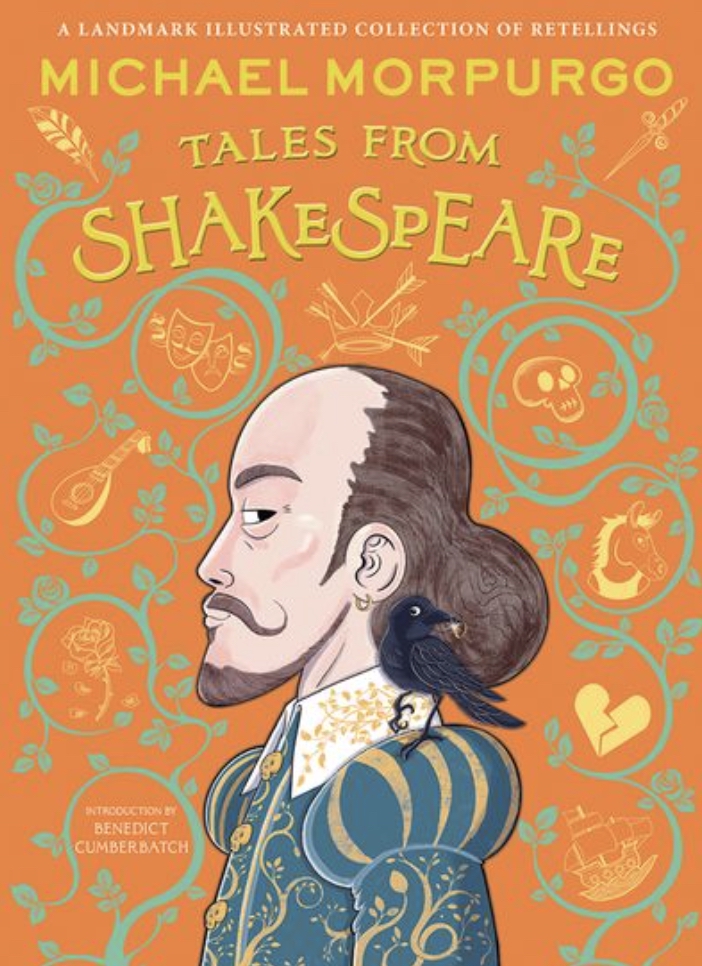
Life and all its twists and turns, loves, dreams and betrayals are captured in Michael Morpurgo’s retelling of ten of Shakespeare’s plays. Each is preceded by a brief personal introduction inviting the reader or listener to be an active participant in the drama. As Morpurgo tells us, ‘I have only my voice as the storyteller,’ but ‘you have your imagination to play with’. Beginning with A Mid-summer Night’s Dream with all its magical chaos, Shakespeare’s tragedies, comedies, romances and histories are all represented: Henry V follows the bloody Scottish Play and is then itself followed by Twelfth Night and its story of shipwreck and mistaken identities.
Whether it is The Tempest, told from Prospero’s perspective, or King Lear, Morpurgo’s interpretations encourage us to read Shakespeare’s plays themselves. With these stories under our belts, we’d be well equipped to dive into the beauty of Shakespeare’s language and the universal timelessness of his concerns, and to delight in dramas in which mostly, but not always, everyone lives happily ever after.
Michael Morpurgo, Tales from Shakespeare, Harper Collins Children’s Books, 2023
Life and all its twists and turns, loves, dreams and betrayals are captured in Michael Morpurgo’s retelling of ten of Shakespeare’s plays. Each is preceded by a brief personal introduction inviting the reader or listener to be an active participant in the drama. As Morpurgo tells us, ‘I have only my voice as the storyteller,’ but ‘you have your imagination to play with’. Beginning with A Mid-summer Night’s Dream with all its magical chaos, Shakespeare’s tragedies, comedies, romances and histories are all represented: Henry V follows the bloody Scottish Play and is then itself followed by Twelfth Night and its story of shipwreck and mistaken identities.
Whether it is The Tempest, told from Prospero’s perspective, or King Lear, Morpurgo’s interpretations encourage us to read Shakespeare’s plays themselves. With these stories under our belts, we’d be well equipped to dive into the beauty of Shakespeare’s language and the universal timelessness of his concerns, and to delight in dramas in which mostly, but not always, everyone lives happily ever after.
R. K. Narayan
Malgudi Days
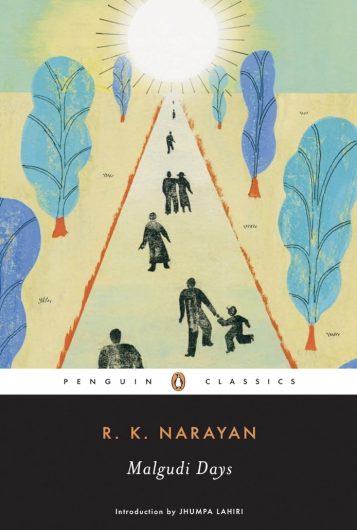
‘The material available to a writer in India is limitless’, R. K. Narayan tells us in his introduction to Malgudi Days. The ‘writer has only to look out of the window to pick up a character (and thereby a story)’.
R. K. Narayan, Malgudi Days, (1943), Penguin Classics, 2006
‘The material available to a writer in India is limitless’, R. K. Narayan tells us in his introduction to Malgudi Days. The ‘writer has only to look out of the window to pick up a character (and thereby a story)’.
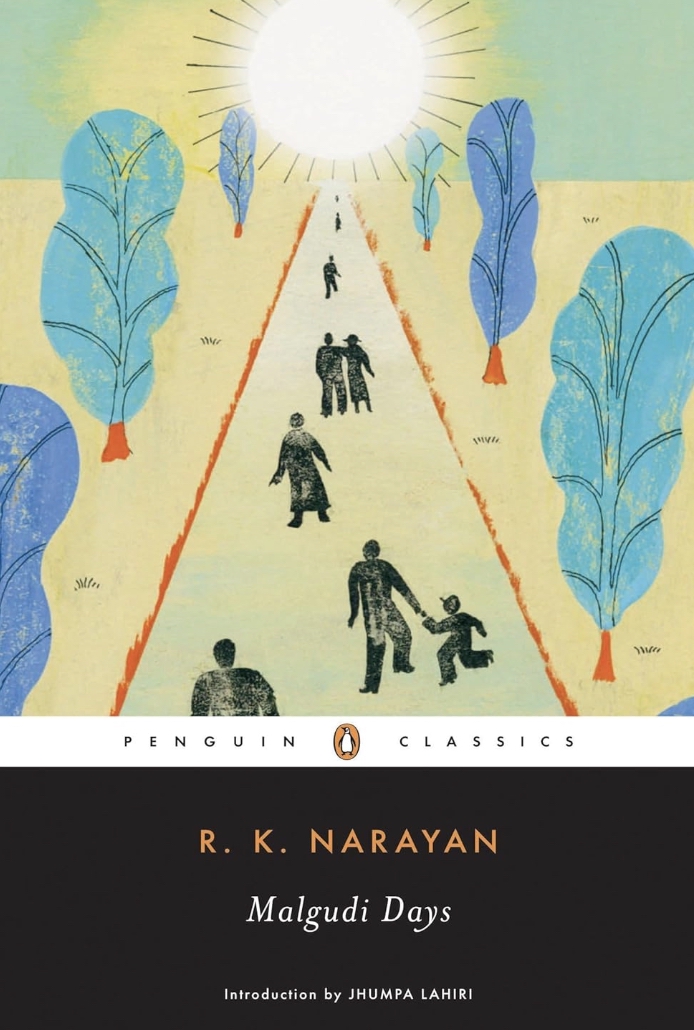
Life in the imaginary southern Indian town of Malgudi centres around the marketplace, where snake charmers, a pick pocket and an astrologer work the crowds. From there, Narayan takes his readers on journeys that reflect the joys and struggles of everyday life for an array of characters; a schoolboy called Swami and his friends, a bride, a postman and an eternal student are just a few. In each story, numerous colourful characters reach a crisis in their lives which either resolves in an unexpected twist or is accepted as fate.
R. K. Narayan, Malgudi Days, (1943), Penguin Classics, 2006
‘The material available to a writer in India is limitless’, R. K. Narayan tells us in his introduction to Malgudi Days. The ‘writer has only to look out of the window to pick up a character (and thereby a story)’.
Life in the imaginary southern Indian town of Malgudi centres around the marketplace, where snake charmers, a pick pocket and an astrologer work the crowds. From there, Narayan takes his readers on journeys that reflect the joys and struggles of everyday life for an array of characters; a schoolboy called Swami and his friends, a bride, a postman and an eternal student are just a few. In each story, numerous colourful characters reach a crisis in their lives which either resolves in an unexpected twist or is accepted as fate.
Maurice Sendak
Where the Wild Things Are
The night Max dressed in his wolf suit was the night his adventures began.
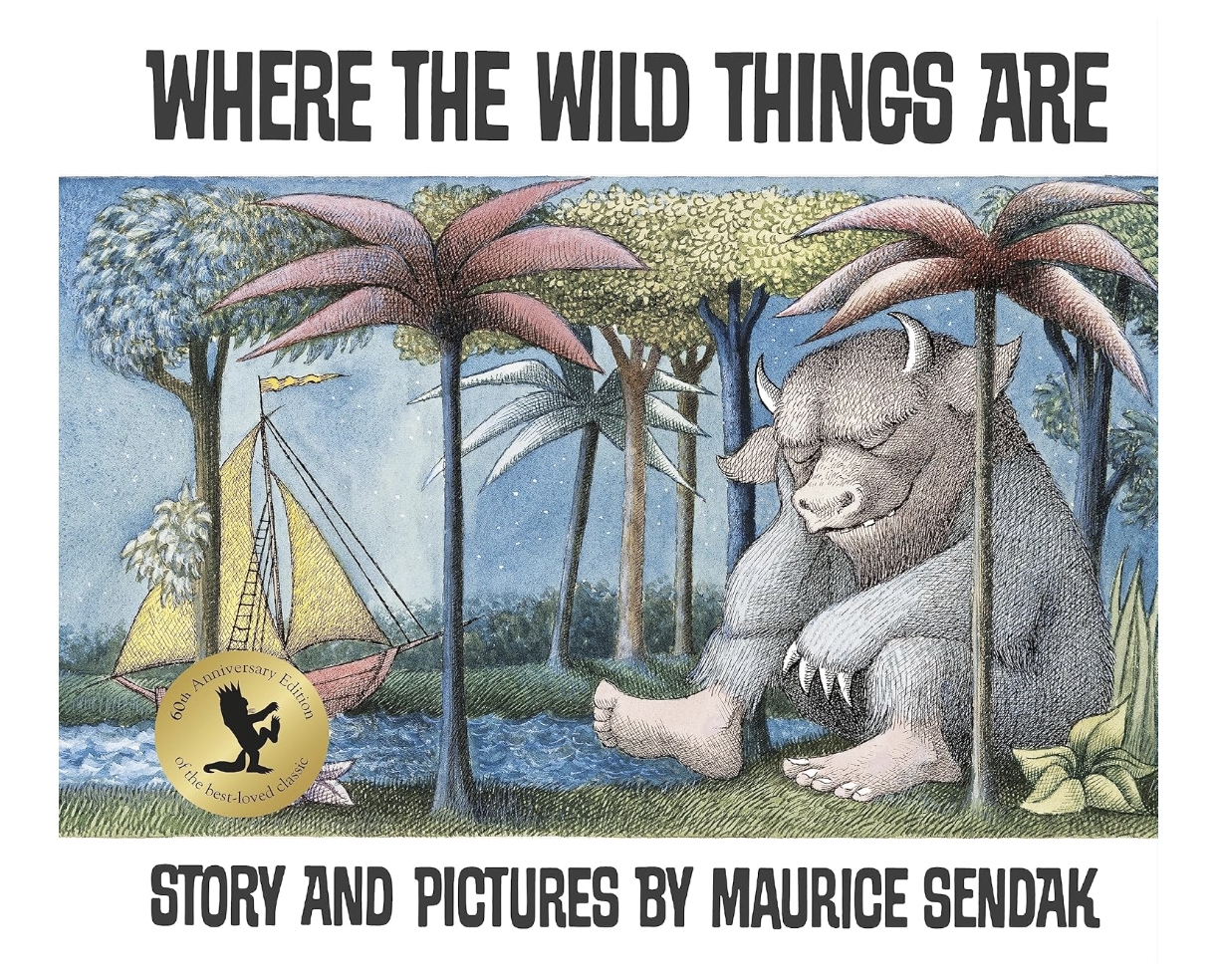
Maurice Sendak, Where the Wild Things Are, (1963), Red Fox, 2015
The night Max dressed in his wolf suit was the night his adventures began. Sent to bed without any supper for chasing the dog and being rude to his mother, we see Max’s bedroom gradually transform into a wild forest reaching down to the sea. There Max dances under the moon before stepping into a boat and sailing across the ocean to the land of the wild things, where the fun really begins.
Maurice Sendak, Where the Wild Things Are, (1963), Red Fox, 2015
The night Max dressed in his wolf suit was the night his adventures began. Sent to bed without any supper for chasing the dog and being rude to his mother, we see Max’s bedroom gradually transform into a wild forest reaching down to the sea. There Max dances under the moon before stepping into a boat and sailing across the ocean to the land of the wild things, where the fun really begins.
E. Nesbit
Five Children and It
Leaving London for their new home in the Kent countryside, the four siblings with their baby brother in tow, relish the freedom of their new surroundings. Exploring the nearby sand quarry one day, they unearth a Psammead.
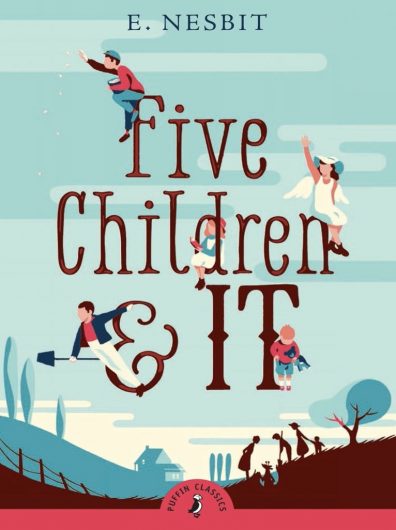
E. Nesbit, Five Children and It, (1902), Puffin Classics, 2024
Leaving London for their new home in the Kent countryside, the four siblings with their baby brother in tow, relish the freedom of their new surroundings. Exploring the nearby sand quarry one day, they unearth a Psammead.
Fat, brown, furry, lethargic and disagreeable, on emerging from the sand this ancient creature grudgingly grants the children a wish a day, which lasts until sunset. And so, their adventures begin, as the children seek to fulfil their wildest dreams. In so doing, they enter a parallel world, where a child’s logic reigns, and adults remain mostly peripheral, oblivious to the children’s activities, but where each wish has unforeseen consequences.
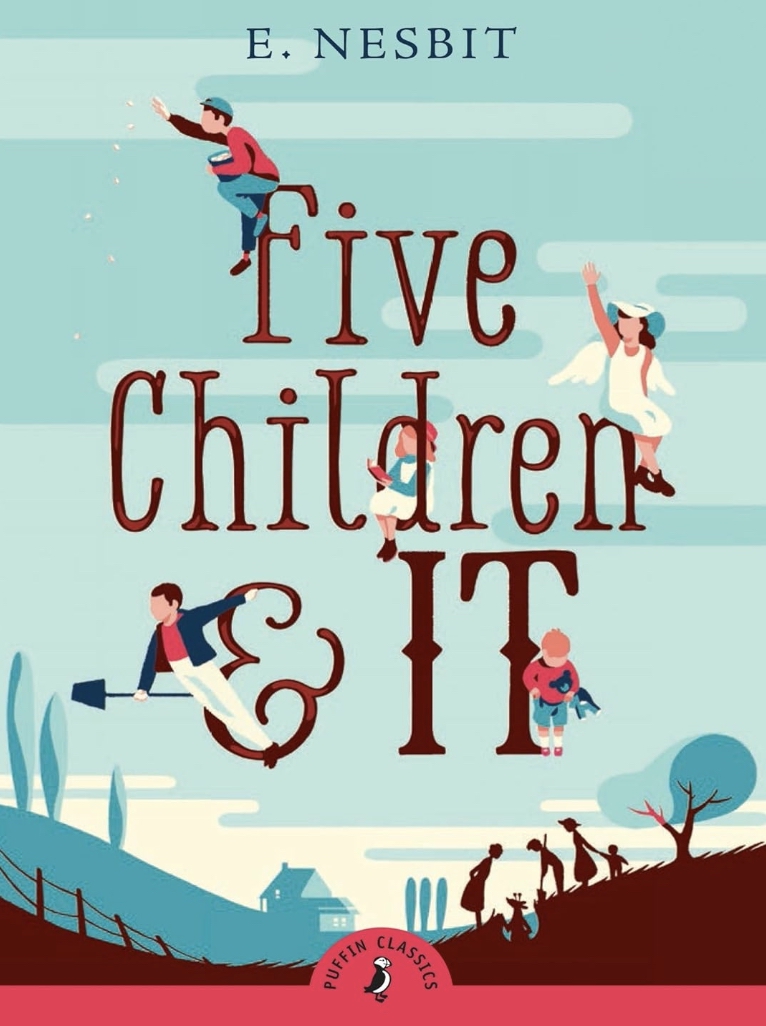
E. Nesbit, Five Children and It, (1902), Puffin Classics, 2024
Leaving London for their new home in the Kent countryside, the four siblings with their baby brother in tow, relish the freedom of their new surroundings. Exploring the nearby sand quarry one day, they unearth a Psammead.
Fat, brown, furry, lethargic and disagreeable, on emerging from the sand this ancient creature grudgingly grants the children a wish a day, which lasts until sunset. And so, their adventures begin, as the children seek to fulfil their wildest dreams. In so doing, they enter a parallel world, where a child’s logic reigns, and adults remain mostly peripheral, oblivious to the children’s activities, but where each wish has unforeseen consequences.