

Spring 2026
Metamorphosis
Primordial
Protean
Embodiment
Remembering
Other ways of being
Recovered things
Copies of all the books included in our summer 15 Reads are available to browse at CAMPLE LINE or to borrow through Dumfries and Galloway Libraries
This spring’s 15 Reads explore seven concepts inspired by our current exhibition, Anderson Borba’s The Unearthed.
In this new list, we find stories and texts that are concerned with women, power, trans-sexuality and representation, that embrace metamorphosis, the mutable, the primordial and other ways of being, and that invoke remembering and embodiment, recovered things, the half-seen and the half-spoken.
Our 15 Reads are guided as always by our commitment to women’s voices, writing from marginalised communities, authors in translation and quality writing produced by independent publishers. They also express our commitment to celebrate world classics during this national year of reading.
Mário de Andrade Macunaíma
‘And that’s all.’ The closing words of the epilogue to this remarkable, experimental novel by Brazilian writer, musicologist and avant-garde figure Mário de Andrade couldn’t be more of an understatement.
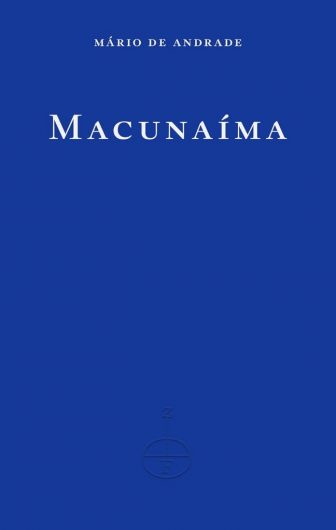
Mário de Andrade, Macunaíma, (1928), translated by Katrina Dodson, Fitzcarraldo Editions, 2023
‘And that’s all.’ The closing words of the epilogue to this remarkable, experimental novel by Brazilian writer, musicologist and avant-garde figure Mário de Andrade couldn’t be more of an understatement. Drawn from years of research into the diverse languages, dialects and cultures of Brazil and written in six days, the story follows the travels of its eponymous ‘hero without any character’ and his two brothers Jiguê and Maanape. Born in the fictional Amazonian tribe of Tapanhumas and possessing magical, shapeshifting powers Macunaíma leads his siblings on a dizzying journey to São Paulo and back to retrieve an amulet given to him by his grieving love Cí and stolen by the giant Piaimã. Spanning forest and city, weaving folklore, mythology and pop culture, and narrated in a raucous fusion of ‘ragged tune and impure speech’ that anticipated magical realism, Macunaíma embodied the multiplicity and complexity of Brazilian identity.
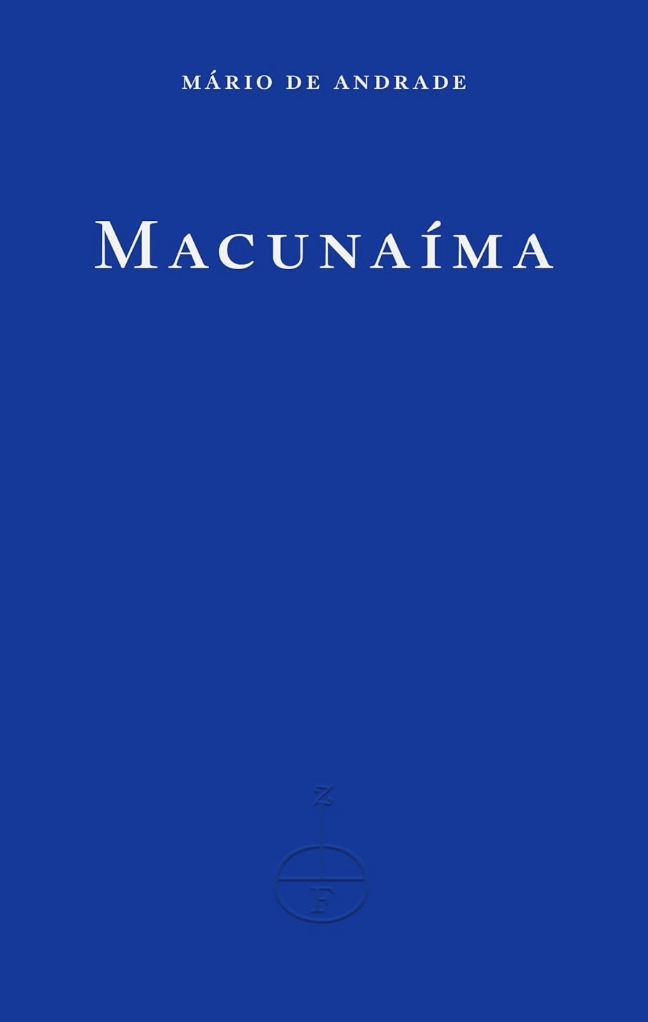
Mário de Andrade, Macunaíma, (1928), translated by Katrina Dodson, Fitzcarraldo Editions, 2023
‘And that’s all.’ The closing words of the epilogue to this remarkable, experimental novel by Brazilian writer, musicologist and avant-garde figure Mário de Andrade couldn’t be more of an understatement. Drawn from years of research into the diverse languages, dialects and cultures of Brazil and written in six days, the story follows the travels of its eponymous ‘hero without any character’ and his two brothers Jiguê and Maanape. Born in the fictional Amazonian tribe of Tapanhumas and possessing magical, shapeshifting powers Macunaíma leads his siblings on a dizzying journey to São Paulo and back to retrieve an amulet given to him by his grieving love Cí and stolen by the giant Piaimã. Spanning forest and city, weaving folklore, mythology and pop culture, and narrated in a raucous fusion of ‘ragged tune and impure speech’ that anticipated magical realism, Macunaíma embodied the multiplicity and complexity of Brazilian identity.
Ovid
Metamorphosis
‘My spirit moves to tell of shapes transformed into new bodies’ are the opening lines of Ovid’s panoramic telling of the mythical deeds of gods and mortals, setting the scene for the tales of transformation that depict both god and mortal in all their complexity.
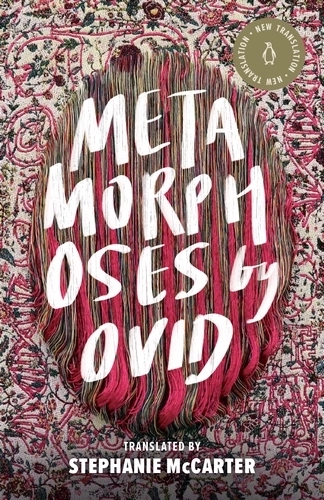
Ovid, Metamorphosis, translated and with an introduction by Stephanie McCarter, Penguin Classics, 2023
‘My spirit moves to tell of shapes transformed into new bodies’ are the opening lines of Ovid’s panoramic telling of the mythical deeds of gods and mortals, setting the scene for the tales of transformation that depict both god and mortal in all their complexity. Even in their changed state, the mortals we encounter retain something of their human characteristics: the weaver Arachne who, punished by Minerva for hubris, is transformed into a spider; the hunter Acteon who becomes a hunted stag under Diana’s vengeful transmutation; and beautiful Daphne who, fleeing Apollo, is transformed into a laurel tree whose leaves flicker and shimmer in the breeze. Violent, competitive and playful, the gods look down from on high, deranging life on earth. Read through today’s lens these stories raise age-old questions concerning humankind’s flaws and virtues, the abuse of power, the healing effects of the arts and the necessity for peace. Stephanie McCarter’s new translation also shines a light on contemporary concerns surrounding gender, race and patriarchy. It is, she tells us, the work of ‘grasping our human failings’ that ensure Ovid’s continuing relevance.
Ovid, Metamorphosis, translated and with an introduction by Stephanie McCarter, Penguin Classics, 2023
‘My spirit moves to tell of shapes transformed into new bodies’ are the opening lines of Ovid’s panoramic telling of the mythical deeds of gods and mortals, setting the scene for the tales of transformation that depict both god and mortal in all their complexity. Even in their changed state, the mortals we encounter retain something of their human characteristics: the weaver Arachne who, punished by Minerva for hubris, is transformed into a spider; the hunter Acteon who becomes a hunted stag under Diana’s vengeful transmutation; and beautiful Daphne who, fleeing Apollo, is transformed into a laurel tree whose leaves flicker and shimmer in the breeze. Violent, competitive and playful, the gods look down from on high, deranging life on earth. Read through today’s lens these stories raise age-old questions concerning humankind’s flaws and virtues, the abuse of power, the healing effects of the arts and the necessity for peace. Stephanie McCarter’s new translation also shines a light on contemporary concerns surrounding gender, race and patriarchy. It is, she tells us, the work of ‘grasping our human failings’ that ensure Ovid’s continuing relevance.
Virginia Woolf
Orlando, A Biography
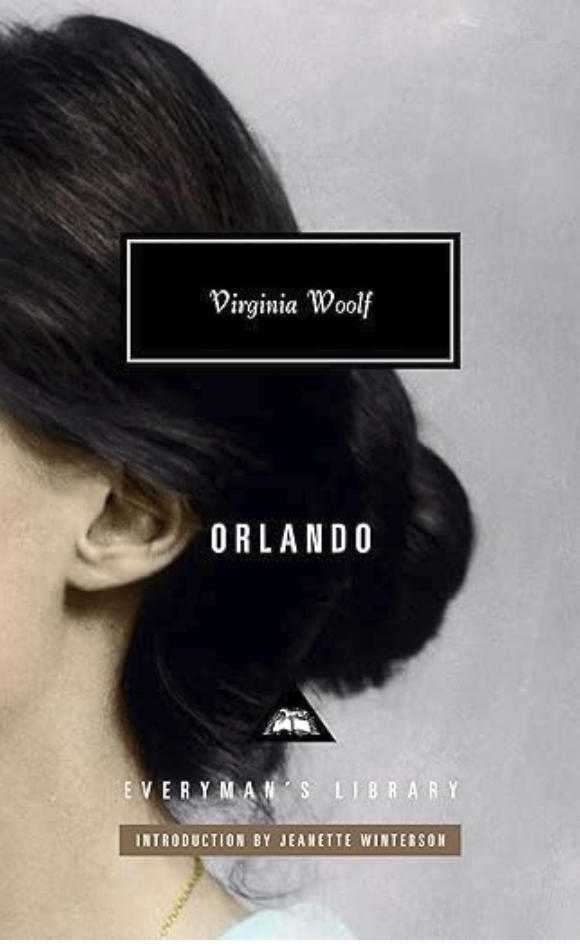
In part, this is a tale of extravagant decadence, adventure, love, literature and exoticism in which Virginia Woolf chronicles Orlando’s life from the 1500s up to her present time of writing. As the centuries pass, Orlando appears in many guises as courtier, ambassador, melancholic, poet and wife, transmuting from male to female.
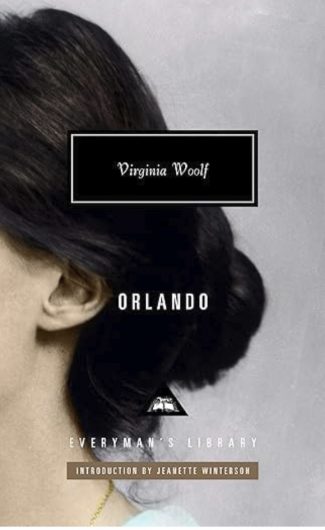
Virginia Woolf, Orlando, A Biography, (1928), Penguin Modern Classics, 2024
In part, this is a tale of extravagant decadence, adventure, love, literature and exoticism in which Virginia Woolf chronicles Orlando’s life from the 1500s up to her present time of writing. As the centuries pass, Orlando appears in many guises as courtier, ambassador, melancholic, poet and wife, transmuting from male to female. Arriving in the 1920s, memories from a long-life re-surface as the objects in Orlando’s ancestral home release their accumulated experiences, until the clock strikes and all crumbles to dust. A playful protean caper inspired by and written for Vita Sackville-West on the one hand, Woolf also exposes how women have been stifled by the patriarchy as much as they have by their long skirts. As such, she would argue, women’s talents have remained unused or unremarked, their deeds unaccounted for and thus lost to history. A coded biography of Vita herself, ‘Orlando’ is also an exploration of how, by refusing literary conventions designed for male subjects, a woman’s life may be documented.
Virginia Woolf, Orlando, A Biography, (1928), Penguin Modern Classics, 2024
In part, this is a tale of extravagant decadence, adventure, love, literature and exoticism in which Virginia Woolf chronicles Orlando’s life from the 1500s up to her present time of writing. As the centuries pass, Orlando appears in many guises as courtier, ambassador, melancholic, poet and wife, transmuting from male to female. Arriving in the 1920s, memories from a long-life re-surface as the objects in Orlando’s ancestral home release their accumulated experiences, until the clock strikes and all crumbles to dust. A playful protean caper inspired by and written for Vita Sackville-West on the one hand, Woolf also exposes how women have been stifled by the patriarchy as much as they have by their long skirts. As such, she would argue, women’s talents have remained unused or unremarked, their deeds unaccounted for and thus lost to history. A coded biography of Vita herself, ‘Orlando’ is also an exploration of how, by refusing literary conventions designed for male subjects, a woman’s life may be documented.
Maria Popova
Figuring
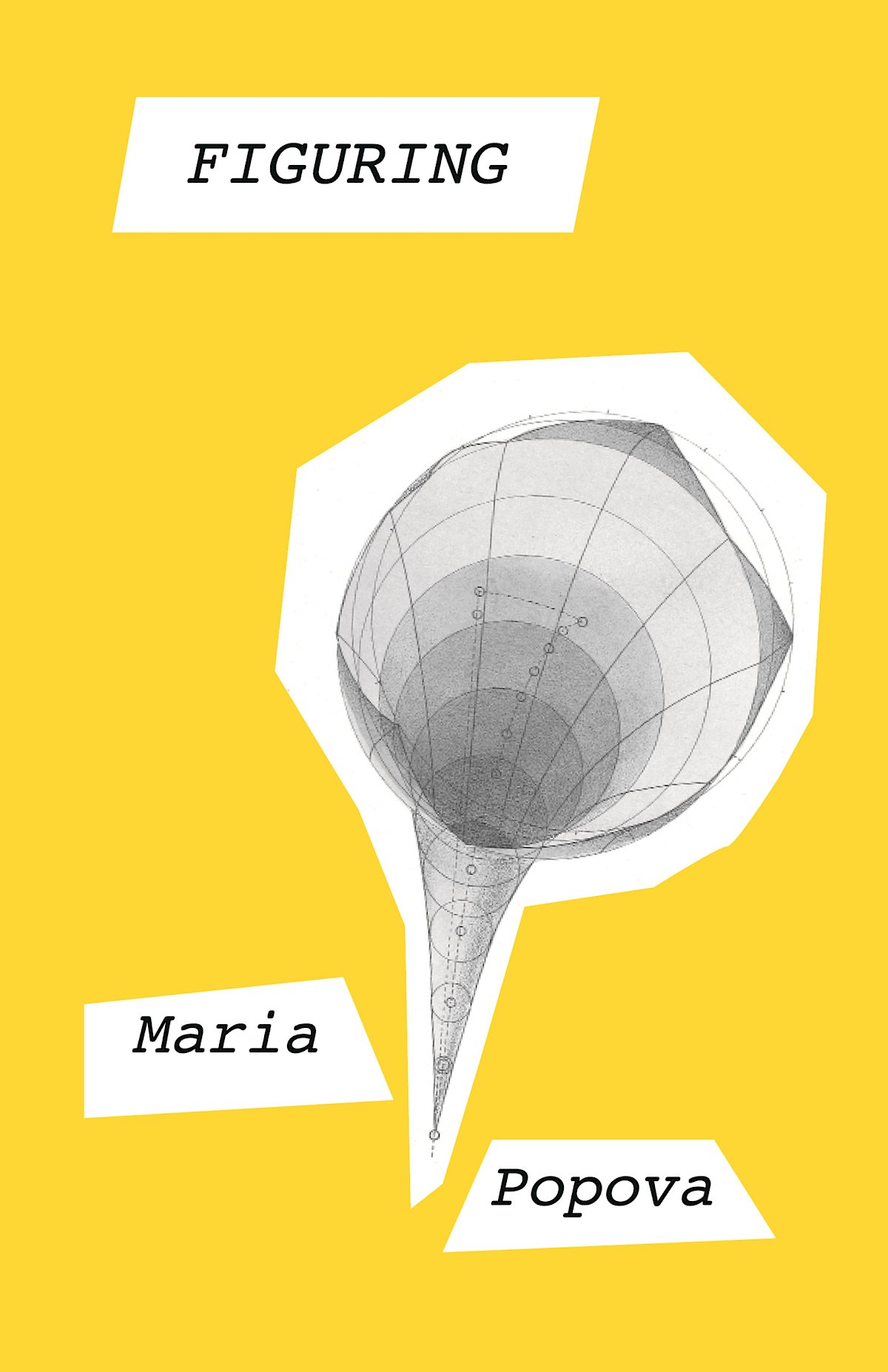
‘Where does it live, that place of permission that lets a person chart a new terrain of possibility that makes her dare to believe that she can be something other than what her culture tells her she is’? Maria Popova asks, as she draws threads across time, geographies and disciplines between scientists, artists and writers.
Maria Popova, Figuring, (2019), Canongate, 2020
‘Where does it live, that place of permission that lets a person chart a new terrain of possibility that makes her dare to believe that she can be something other than what her culture tells her she is’? Maria Popova asks, as she draws threads across time, geographies and disciplines between scientists, artists and writers. Focusing on five pioneering women who defied the conventions of their times to pursue their intellectual passions, Popova shows that the personal is inextricably bound to the scholarly. By detailing their lives, she details how each rose above accepted intellectual norms, generating new knowledge and opening possibilities, which furthered female intellectual emancipation. Each figure is situated within an expansive network of intellectual symbioses, friendships and happenstance, expressive of what Popova describes as an ‘atomic mutuality’ that reaches from Pythagoras to Virginia Woolf, Oliver Sacks to Elizabeth Barrett Browning.
Maria Popova, Figuring, (2019), Canongate, 2020
‘Where does it live, that place of permission that lets a person chart a new terrain of possibility that makes her dare to believe that she can be something other than what her culture tells her she is’? Maria Popova asks, as she draws threads across time, geographies and disciplines between scientists, artists and writers. Focusing on five pioneering women who defied the conventions of their times to pursue their intellectual passions, Popova shows that the personal is inextricably bound to the scholarly. By detailing their lives, she details how each rose above accepted intellectual norms, generating new knowledge and opening possibilities, which furthered female intellectual emancipation. Each figure is situated within an expansive network of intellectual symbioses, friendships and happenstance, expressive of what Popova describes as an ‘atomic mutuality’ that reaches from Pythagoras to Virginia Woolf, Oliver Sacks to Elizabeth Barrett Browning.
Sasha Dugdale
Red House
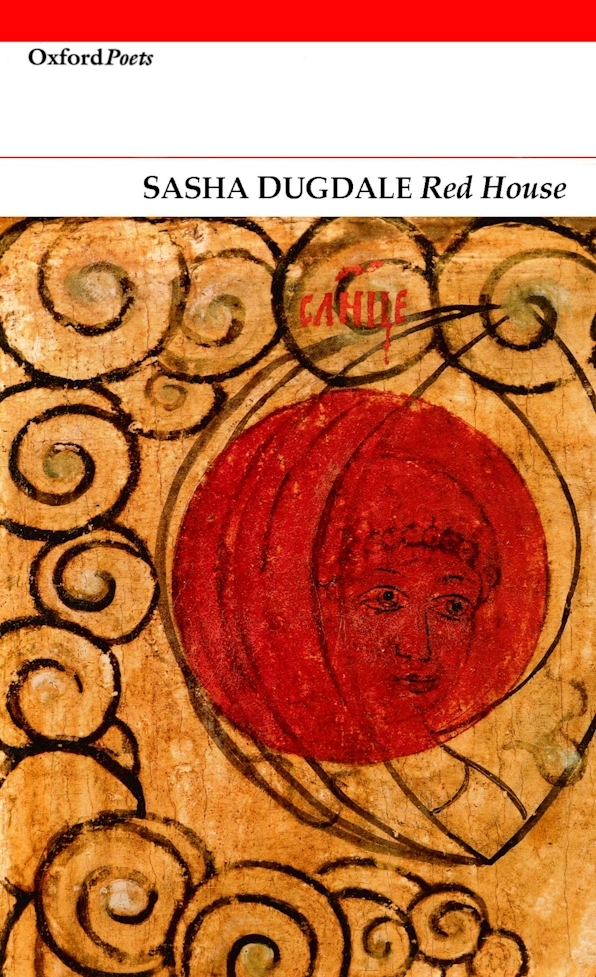
A storied place of love and despoiled innocence, Sasha Dugdale’s red house ‘lies without the parish of the soul’. It is in just such a building, shadowed by the violence of the past, that she made her home after the collapse of the USSR.
Sasha Dugdale, Red House, Carcanet Press, 2011
A storied place of love and despoiled innocence, Sasha Dugdale’s red house ‘lies without the parish of the soul’. It is in just such a building, shadowed by the violence of the past, that she made her home after the collapse of the USSR. This is a haunted place, a place of crisis, where poetry forms from the half-remembered, half-seen, the mundane: loneliness, a shirt, childhood, mould on the wall, a wrought iron banister. The scene shifts to Britain, to motherhood, to walking on the chalk downs. Through these places and experiences Dugdale examines life’s realities, together with embodiments of older ways, exploring remembered situations where the transient beauty of the natural world offers moments to pause, to sense, to remember and, as we read, to wonder.
Sasha Dugdale, Red House, Carcanet Press, 2011
A storied place of love and despoiled innocence, Sasha Dugdale’s red house ‘lies without the parish of the soul’. It is in just such a building, shadowed by the violence of the past, that she made her home after the collapse of the USSR. This is a haunted place, a place of crisis, where poetry forms from the half-remembered, half-seen, the mundane: loneliness, a shirt, childhood, mould on the wall, a wrought iron banister. The scene shifts to Britain, to motherhood, to walking on the chalk downs. Through these places and experiences Dugdale examines life’s realities, together with embodiments of older ways, exploring remembered situations where the transient beauty of the natural world offers moments to pause, to sense, to remember and, as we read, to wonder.
Jenny Erpenbeck Things That Disappear: Reflections and Memories
Things That Disappear brings together a selection of prose pieces that Erpenbeck wrote for a column in the German newspaper Frankfurter Allgemeine Zeitung. Brief and paratactic, the pieces focus on a single often unassuming object, an erased place, a memory.
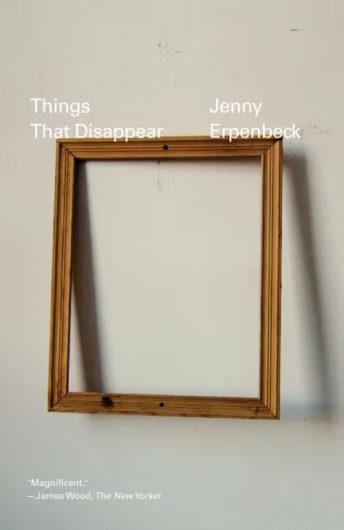
Jenny Erpenbeck, Things That Disappear: Reflections and Memories, (2009), translated by Kurt Beales, Granta, 2025
Things That Disappear brings together a selection of prose pieces that Erpenbeck wrote for a column in the German newspaper Frankfurter Allgemeine Zeitung. Brief and paratactic, the pieces focus on a single often unassuming object, an erased place, a memory. In each, Jenny Erpenbeck expands from the specific to the universal, exposing something of the human condition or an aspect of our troubled present, transforming the ordinary into something extraordinary or revelatory. As the book’s title suggests, these sketches are concerned with loss – the loss of a thing and loss as a state of being, but Erpenbeck also shows us that new ways of being can emerge from loss, sometimes but not always for the better. If we attend closely enough, she tells us, remnants of the original may be observed resisting eradication, something of the past may still be grasped, at least for Erpenbeck’s generation whose early memories were laid down before the collapse of the German Democratic Republic (GDR).
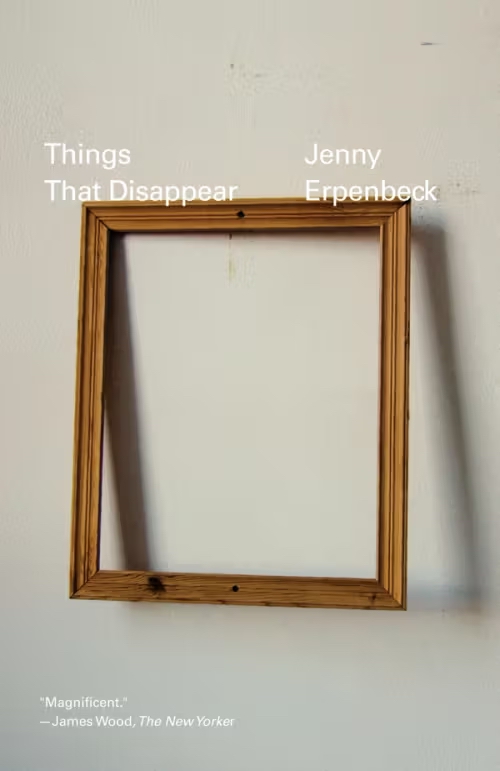
Jenny Erpenbeck, Things That Disappear: Reflections and Memories, (2009), translated by Kurt Beales, Granta, 2025
Things That Disappear brings together a selection of prose pieces that Erpenbeck wrote for a column in the German newspaper Frankfurter Allgemeine Zeitung. Brief and paratactic, the pieces focus on a single often unassuming object, an erased place, a memory. In each, Jenny Erpenbeck expands from the specific to the universal, exposing something of the human condition or an aspect of our troubled present, transforming the ordinary into something extraordinary or revelatory. As the book’s title suggests, these sketches are concerned with loss – the loss of a thing and loss as a state of being, but Erpenbeck also shows us that new ways of being can emerge from loss, sometimes but not always for the better. If we attend closely enough, she tells us, remnants of the original may be observed resisting eradication, something of the past may still be grasped, at least for Erpenbeck’s generation whose early memories were laid down before the collapse of the German Democratic Republic (GDR).
Christian Lehnert Wickerwork
Spiderwebs ‘riffled by an indignant wind’; a ‘March butterfly, numb with winter’; the salamander ‘contracting/into itself/in a systole’s twitch’; poetic distillations of a lifetime of looking and watching.
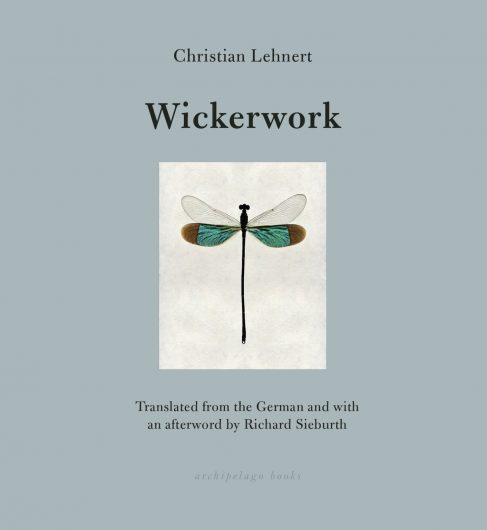
Christian Lehnert, Wickerwork, (2018, 2022), translated and with an introduction by Richard Sieburth, Archipelago Books, 2025
Spiderwebs ‘riffled by an indignant wind’; a ‘March butterfly, numb with winter’; the salamander ‘contracting/into itself/in a systole’s twitch’; poetic distillations of a lifetime of looking and watching. Infused by German baroque literary forms and Christian Lehnert’s years of theological and philosophical studies, his enquiries give rise to a world which speaks of the primordial and the spiritual. Lichen, bacteria, fungus, tree roots, rooks cawing in the snow are each shown as a part of something greater, that which extends beyond itself, that which may be called divine.
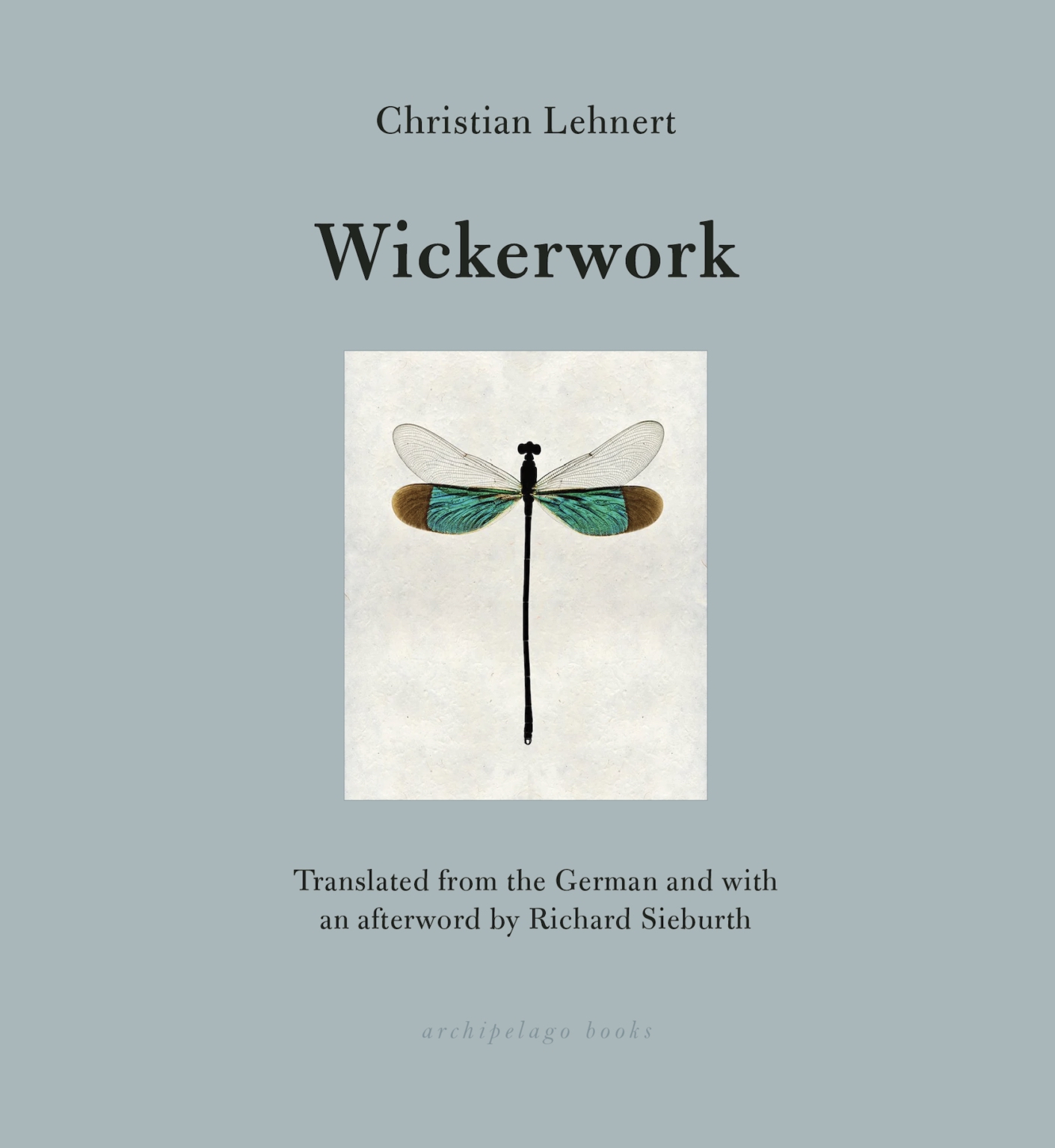
Christian Lehnert, Wickerwork, (2018, 2022), translated and with an introduction by Richard Sieburth, Archipelago Books, 2025
Spiderwebs ‘riffled by an indignant wind’; a ‘March butterfly, numb with winter’; the salamander ‘contracting/into itself/in a systole’s twitch’; poetic distillations of a lifetime of looking and watching. Infused by German baroque literary forms and Christian Lehnert’s years of theological and philosophical studies, his enquiries give rise to a world which speaks of the primordial and the spiritual. Lichen, bacteria, fungus, tree roots, rooks cawing in the snow are each shown as a part of something greater, that which extends beyond itself, that which may be called divine.
Marjolein van der Loo
A Tree. A Reader on Arboreal Kinship
Printed on wood-free paper, A Tree, A Reader on Arboreal Kinship, is part of a wider project and continuation of an exhibition of research and artworks, which explored the relationship between people and trees and what can be learned from their 420 million years on earth.
Marjolein van der Loo (ed), A Tree. A Reader on Arboreal Kinship, Onomatopee Projects, 2024
Printed on wood-free paper, A Tree, A Reader on Arboreal Kinship, is part of a wider project and continuation of an exhibition of research and artworks, which explored the relationship between people and trees and what can be learned from their 420 million years on earth. Addressed throughout as a source of inspiration and enquiry, as ‘embodiments of the seasons and indicators of climate changes’, trees are seen as both ‘beings’ and keepers of wisdom’. This diverse collection of stories, poetry, essays, artwork and images opens up ways of thinking about our connections to trees. Whether imagining that we could speak to trees in a common cellular primordial language, discovering co-founder of the Beach Boys, Brian Wilson’s pop music experiment ‘A Day in the life of a tree’, following a story of a woman who transforms into a plant, or investigating the gender-bias of public spaces in relation to both plants and people, the subject of trees develops like a ‘claff’: a Scots word from the final poem of the book, ‘Colonsay’, which refers to where the trunk of a tree splits into branches.
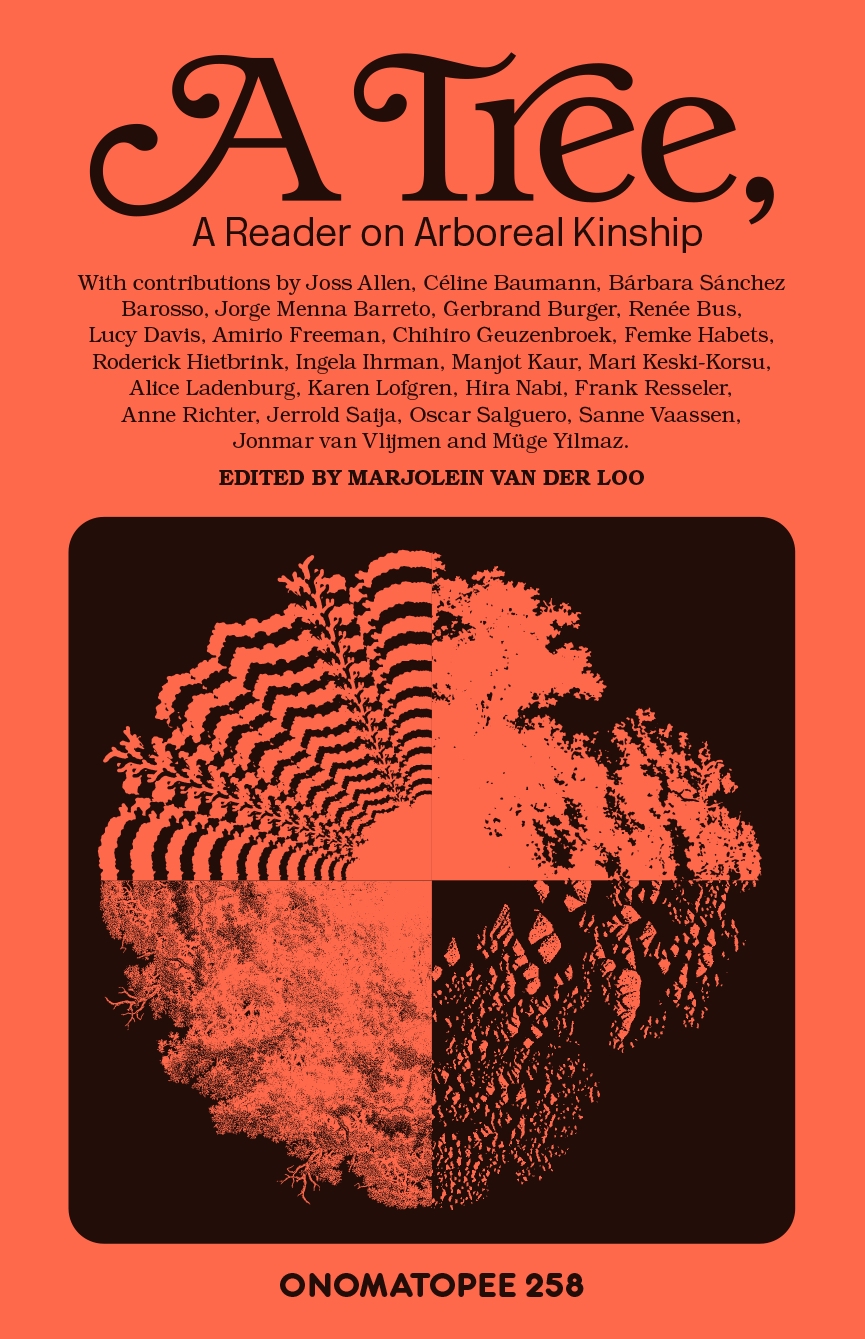
Marjolein van der Loo (ed), A Tree. A Reader on Arboreal Kinship, Onomatopee Projects, 2024
Printed on wood-free paper, A Tree, A Reader on Arboreal Kinship, is part of a wider project and continuation of an exhibition of research and artworks, which explored the relationship between people and trees and what can be learned from their 420 million years on earth. Addressed throughout as a source of inspiration and enquiry, as ‘embodiments of the seasons and indicators of climate changes’, trees are seen as both ‘beings’ and keepers of wisdom’. This diverse collection of stories, poetry, essays, artwork and images opens up ways of thinking about our connections to trees. Whether imagining that we could speak to trees in a common cellular primordial language, discovering co-founder of the Beach Boys, Brian Wilson’s pop music experiment ‘A Day in the life of a tree’, following a story of a woman who transforms into a plant, or investigating the gender-bias of public spaces in relation to both plants and people, the subject of trees develops like a ‘claff’: a Scots word from the final poem of the book, ‘Colonsay’, which refers to where the trunk of a tree splits into branches.
Toni Cade Bambara
The Salt Eaters
Minnie Ransome, a faith healer and exuberant dresser, sits in circle in the South West Community Infirmary in Claybourne, Georgia, on the eve of Mardi Gras with Velma Henry, mother, sister, activist, musician and suicide survivor, and the God-fearing Sophie Heywood with ‘baby-catching hands’, aided by Minnie’s own spiritual guide Old Wife.
Toni Cade Bambara, The Salt Eaters, (1980), Penguin Classics, 2021
Minnie Ransome, a faith healer and exuberant dresser, sits in circle in the South West Community Infirmary in Claybourne, Georgia, on the eve of Mardi Gras with Velma Henry, mother, sister, activist, musician and suicide survivor, and the God-fearing Sophie Heywood with ‘baby-catching hands’, aided by Minnie’s own spiritual guide Old Wife. Pulled off kilter into lostness, Velma hasn’t yet realised her own spiritual powers gifted by her ancestors and so wanders in darkness, channelling the accumulated weight of history. As the women seek to ease Velma’s suffering, the narrative moves to and fro between the hospital room and the outside world where bus driver Fred Holt battles with his own memories until a cataclysmic storm offers possibilities of redemption for all.
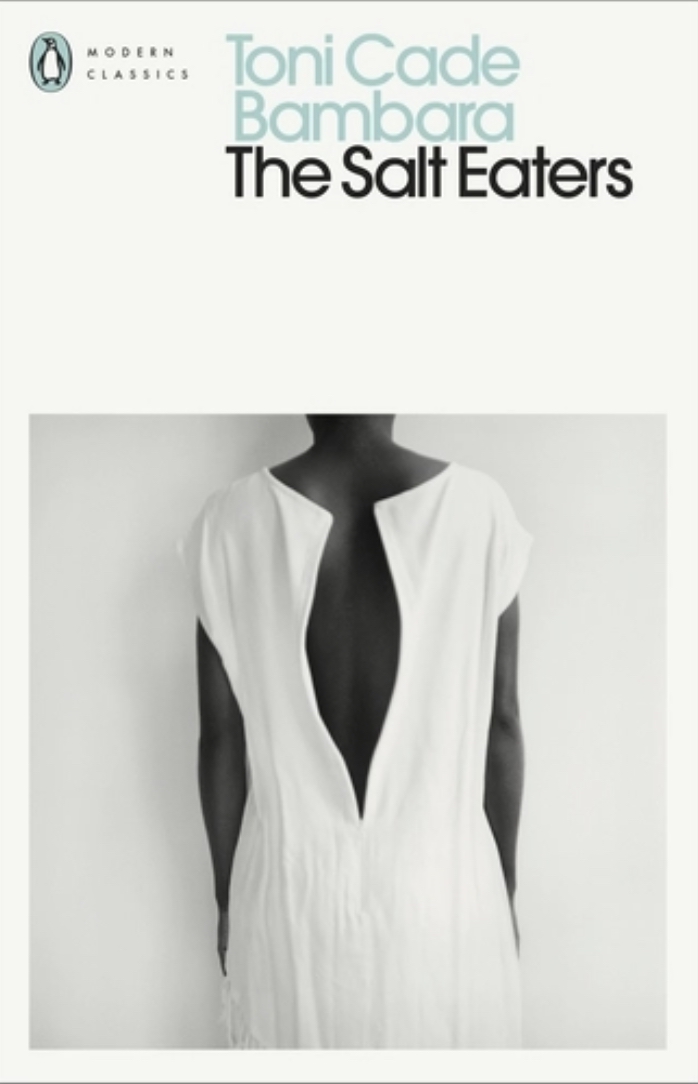
Toni Cade Bambara, The Salt Eaters, (1980), Penguin Classics, 2021
Minnie Ransome, a faith healer and exuberant dresser, sits in circle in the South West Community Infirmary in Claybourne, Georgia, on the eve of Mardi Gras with Velma Henry, mother, sister, activist, musician and suicide survivor, and the God-fearing Sophie Heywood with ‘baby-catching hands’, aided by Minnie’s own spiritual guide Old Wife. Pulled off kilter into lostness, Velma hasn’t yet realised her own spiritual powers gifted by her ancestors and so wanders in darkness, channelling the accumulated weight of history. As the women seek to ease Velma’s suffering, the narrative moves to and fro between the hospital room and the outside world where bus driver Fred Holt battles with his own memories until a cataclysmic storm offers possibilities of redemption for all.
Leanne Betasamosake Simpson
Noopiming, The Cure for White Ladies
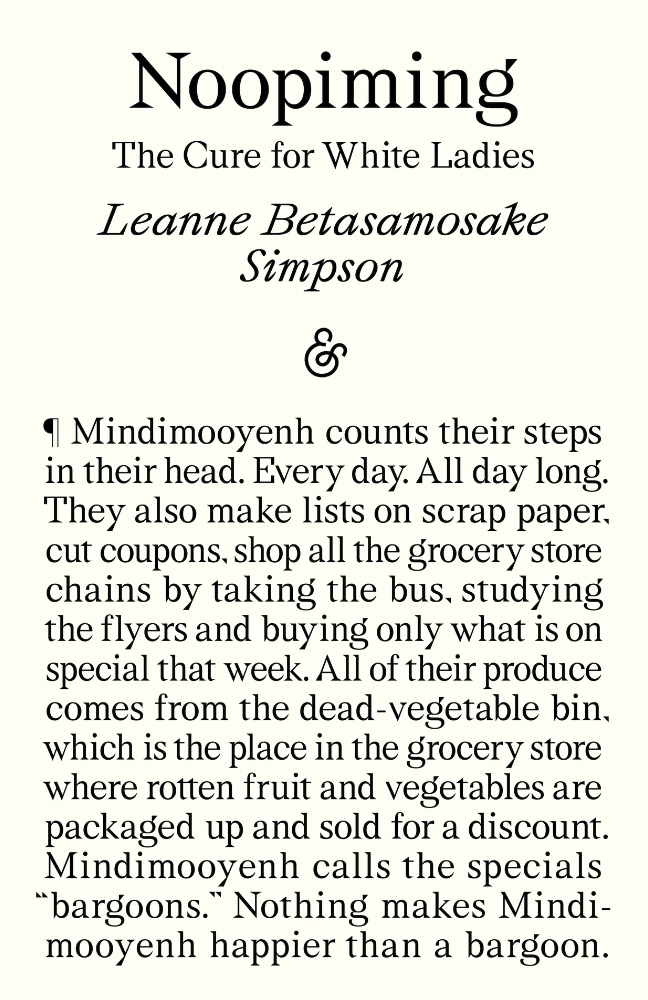
Mashkawaji, as the Anishinaabemowin dictionary tells us, is the name given to that which is frozen stiff. Mashkawaji lies frozen in the lake, the multiple parts of their consciousness, manifesting in altered forms as they move between town, reserve and disregarded spaces on the periphery.
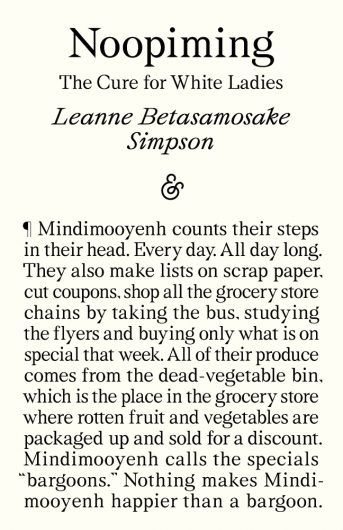
Leanne Betasamosake Simpson, Noopiming, The Cure for White Ladies, (2020), And Other Stories, 2025
Mashkawaji, as the Anishinaabemowin dictionary tells us, is the name given to that which is frozen stiff. Mashkawaji lies frozen in the lake, the multiple parts of their consciousness, manifesting in altered forms as they move between town, reserve and disregarded spaces on the periphery. Here we follow Lucy, Mashkawaji’s ‘brain’, as she attempts to reconnect with her culture and with Asin (rock), Mashkawaji’s ‘eyes and ears’. We meet straight-talking Mindimooyeng (the old lady who holds things together), Adik (caribou) who goes down to the river at night to drink the cool water, and the maple tree Ninaatig who also pushes a shopping trolley.
Distinctions blur between or transmute from human, animal and geological forms while gender descriptions reflect Nishnaabeg culture which has more than two sexual orientations. Written in fragments of poetry and prose, Leanne Betasamosake Simpson’s novel explores the effects of colonialism and resulting separation of indigenous peoples from their lands and cultures, examining what it takes to survive in an environmentally challenged urban-settler capitalist world.
Leanne Betasamosake Simpson, Noopiming, The Cure for White Ladies, (2020), And Other Stories, 2025
Mashkawaji, as the Anishinaabemowin dictionary tells us, is the name given to that which is frozen stiff. Mashkawaji lies frozen in the lake, the multiple parts of their consciousness, manifesting in altered forms as they move between town, reserve and disregarded spaces on the periphery. Here we follow Lucy, Mashkawaji’s ‘brain’, as she attempts to reconnect with her culture and with Asin (rock), Mashkawaji’s ‘eyes and ears’. We meet straight-talking Mindimooyeng (the old lady who holds things together), Adik (caribou) who goes down to the river at night to drink the cool water, and the maple tree Ninaatig who also pushes a shopping trolley.
Distinctions blur between or transmute from human, animal and geological forms while gender descriptions reflect Nishnaabeg culture which has more than two sexual orientations. Written in fragments of poetry and prose, Leanne Betasamosake Simpson’s novel explores the effects of colonialism and resulting separation of indigenous peoples from their lands and cultures, examining what it takes to survive in an environmentally challenged urban-settler capitalist world.
Ben Okri
Astonishing the Gods
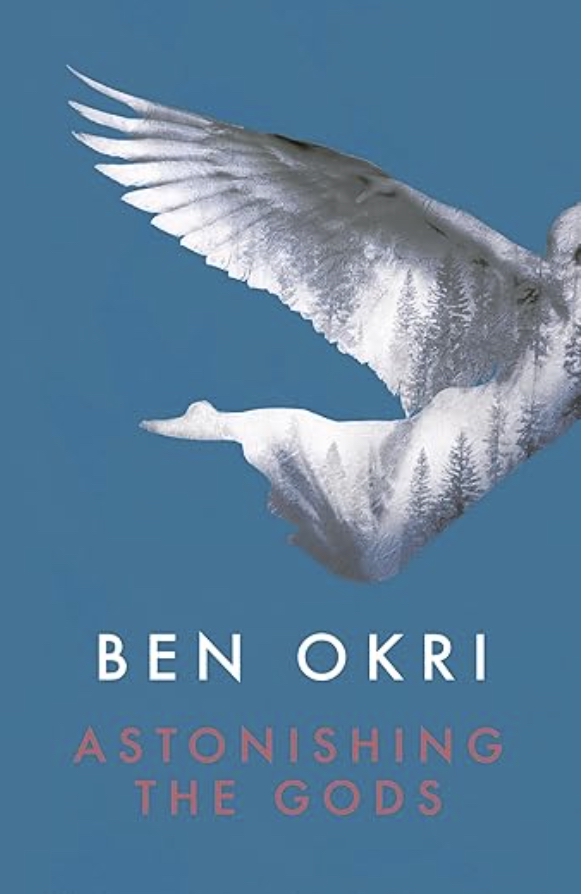
‘I set out to find one thing, but found another’, Ben Okri tells us. ‘Maybe’, he continues, ‘what seeks us is better than what we seek.’
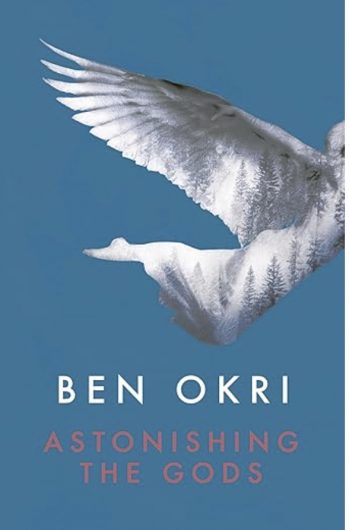
Ben Okri, Astonishing the Gods, (1995), Bloomsbury Publishing, 2015
‘I set out to find one thing, but found another’, Ben Okri tells us. ‘Maybe’, he continues, ‘what seeks us is better than what we seek.’ And this is true of his central character also; an invisible boy born to an invisible people who sets out on a quest to learn the secret of invisibility. He travels for seven years, finally arriving, now a young man, at a wondrous island, home to a beautiful city, filled with sonorous voices yet whose residents are visible only as reflections in mirrors. This is a place of paradoxes, of joy and suffering, ecstatic dreams and terrifying visions, beauty and cruelty, signifying perhaps different states of consciousness on the path to enlightenment. Redolent of parable, fairy tale and myth, gesturing also towards Italo Calvino’s ‘Invisible Cities’, this is a fantastical poetic exploration of humankind’s fundamental questions concerning the meaning of existence.
Ben Okri, Astonishing the Gods, (1995), Bloomsbury Publishing, 2015
‘I set out to find one thing, but found another’, Ben Okri tells us. ‘Maybe’, he continues, ‘what seeks us is better than what we seek.’ And this is true of his central character also; an invisible boy born to an invisible people who sets out on a quest to learn the secret of invisibility. He travels for seven years, finally arriving, now a young man, at a wondrous island, home to a beautiful city, filled with sonorous voices yet whose residents are visible only as reflections in mirrors. This is a place of paradoxes, of joy and suffering, ecstatic dreams and terrifying visions, beauty and cruelty, signifying perhaps different states of consciousness on the path to enlightenment. Redolent of parable, fairy tale and myth, gesturing also towards Italo Calvino’s ‘Invisible Cities’, this is a fantastical poetic exploration of humankind’s fundamental questions concerning the meaning of existence.
César Aira
The Seamstress and the Wind
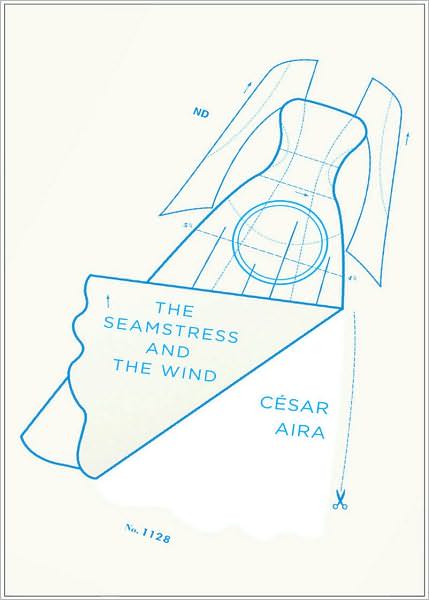
The genesis of this story is to be found in Paris, the home of surrealism. There César Aira ponders on his long-held idea of a story of a modest seamstress and the transformative power of the wind.
César Aira, The Seamstress and the Wind, (1994), translated by Rosalie Knecht, New Directions, 2011
The genesis of this story is to be found in Paris, the home of surrealism. There César Aira ponders on his long-held idea of a story of a modest seamstress and the transformative power of the wind. And so, the tale begins: The disappearance of a young boy gives rise to a frantic chase by his mother the seamstress who, sitting in the back of a taxi sewing a wedding dress, is followed by her no-good gambler of a husband and in turn by the intended wearer of the half-made dress. The three lives eventually collide on a desolate Patagonian plateau, where the protean power of the wind—or is it imagination—undoes the natural order of things. In this other-worldly place, objects appear uncanny, situations spiral into the fantastical. Raising questions about revelation through displacement, childhood memory and the role of fate, the destinies of all three may finally be decided by a poker game led by the wind of course, who shuffles the cards.
César Aira, The Seamstress and the Wind, (1994), translated by Rosalie Knecht, New Directions, 2011
The genesis of this story is to be found in Paris, the home of surrealism. There César Aira ponders on his long-held idea of a story of a modest seamstress and the transformative power of the wind. And so, the tale begins: The disappearance of a young boy gives rise to a frantic chase by his mother the seamstress who, sitting in the back of a taxi sewing a wedding dress, is followed by her no-good gambler of a husband and in turn by the intended wearer of the half-made dress. The three lives eventually collide on a desolate Patagonian plateau, where the protean power of the wind—or is it imagination—undoes the natural order of things. In this other-worldly place, objects appear uncanny, situations spiral into the fantastical. Raising questions about revelation through displacement, childhood memory and the role of fate, the destinies of all three may finally be decided by a poker game led by the wind of course, who shuffles the cards.
John Bierhorst
Latin American Folktales: Stories from Hispanic and Indian Traditions
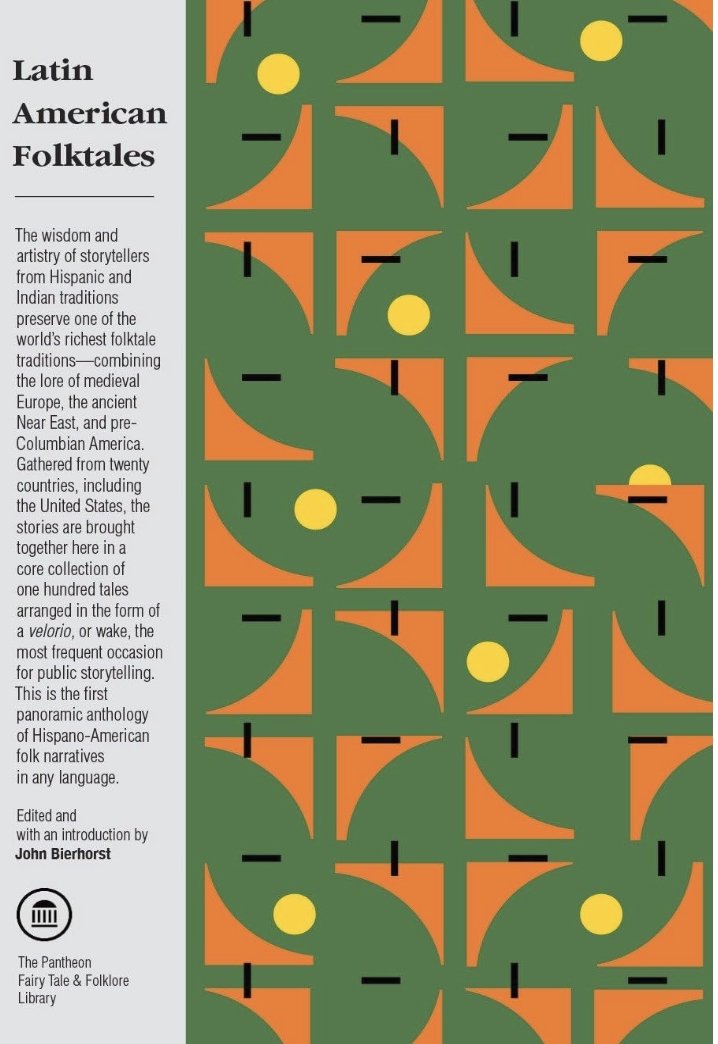
‘Listen and learn it, learn to tell it, and tell it to teach’, Carmen Rivera announces as she begins her story ‘Crystal the Wise’. The riddles, epic tales and stories, many of whose origins are rooted in tribal lore, have been transcribed from the spoken word often gathered at festivals or wakes.
John Bierhorst, edited and introduced, Latin American Folktales: Stories from Hispanic and Indian Traditions, Pantheon Books, 2002
‘Listen and learn it, learn to tell it, and tell it to teach’, Carmen Rivera announces as she begins her story ‘Crystal the Wise’. The riddles, epic tales and stories, many of whose origins are rooted in tribal lore, have been transcribed from the spoken word often gathered at festivals or wakes. Conquest and European colonialism, bible stories and fairy tales have also been absorbed into stories ranging in scope from the fantastical to the pragmatic, the irreverent to the holy. Accounts of tricksters and the devil equal tales of wicked fathers, beautiful women, saints, genies and shapeshifters, telling how evil is punished and the virtuous rewarded – mostly. Cinderella, Cap o’ Rushes, Rapunzel and the Thousand and One Nights appear in altered guises along with biblical stories acculturated from early missionary teachings. And there, ‘my tale is done and the wind blows it off’.
John Bierhorst, edited and introduced, Latin American Folktales: Stories from Hispanic and Indian Traditions, Pantheon Books, 2002
‘Listen and learn it, learn to tell it, and tell it to teach’, Carmen Rivera announces as she begins her story ‘Crystal the Wise’. The riddles, epic tales and stories, many of whose origins are rooted in tribal lore, have been transcribed from the spoken word often gathered at festivals or wakes. Conquest and European colonialism, bible stories and fairy tales have also been absorbed into stories ranging in scope from the fantastical to the pragmatic, the irreverent to the holy. Accounts of tricksters and the devil equal tales of wicked fathers, beautiful women, saints, genies and shapeshifters, telling how evil is punished and the virtuous rewarded – mostly. Cinderella, Cap o’ Rushes, Rapunzel and the Thousand and One Nights appear in altered guises along with biblical stories acculturated from early missionary teachings. And there, ‘my tale is done and the wind blows it off’.
For younger readers
Jane Yolan
Greyling
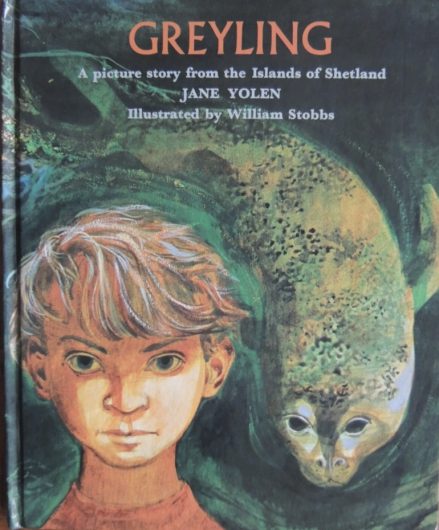
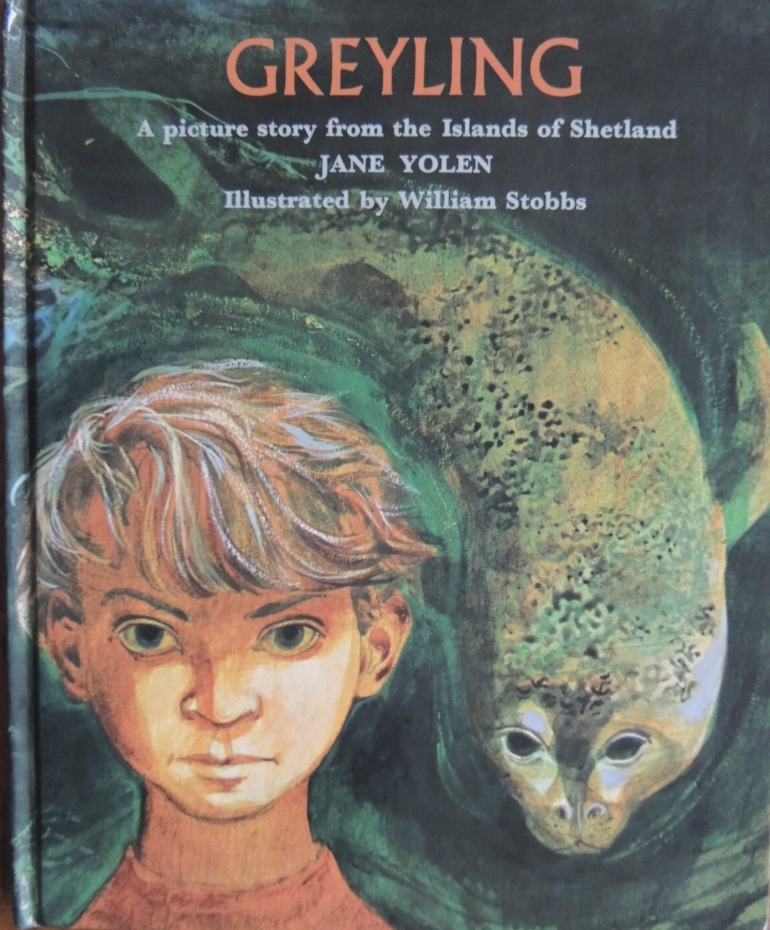
On the way to his fishing boat, a childless fisherman finds a seal pup on the strand. The man takes it home to his wife swathed in his shirt. On unwrapping the bundle, they discover no seal but a baby boy, for the child is a selchie, a mythical creature who takes human form on land but in the ocean becomes a seal once more.
Jane Yolan, illustrated by William Stobbs, Greyling, (1968), Bodley Head, 1975
On the way to his fishing boat, a childless fisherman finds a seal pup on the strand. The man takes it home to his wife swathed in his shirt. On unwrapping the bundle, they discover no seal but a baby boy, for the child is a selchie, a mythical creature who takes human form on land but in the ocean becomes a seal once more. They name him Greyling, after ‘the storm coming sky’ and fearful of losing him to the waves, the couple keep their adopted son on dry land. But the call of the ocean is powerful. Can a selchie remain in human form or are family bonds or the desire to swim with his own folk in Orkney’s dark seas stronger? Inspired by ancient legends and the folk song ‘The Grey Selchie of Sule Skerrie’, the story is illustrated with evocative watercolours which capture the essence of sea and land, and the lives of the couple dwelling in their blackhouse thatched with moss.
Jane Yolan, illustrated by William Stobbs, Greyling, (1968), Bodley Head, 1975
On the way to his fishing boat, a childless fisherman finds a seal pup on the strand. The man takes it home to his wife swathed in his shirt. On unwrapping the bundle, they discover no seal but a baby boy, for the child is a selchie, a mythical creature who takes human form on land but in the ocean becomes a seal once more. They name him Greyling, after ‘the storm coming sky’ and fearful of losing him to the waves, the couple keep their adopted son on dry land. But the call of the ocean is powerful. Can a selchie remain in human form or are family bonds or the desire to swim with his own folk in Orkney’s dark seas stronger? Inspired by ancient legends and the folk song ‘The Grey Selchie of Sule Skerrie’, the story is illustrated with evocative watercolours which capture the essence of sea and land, and the lives of the couple dwelling in their blackhouse thatched with moss.
Maria Stepanova
The Disappearing Act
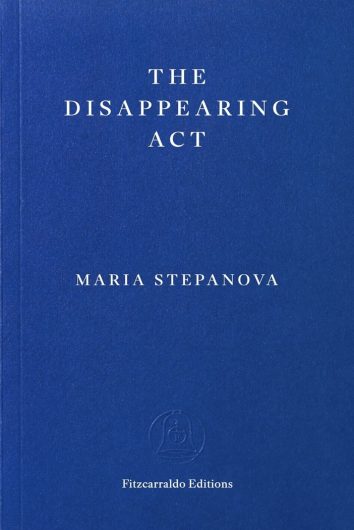
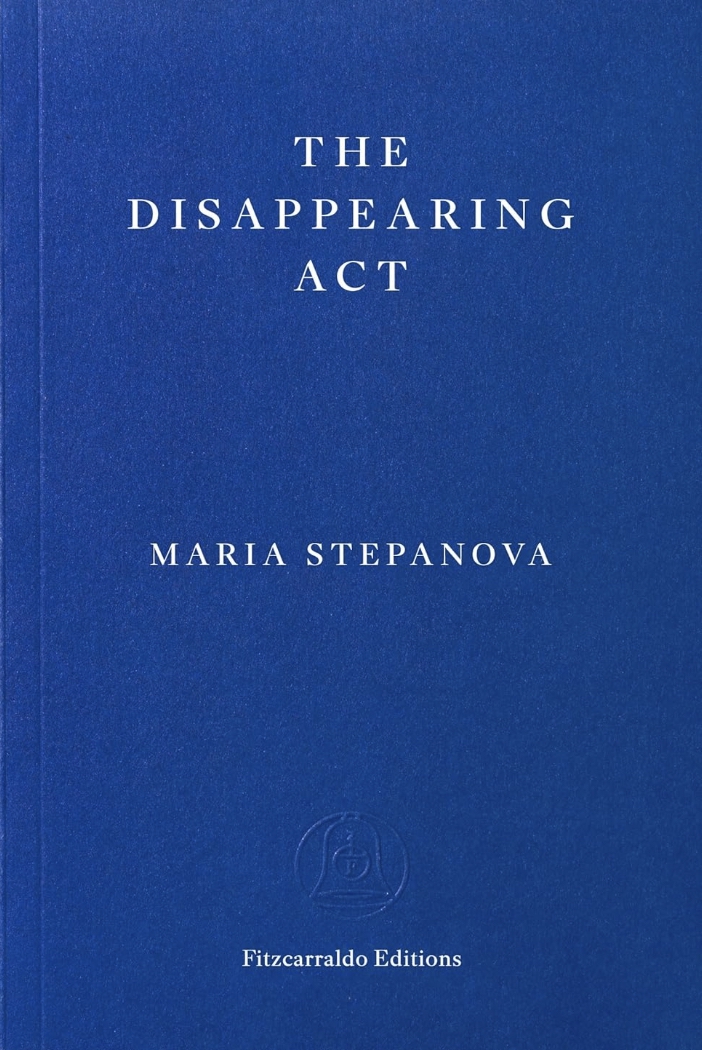
Stranded in a strange town on her way to give a reading at a literary festival, her phone out of charge, and her whereabouts unknown, the novelist M drifts towards a state of possible freedom in her newly found ‘posthumous existence’.
Maria Stepanova, The Disappearing Act, (2024), translated by Sasha Dugdale, Fitzcarraldo Editions, 2026
Stranded in a strange town on her way to give a reading at a literary festival, her phone out of charge, and her whereabouts unknown, the novelist M drifts towards a state of possible freedom in her newly found ‘posthumous existence’. In self-imposed exile from her homeland which is waging war on its neighbour, M is still haunted by memories of her childhood infused by the tyrannical regime which she has named the ‘beast’, and from which she now seeks to free herself. Although now physically at a remove, the ‘beast’s’ atmosphere still disturbs M’s mind. Is her destiny inescapable, as foretold by the tarot cards, or does the possibility of becoming an itinerant circus performer offer an escape route from fate and from herself? Written between July and August 2023, M perhaps may be read as a literary embodiment of Maria Stepanova’s life in exile from Russia since the 2022 invasion of Ukraine.
Maria Stepanova, The Disappearing Act, (2024), translated by Sasha Dugdale, Fitzcarraldo Editions, 2026
Stranded in a strange town on her way to give a reading at a literary festival, her phone out of charge, and her whereabouts unknown, the novelist M drifts towards a state of possible freedom in her newly found ‘posthumous existence’. In self-imposed exile from her homeland which is waging war on its neighbour, M is still haunted by memories of her childhood infused by the tyrannical regime which she has named the ‘beast’, and from which she now seeks to free herself. Although now physically at a remove, the ‘beast’s’ atmosphere still disturbs M’s mind. Is her destiny inescapable, as foretold by the tarot cards, or does the possibility of becoming an itinerant circus performer offer an escape route from fate and from herself? Written between July and August 2023, M perhaps may be read as a literary embodiment of Maria Stepanova’s life in exile from Russia since the 2022 invasion of Ukraine.