

Summer 2026
Small things
Portability
Reactivation
Threads
Touch
The domestic space
Repair
Copies of all the books included in our summer 15 Reads are available to browse at CAMPLE LINE or to borrow through Dumfries and Galloway Libraries
This new list of 15 Reads for the summer focuses on the particular lives and the particular power of small things – miniatures, fragments, scraps. As we see in these reads, small things travel. Inherently portable, we carry them, along with our stories and memories, wherever life take us. Here, between Lebanon and Java, the Mexican borderlands and Palestine, literary threads cross; from Susan Howe’s collaged essay to Emily Dickinson’s ‘small works’, Robert Walser’s ‘microscripts’ and Herta Müller’s radical paper collage poems, while threads appear literally in stories of weaving, bonnet making and by association with cotton growing.
Inspired by our current exhibitions, Murmuration by Majd Abdel Hamid and Katie Schwab’s The warp and woof of my self, these reads also explore notions of reactivation, touch and repair.
As always, this summer’s list is informed by our commitment to women’s voices, writing from marginalised communities, authors in translation and independent publishers. During this national year of reading, 15 Reads also celebrates world classics, which for this list take the form of lesser-known pieces by writers of classic works.
Alice Hattrick
Fancy Work: Unpicking Past Lives
The association of embroidery with femininity, with embroidery commonly regarded as a female pursuit throughout history, is what Alice Hattrick calls a ‘deceitful fiction’. Hattrick turns this notion on its head largely through the central figure of May Morris and her gender non-conforming partner of twenty years, MF.
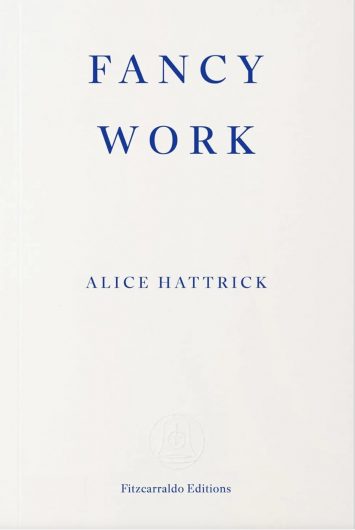
Alice Hattrick, Fancy Work: Unpicking Past Lives, Fitzcarraldo Editions, 2026
The association of embroidery with femininity, with embroidery commonly regarded as a female pursuit throughout history, is what Alice Hattrick calls a ‘deceitful fiction’. Hattrick turns this notion on its head largely through the central figure of May Morris and her gender non-conforming partner of twenty years, MF. Morris was the daughter of William Morris and ran the embroidery department of her father’s design firm, Morris & Co. Through exploring what she could in May’s archive (evidence of queerness often exists ‘outside of normative visibility’), Hattrick explores the place of embroidery in their lives (as well as in her own and in her mother’s), and also in those of others in the book for whom embroidery is a tool of resistance, ‘of complaint, refusal and rage’. Palestinian artist Majd Abdel Hamid’s use of embroidery, Hattrick explains, is a means to both process traumatic experiences and refuse external demands on labour and our attention – ‘unpicking fraying materials to arrive at something hopeful.’
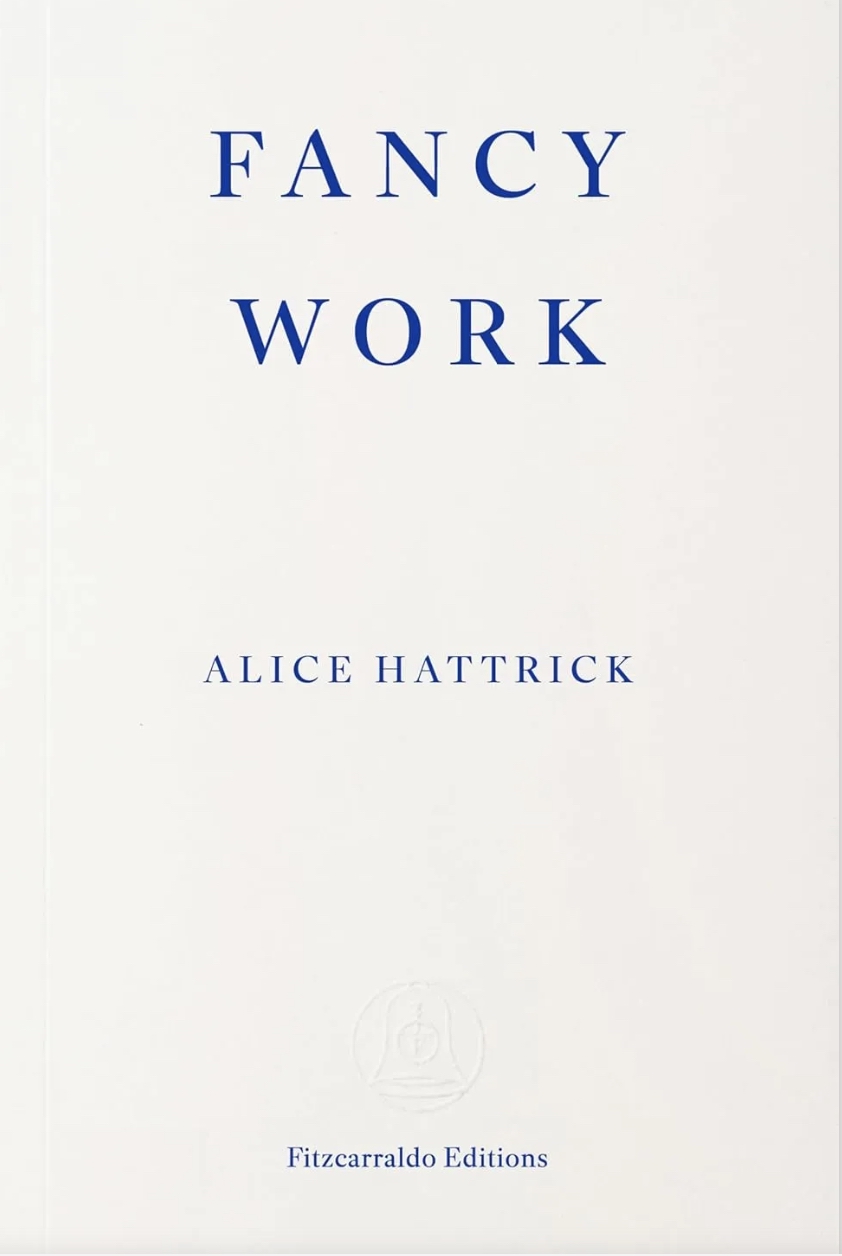
Alice Hattrick, Fancy Work: Unpicking Past Lives, Fitzcarraldo Editions, 2026
The association of embroidery with femininity, with embroidery commonly regarded as a female pursuit throughout history, is what Alice Hattrick calls a ‘deceitful fiction’. Hattrick turns this notion on its head largely through the central figure of May Morris and her gender non-conforming partner of twenty years, MF. Morris was the daughter of William Morris and ran the embroidery department of her father’s design firm, Morris & Co. Through exploring what she could in May’s archive (evidence of queerness often exists ‘outside of normative visibility’), Hattrick explores the place of embroidery in their lives (as well as in her own and in her mother’s), and also in those of others in the book for whom embroidery is a tool of resistance, ‘of complaint, refusal and rage’. Palestinian artist Majd Abdel Hamid’s use of embroidery, Hattrick explains, is a means to both process traumatic experiences and refuse external demands on labour and our attention – ‘unpicking fraying materials to arrive at something hopeful.’
Cristina Rivera Garza
Autobiography of Cotton
From disappearances as much as from traces that linger in archives and in the dusty soil, Cristina Rivera Garza reactivates her family’s story, which is also a history of the post-revolutionary borderlands between Mexico and the US.
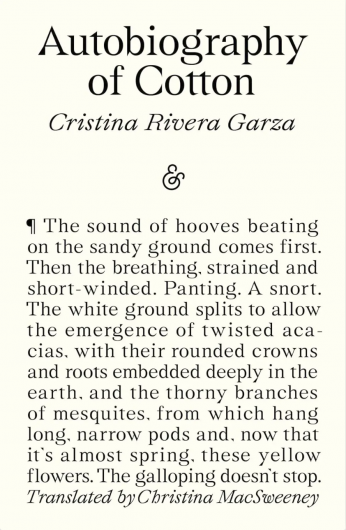
Cristina Rivera Garza, Autobiography of Cotton, (2020), translated by Cristina MacSweeney, And Other Stories, 2026
A book of histories partly speculative, partly gleaned from ‘the fine splinters that travel through time,’ which persist unremarked in ‘the blind spot of power’. From disappearances as much as from traces that linger in archives and in the dusty soil, Cristina Rivera Garza reactivates her family’s story, which is also a history of the post-revolutionary borderlands between Mexico and the US. She finds lives formed by itinerant work, cruel sun and violent floods, piecing together stories of hope, strikes, poverty and displacement, of childbirth and marriage; of cotton. Rivera Garza examines how we remember what history has chosen to forget as she crosses the now depopulated lands in search of the places in which her ancestors had worked.
‘Sometimes a book is a form of return’, Rivera Garza tells us, it is ‘a form of refamiliarization and a reparation. The conversation that starts up again after years of silence.’
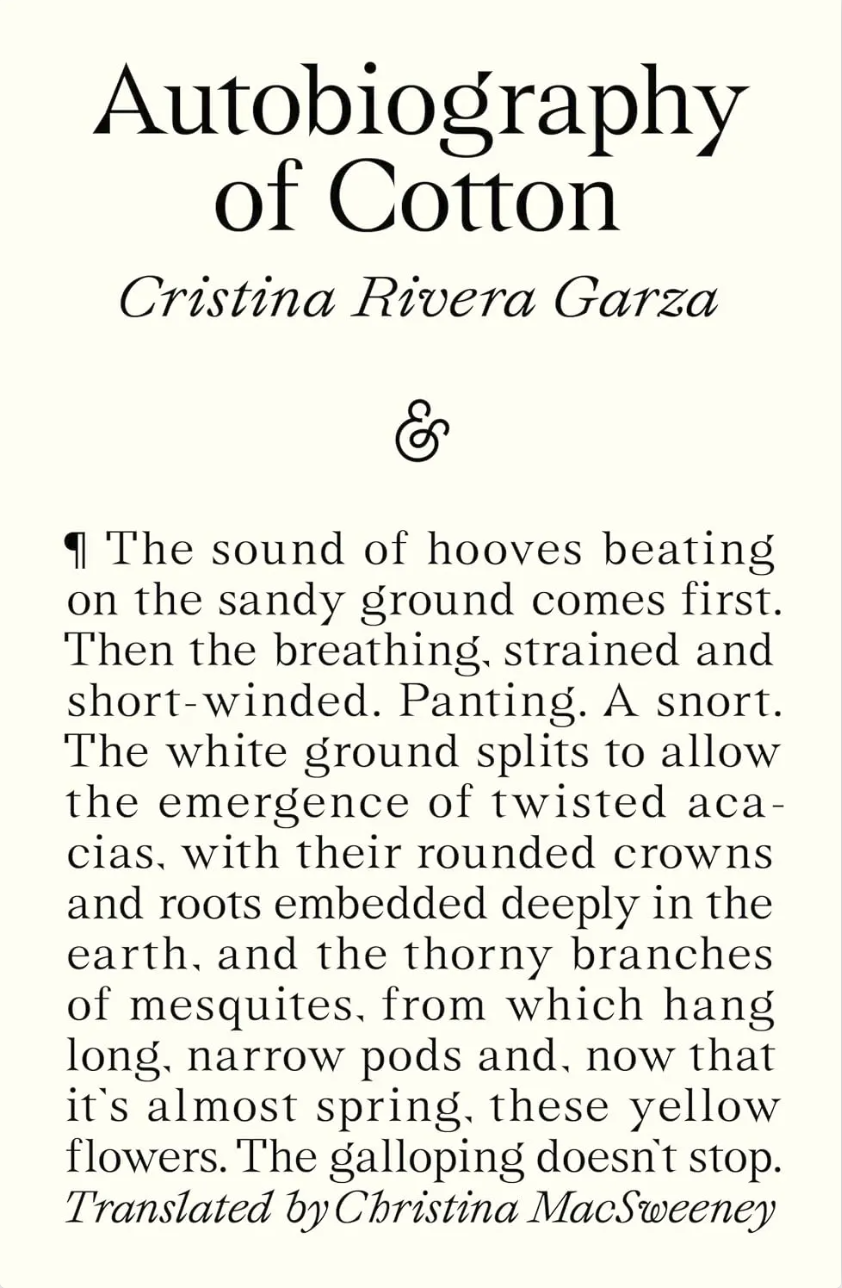
Cristina Rivera Garza, Autobiography of Cotton, (2020), translated by Cristina MacSweeney, And Other Stories, 2026
A book of histories partly speculative, partly gleaned from ‘the fine splinters that travel through time,’ which persist unremarked in ‘the blind spot of power’. From disappearances as much as from traces that linger in archives and in the dusty soil, Cristina Rivera Garza reactivates her family’s story, which is also a history of the post-revolutionary borderlands between Mexico and the US. She finds lives formed by itinerant work, cruel sun and violent floods, piecing together stories of hope, strikes, poverty and displacement, of childbirth and marriage; of cotton. Rivera Garza examines how we remember what history has chosen to forget as she crosses the now depopulated lands in search of the places in which her ancestors had worked.
‘Sometimes a book is a form of return’, Rivera Garza tells us, it is ‘a form of refamiliarization and a reparation. The conversation that starts up again after years of silence.’
Susan Howe
Spontaneous Particulars. The Telepathy of Archives
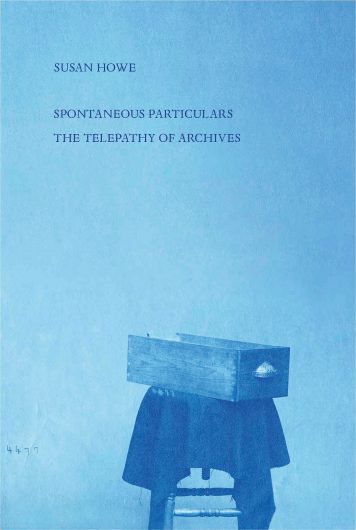
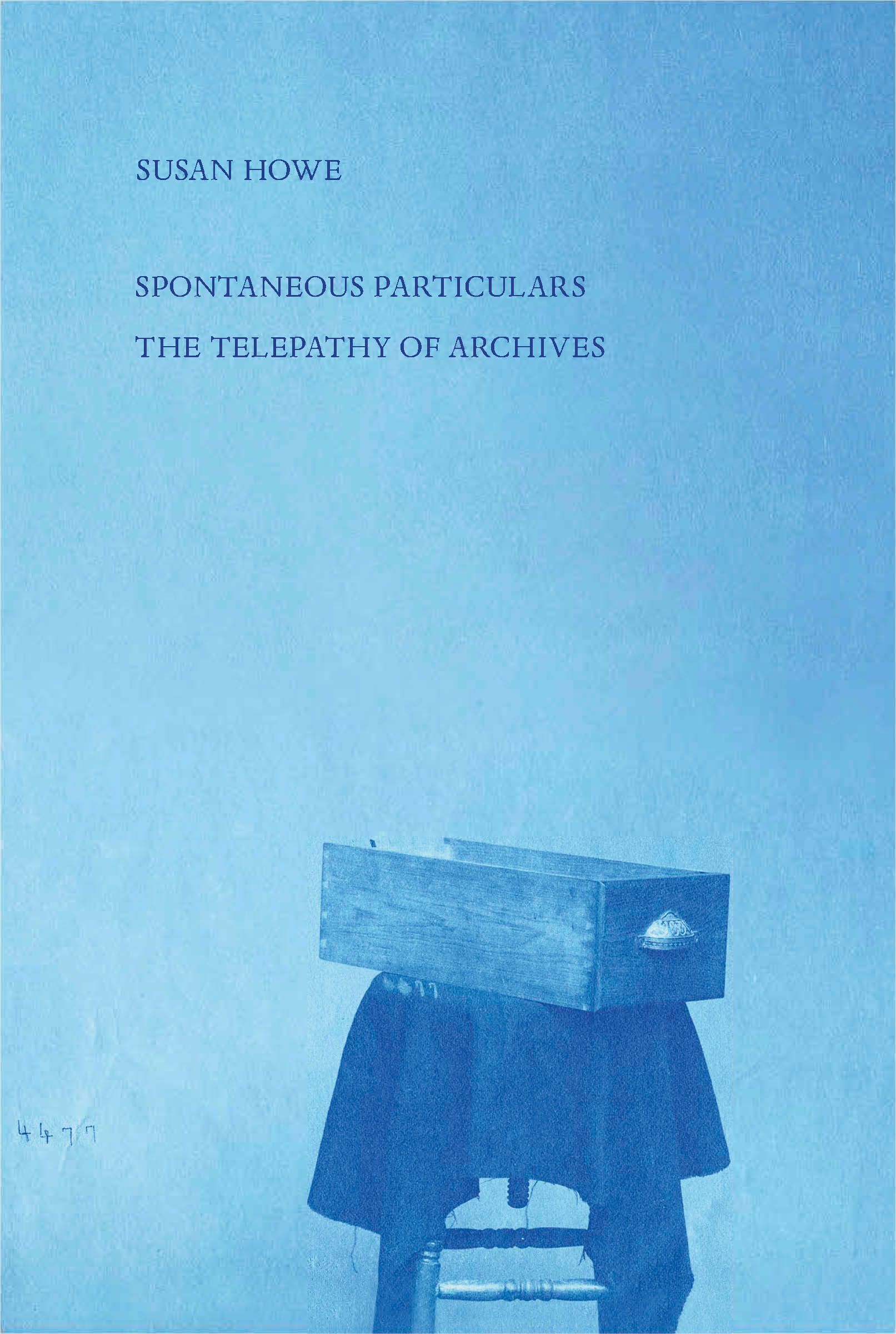
Collaged together as an essay of images, prose, quotations and poetry, Howe brings Emily Dickinson’s envelope poems into conversation with Gertrude Stein, Jonathan Edwards’ family scraps, and William Carlos Williams’ newspaper cuttings.
Susan Howe, Spontaneous Particulars. The Telepathy of Archives, Christine Burgin/New Directions, 2014
Connections emerge, clusters form when working in archives as documents and ‘simple objects’ offer themselves to Susan Howe’s touch. Collaged together as an essay of images, prose, quotations and poetry, Howe brings Emily Dickinson’s envelope poems into conversation with Gertrude Stein, Jonathan Edwards’ family scraps, and William Carlos Williams’ newspaper cuttings. She establishes etymological connections between text and textile, thread, skein and land. She notices how scholarly pursuits intertwine with everyday life, how fabric relates to the page and words connect to a blue scrap of wedding dress, held in Howe’s ‘looking glass hands’.
Susan Howe, Spontaneous Particulars. The Telepathy of Archives, Christine Burgin/New Directions, 2014
Connections emerge, clusters form when working in archives as documents and ‘simple objects’ offer themselves to Susan Howe’s touch. Collaged together as an essay of images, prose, quotations and poetry, Howe brings Emily Dickinson’s envelope poems into conversation with Gertrude Stein, Jonathan Edwards’ family scraps, and William Carlos Williams’ newspaper cuttings. She establishes etymological connections between text and textile, thread, skein and land. She notices how scholarly pursuits intertwine with everyday life, how fabric relates to the page and words connect to a blue scrap of wedding dress, held in Howe’s ‘looking glass hands’.
Emily Dickinson
Envelope Poems
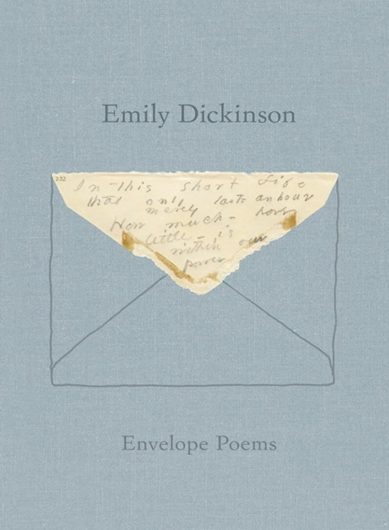
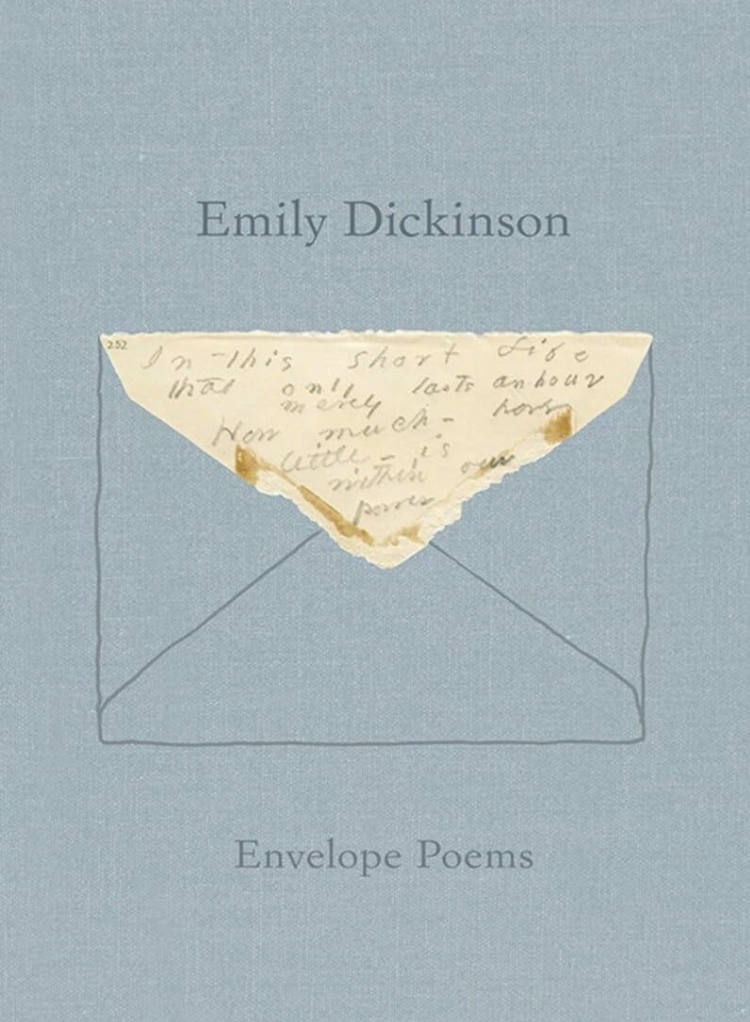
Brief poetic expressions and fragments, written in pencil, fill a torn–off corner, a detached flap, or even the entirety of an opened-out envelope. Edges, folds and glue marks delineate the margins within which Emily Dickinson writes.
Emily Dickinson, Envelope Poems, with transcriptions by Marta L. Werner and Jen Bervin, Christine Burgin/New Directions, 2016
Brief poetic expressions and fragments, written in pencil, fill a torn-off corner, a detached flap, or even the entirety of an opened-out envelope. Edges, folds and glue marks delineate the margins within which Emily Dickinson writes. Reproduced to scale in this edition, we see that the form of each poem is determined by the shape and size of the paper ‘scrap[s]’ on which they are written, to be read as objects in their own right. In the short preface, those scraps are described as ‘a sort of ‘small fabric’, the term is inspired by Dickinson’s words: ‘The North Star is / of small / fabric but it / implies / much / presides / yet’. Although small in scale her envelope poems convey in just a few words a thought which proliferates, reaching far beyond the confines of the paper on which it is written.
Emily Dickinson, Envelope Poems, with transcriptions by Marta L. Werner and Jen Bervin, Christine Burgin/New Directions, 2016
Brief poetic expressions and fragments, written in pencil, fill a torn-off corner, a detached flap, or even the entirety of an opened-out envelope. Edges, folds and glue marks delineate the margins within which Emily Dickinson writes. Reproduced to scale in this edition, we see that the form of each poem is determined by the shape and size of the paper ‘scrap[s]’ on which they are written, to be read as objects in their own right. In the short preface, those scraps are described as ‘a sort of ‘small fabric’, the term is inspired by Dickinson’s words: ‘The North Star is / of small / fabric but it / implies / much / presides / yet’. Although small in scale her envelope poems convey in just a few words a thought which proliferates, reaching far beyond the confines of the paper on which it is written.
Robert Walser
Microscripts
Walser’s miniscule, compact and seemingly illegible script often takes up only a fraction of the slips and scraps of paper he is writing on. The empty areas appear to be left open for future reflections, other possibilities. These thought–fragments comprise Robert Walser’s last works written in a small room in a Swiss sanatorium
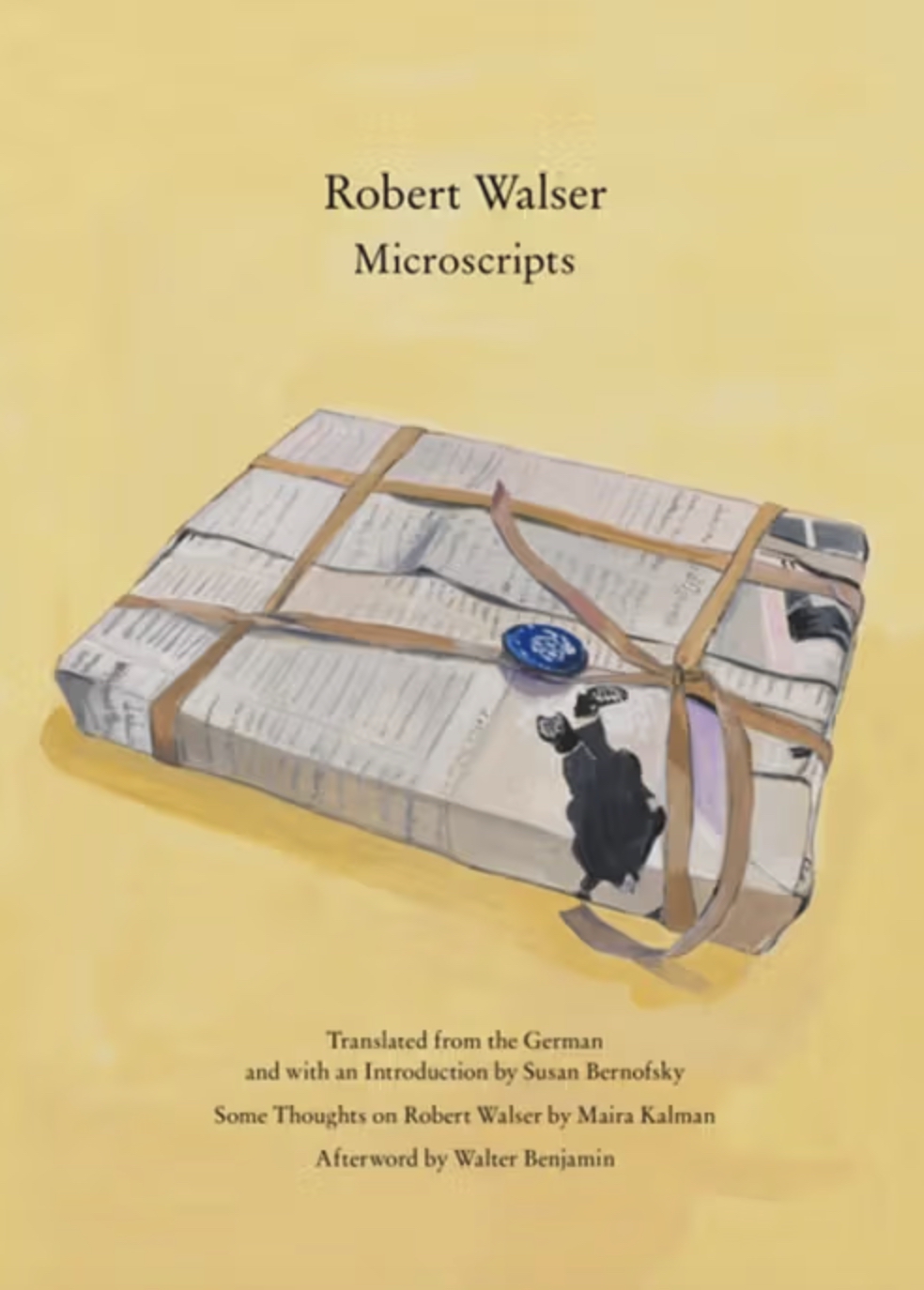
Robert Walser, Microscripts, translated and introduced by Susan Bernofsky, with an essay by Walter Benjamin and a response by Maria Kalman, New Directions/Christine Burgin, 2010
In Microscripts, Walser’s miniscule, compact and seemingly illegible script often takes up only a fraction of the slips and scraps of paper he is writing on. The empty areas appear to be left open for future reflections, other possibilities. These thought-fragments comprise Robert Walser’s last works written in a small room in a Swiss sanatorium. Using a postcard, the back of an envelope or a business card perhaps offered him moments of writerly liberation in which memory and imagination could roam free from the fear of an A4 blank sheet of paper. Walser describes these writerly interludes as pencil sketches, recounting how by taking a less formal approach he is able to counter the difficulties he faced when committing thought to paper and find joy in the process. He tells us that in this way he can ‘work more dreamily, peacefully, cozily, contemplatively’, bringing the possibility of a ‘peculiar form of happiness.’
Robert Walser, Microscripts, translated and introduced by Susan Bernofsky, with an essay by Walter Benjamin and a response by Maria Kalman, New Directions/Christine Burgin, 2010
In Microscripts, Walser’s miniscule, compact and seemingly illegible script often takes up only a fraction of the slips and scraps of paper he is writing on. The empty areas appear to be left open for future reflections, other possibilities. These thought-fragments comprise Robert Walser’s last works written in a small room in a Swiss sanatorium. Using a postcard, the back of an envelope or a business card perhaps offered him moments of writerly liberation in which memory and imagination could roam free from the fear of an A4 blank sheet of paper. Walser describes these writerly interludes as pencil sketches, recounting how by taking a less formal approach he is able to counter the difficulties he faced when committing thought to paper and find joy in the process. He tells us that in this way he can ‘work more dreamily, peacefully, cozily, contemplatively’, bringing the possibility of a ‘peculiar form of happiness.’
Herta Müller
Father’s on the Phone with the Flies
Single words or parts of words cut out from newspapers and magazines are re-formed as colourful collaged image-text fragments on the page. Dislocated both visually and in poetic tone, surreal and sometimes absurd, they convey in word and form Herta Müller’s complex family history and life in Romania during Ceaușescu’s rule.
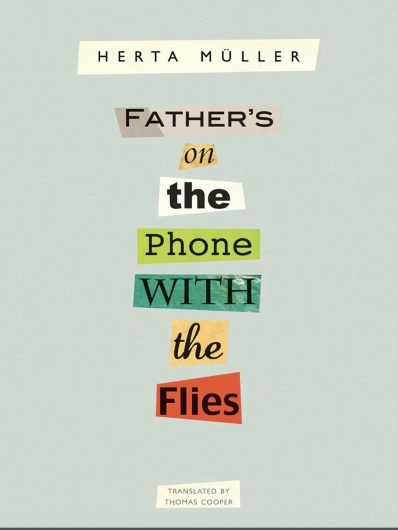
Herta Müller, Father’s on the Phone with the Flies, (2012), translated by Thomas Cooper, Seagull Books, 2018
Single words or parts of words cut out from newspapers and magazines are re-formed as colourful collaged image-text fragments on the page. Dislocated both visually and in poetic tone, surreal and sometimes absurd, they convey in word and form Herta Müller’s complex family history and life in Romania during Nicolae Ceaușescu’s rule. Each brief, at times surreal composition also reads as a kind of counter action against the ways in which words were gathered during state surveillance or interrogations— Müller was subjected to both. The darkly humorous, playful qualities of certain pieces counteract the Ceaușescu regime’s use of words to categorise and to destroy.
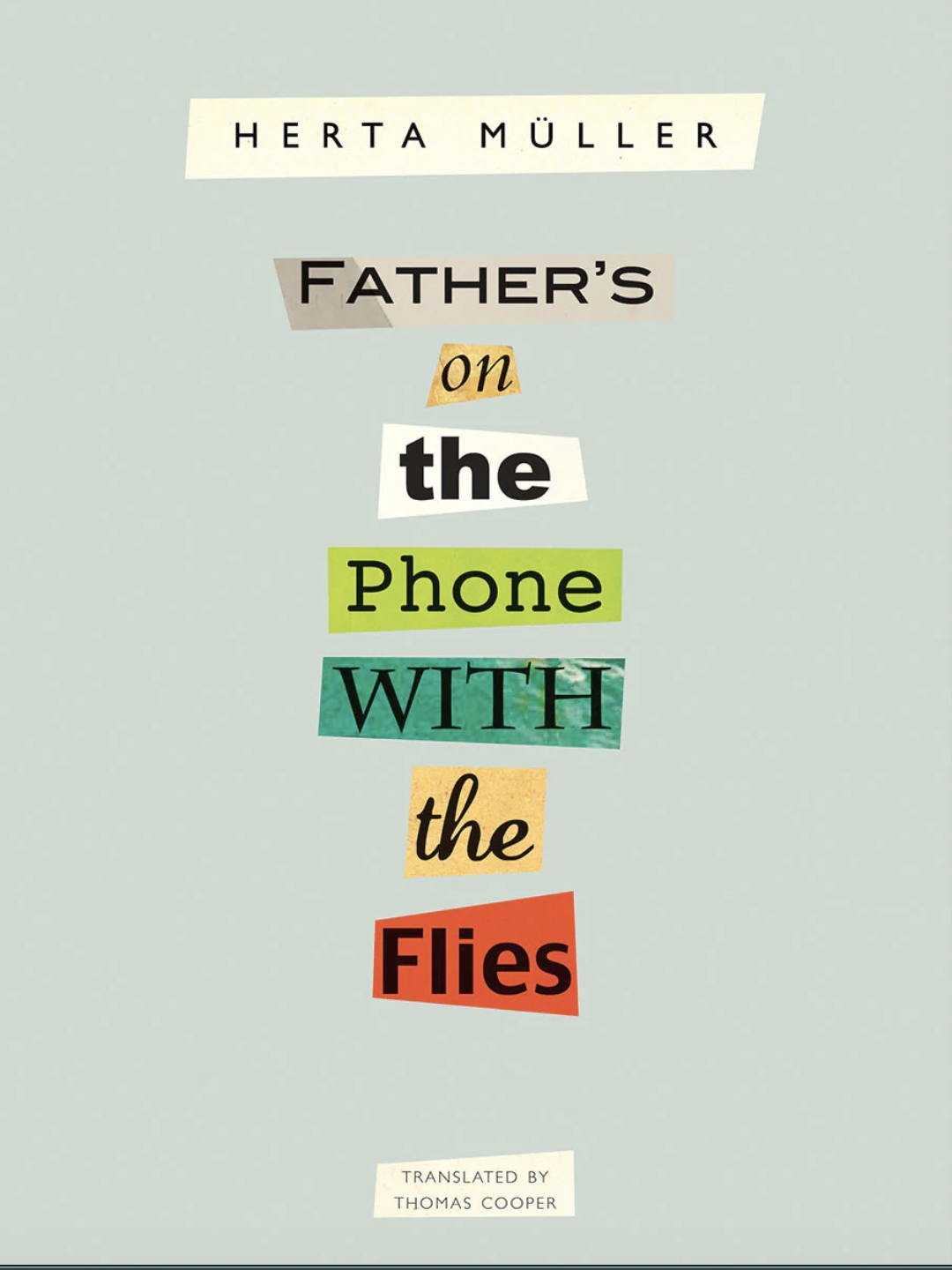
Herta Müller, Father’s on the Phone with the Flies, (2012), translated by Thomas Cooper, Seagull Books, 2018
Single words or parts of words cut out from newspapers and magazines are re-formed as colourful collaged image-text fragments on the page. Dislocated both visually and in poetic tone, surreal and sometimes absurd, they convey in word and form Herta Müller’s complex family history and life in Romania during Nicolae Ceaușescu’s rule. Each brief, at times surreal composition also reads as a kind of counter action against the ways in which words were gathered during state surveillance or interrogations— Müller was subjected to both. The darkly humorous, playful qualities of certain pieces counteract the Ceaușescu regime’s use of words to categorise and to destroy.
Pramoedya Ananta Toer
This Earth of Mankind
‘During mass executions of political prisoners in the isolation cell I told the stories to my friends. During official ceremonies, my fellow isolated friends told the stories to other friends who were not being isolated, and that’s how they were spread.’ It was not until his release from the notorious Buru Island prison that Pramoedya Ananta Toer committed these stories to paper.

Pramoedya Ananta Toer, This Earth of Mankind, (1982), translated and with an afterword by Max Lane, Penguin Classics, 1997
‘For a long time, I was not permitted to write, so I had to do it orally […] During mass executions of political prisoners in the isolation cell I told the stories to my friends. During official ceremonies, my fellow isolated friends told the stories to other friends who were not being isolated, and that’s how they were spread.’ It was not until his release from the notorious Buru Island prison that Pramoedya Ananta Toer committed these stories to paper and although published worldwide, it was not until 2005 that the sanction was lifted, and they were finally available in his native Indonesia. This first novel in the Buru Quartet tells of Minke, a gifted Javanese student and journalist, his love for the beautiful Indo-European Annelies, his travails against the repressive Dutch colonial system and his political awakening.

Pramoedya Ananta Toer, This Earth of Mankind, (1982), translated and with an afterword by Max Lane, Penguin Classics, 1997
‘For a long time, I was not permitted to write, so I had to do it orally […] During mass executions of political prisoners in the isolation cell I told the stories to my friends. During official ceremonies, my fellow isolated friends told the stories to other friends who were not being isolated, and that’s how they were spread.’ It was not until his release from the notorious Buru Island prison that Pramoedya Ananta Toer committed these stories to paper and although published worldwide, it was not until 2005 that the sanction was lifted, and they were finally available in his native Indonesia. This first novel in the Buru Quartet tells of Minke, a gifted Javanese student and journalist, his love for the beautiful Indo-European Annelies, his travails against the repressive Dutch colonial system and his political awakening.
Adania Shibli
Touch
Each brief word-image world that Shibli creates on the page offers a glimpse of the inner life of a young girl trying to make sense of what she sees and hears; a young girl trying to understand in the sudden silences of the house and her own self-imposed muteness.
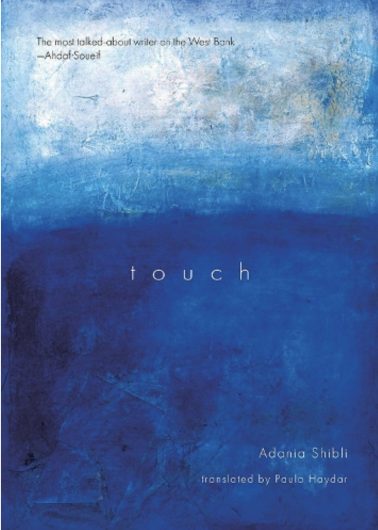
Adania Shibli, Touch, translated by Paula Haydar, Clockroot Books, 2010
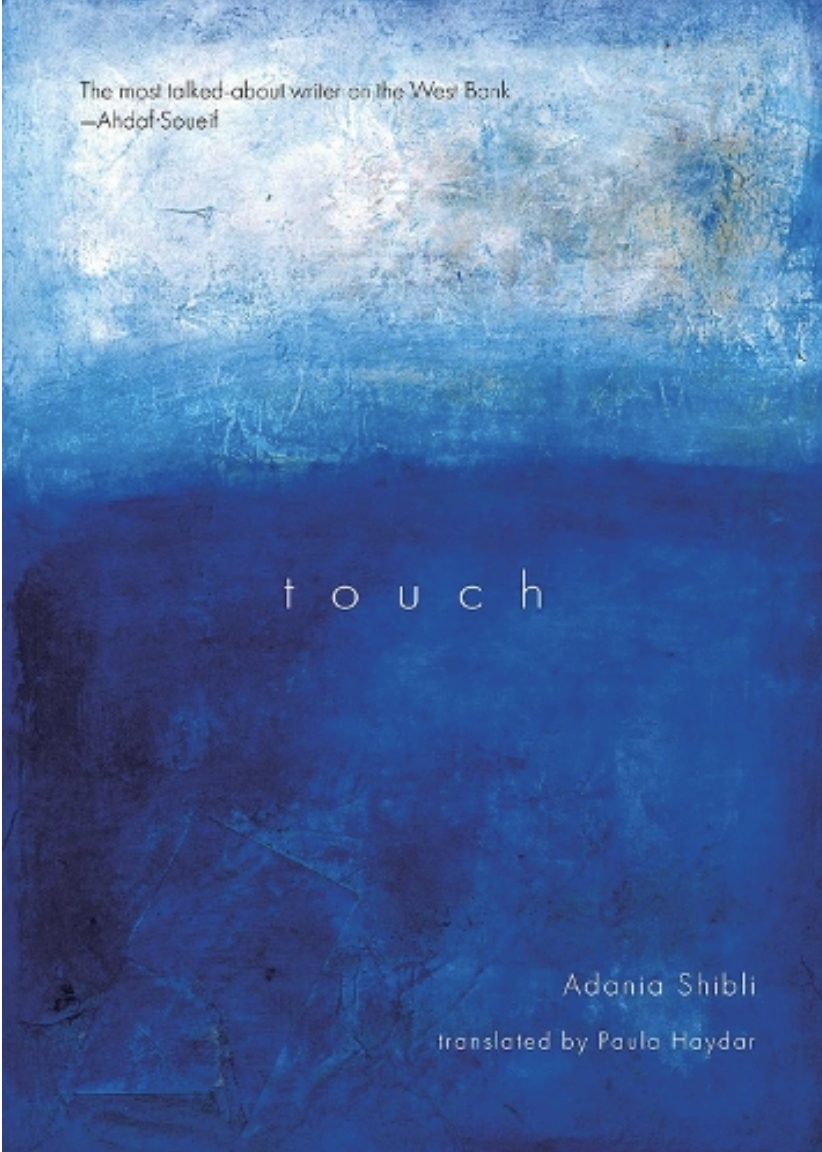
A hole in her blue trousers; almond blossom petals; the sound of her mother’s hand searching in a drawer; the number of floor tiles a dead body occupies; her father’s cigarette smoke; kissing a boy in a hayfield. Each stark instant builds, forming a fissured ever-expanding picture like the spot of rust that the girl observes which ‘grew and grew until it took over the whole’ water tank. Each brief word-image world that Shibli creates on the page offers a glimpse of the inner life of a young girl trying to make sense of what she sees and hears; a young girl trying to understand in the sudden silences of the house and her own self-imposed muteness, the connections between hearing the words Sabra and Shatila, her mother’s weeping, and a house filled with secrets.
Adania Shibli, Touch, translated by Paula Haydar, Clockroot Books, 2010
A hole in her blue trousers; almond blossom petals; the sound of her mother’s hand searching in a drawer; the number of floor tiles a dead body occupies; her father’s cigarette smoke; kissing a boy in a hayfield. Each stark instant builds, forming a fissured ever-expanding picture like the spot of rust that the girl observes which ‘grew and grew until it took over the whole’ water tank. Each brief word-image world that Shibli creates on the page offers a glimpse of the inner life of a young girl trying to make sense of what she sees and hears; a young girl trying to understand in the sudden silences of the house and her own self-imposed muteness, the connections between hearing the words Sabra and Shatila, her mother’s weeping, and a house filled with secrets.
For younger readers
Ian Serraillier
The Silver Sword
With information gleaned from photographs and newspaper articles describing the plight of Europe’s children in the aftermath of the Second Word War, Ian Serraillier constructs a gripping adventure story that tells of the survival of three siblings and a boy named Jan.
Ian Serraillier, The Silver Sword, Puffin, 2015
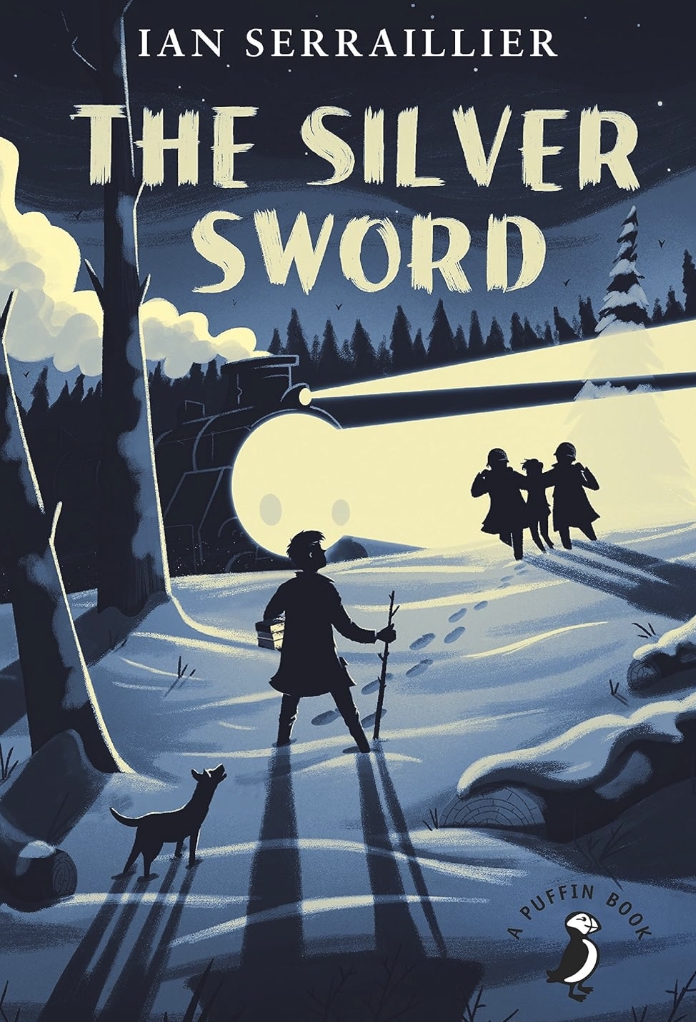
With information gleaned from photographs and newspaper articles describing the plight of Europe’s children in the aftermath of the Second Word War, Ian Serraillier constructs a gripping adventure story that tells of the survival of three siblings and a boy named Jan. The story opens as Warsaw falls to the Nazi’s, following which the mother and father are arrested leaving the three children to fend for themselves in the ruins. There they meet Jan, a boy who carries a box of treasures with him wherever he goes. Inside this box is a silver paper knife shaped like a sword, given to him by a stranger. This stranger is the children’s father, the treasured silver sword, the last surviving remnant of their home. As they travel through the ruins of Europe, this small object becomes their talisman of hope over adversity.
Ian Serraillier, The Silver Sword, Puffin, 2015
With information gleaned from photographs and newspaper articles describing the plight of Europe’s children in the aftermath of the Second Word War, Ian Serraillier constructs a gripping adventure story that tells of the survival of three siblings and a boy named Jan. The story opens as Warsaw falls to the Nazi’s, following which the mother and father are arrested leaving the three children to fend for themselves in the ruins. There they meet Jan, a boy who carries a box of treasures with him wherever he goes. Inside this box is a silver paper knife shaped like a sword, given to him by a stranger. This stranger is the children’s father, the treasured silver sword, the last surviving remnant of their home. As they travel through the ruins of Europe, this small object becomes their talisman of hope over adversity.
Mourid Barghouti
I Saw Ramallah
After thirty years of exile from Palestine, Mourid Barghouti crosses the border into his homeland, carrying a small bag, the burden of absence and most portable of all, his memories.
Mourid Barghouti, I Saw Ramallah, (1997), translated by Ahdaf Soueif, with a foreword by Edward W. Said, Daunt Books, 2024
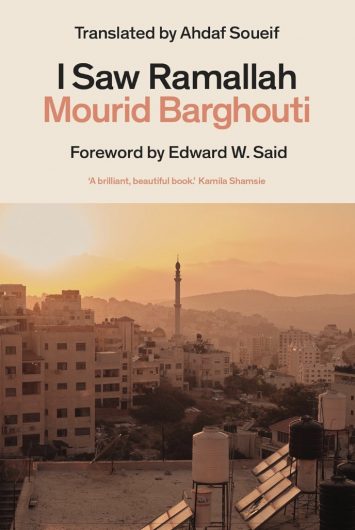
After thirty years of exile from Palestine, Mourid Barghouti crosses the border into his homeland, carrying a small bag, the burden of absence and most portable of all, his memories. What is it for Barghouti to return and on returning to weigh memory with reality when memory rather than place or possessions has been the reliable constant during his transitory adult life? This measured account reveals the magnitude of the politic in the small moments of family life, where the domestic is inextricable from the occupation, where the lives of those who remain is veined with absence, dislocation and loss. His longed-for return, Barghouti tells us, required courage: ‘I managed to stand in front of my days. I made my days stand in front of me. I touched particular details for no reason and neglected others, also for no reason. I chatted an entire lifetime to myself while my guests thought I was silent.’

Mourid Barghouti, I Saw Ramallah, (1997), translated by Ahdaf Soueif, with a foreword by Edward W. Said, Daunt Books, 2024
After thirty years of exile from Palestine, Mourid Barghouti crosses the border into his homeland, carrying a small bag, the burden of absence and most portable of all, his memories. What is it for Barghouti to return and on returning to weigh memory with reality when memory rather than place or possessions has been the reliable constant during his transitory adult life? This measured account reveals the magnitude of the politic in the small moments of family life, where the domestic is inextricable from the occupation, where the lives of those who remain is veined with absence, dislocation and loss. His longed-for return, Barghouti tells us, required courage: ‘I managed to stand in front of my days. I made my days stand in front of me. I touched particular details for no reason and neglected others, also for no reason. I chatted an entire lifetime to myself while my guests thought I was silent.’
Katarína Kucbelová
The Bonnet
‘Stitching makes us fall silent. That rhythm particular to working together. The unexpected moment of immersion that feels quite natural to both of us.’ And so Katarína Kucbelová sits with Ilka learning to make a traditional Šumiac bonnet.
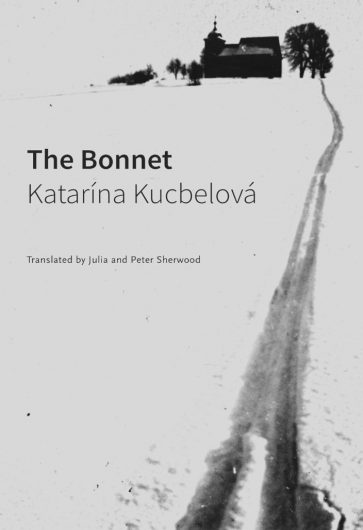
Katarína Kucbelová, The Bonnet (2019), translated by Julia and Peter Sherwood, Seagull Books, 2024
‘Stitching makes us fall silent. That rhythm particular to working together. The unexpected moment of immersion that feels quite natural to both of us.’ And so Katarína Kucbelová sits with Ilka learning to make a traditional Šumiac bonnet. As Kucbelová struggles to master the different techniques required, she examines her own notions of the traditional against the realities of the folk costumes still worn as everyday apparel by village elders. Shaped by the forces of history these elder women have embraced nylon lace and synthetic dyes, their clothing far removed from the romantic ideal Kucbelová seeks. Pricking out the required embroidery patterns, Ilka speaks about her life recalling brief moments from the past which are interspersed with her current daily realities. And as she splits the threads to embroider, Kucbelovárealises that by learning from Ilka she is also seeking to understand something of her own unspoken family history.
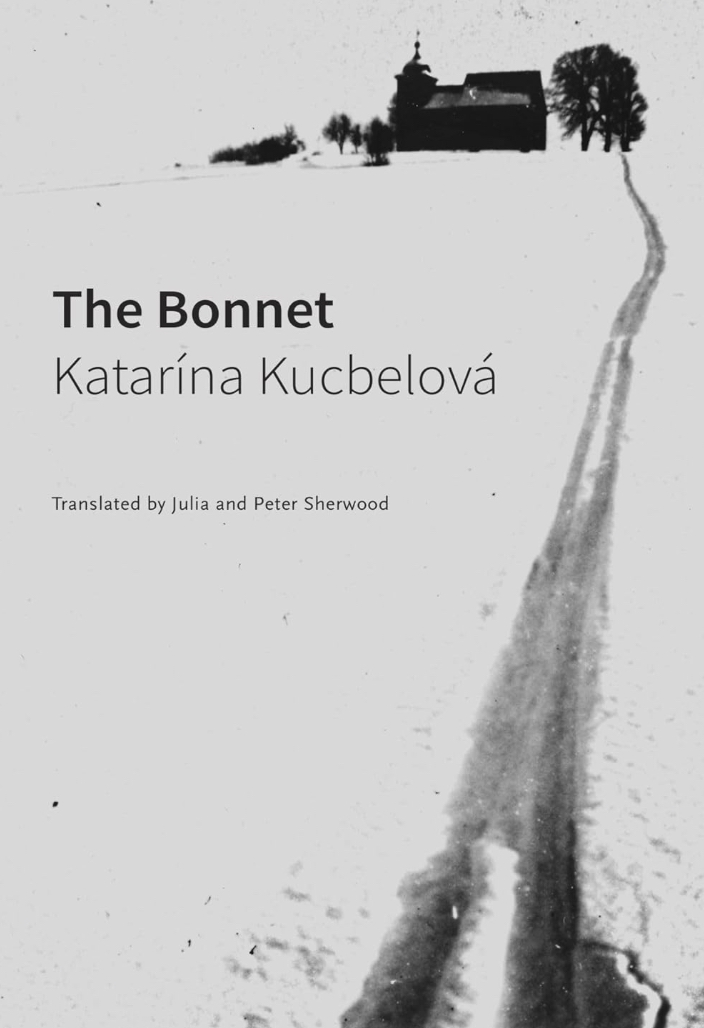
Katarína Kucbelová, The Bonnet (2019), translated by Julia and Peter Sherwood, Seagull Books, 2024
‘Stitching makes us fall silent. That rhythm particular to working together. The unexpected moment of immersion that feels quite natural to both of us.’ And so Katarína Kucbelová sits with Ilka learning to make a traditional Šumiac bonnet. As Kucbelová struggles to master the different techniques required, she examines her own notions of the traditional against the realities of the folk costumes still worn as everyday apparel by village elders. Shaped by the forces of history these elder women have embraced nylon lace and synthetic dyes, their clothing far removed from the romantic ideal Kucbelová seeks. Pricking out the required embroidery patterns, Ilka speaks about her life recalling brief moments from the past which are interspersed with her current daily realities. And as she splits the threads to embroider, Kucbelovárealises that by learning from Ilka she is also seeking to understand something of her own unspoken family history.
Najla Jraissaty Khoury
Pearls on a Branch. Oral Tales
During the fifteen-year civil war in Lebanon, Najla Jraissaty Khoury toured her company to theatres and make-shift spaces across the country.
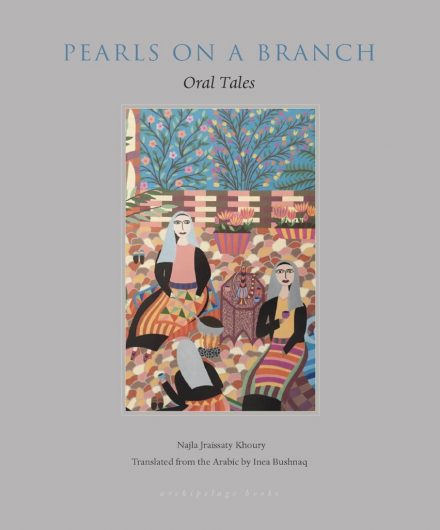
Najla Jraissaty Khoury, Pearls on a Branch. Oral Tales, (2013), translated by Inea Bushnaq, Archipelago Books, 2018
During the fifteen-year civil war in Lebanon, Najla Jraissaty Khoury toured her company to theatres and make-shift spaces across the country. The plays they performed were based upon folk tales Khoury gathered mostly from older women who relayed the deeds of the modest and the powerful, the cunning and the innocent, animal guile and human fallibility. Retold by actors and marionettes or shadow puppets during blackouts, these stories which have been carried across borders, through wars and enforced displacement over centuries of conflict,were passed down through generations of women. Often opening with an epigrammatic statement, they offered audiences and now us the readers an escape from daily reality into the realms of imagination.
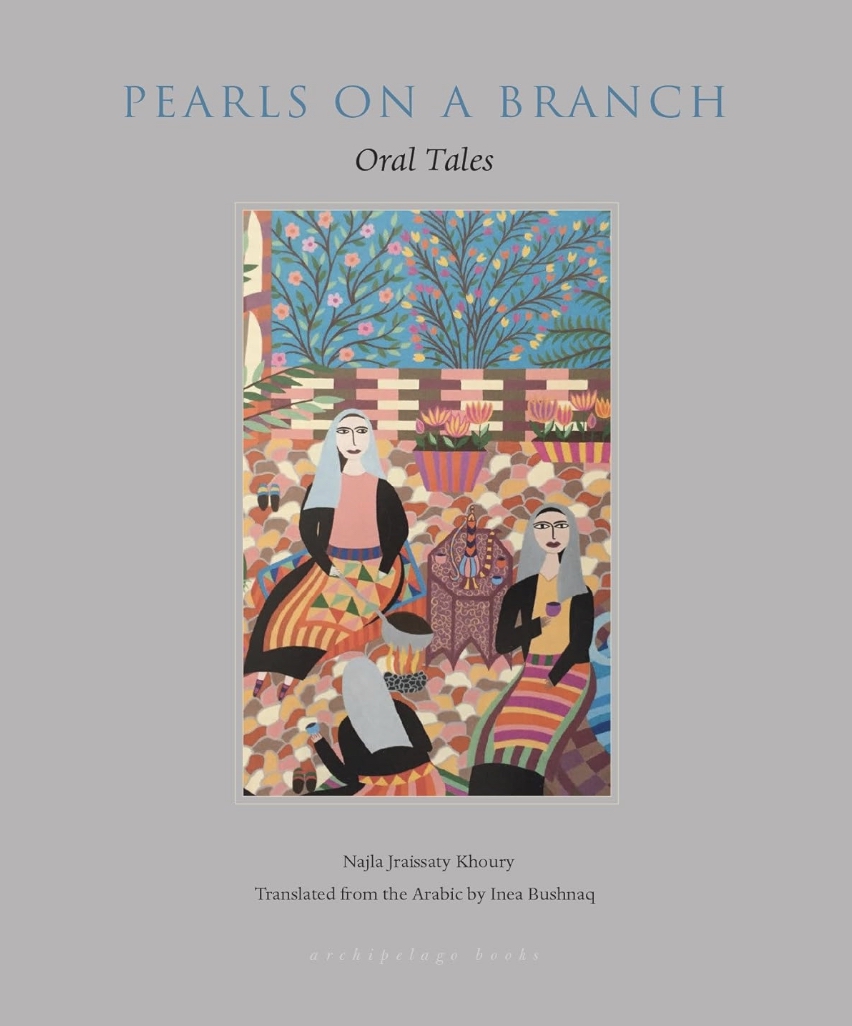
Najla Jraissaty Khoury, Pearls on a Branch. Oral Tales, (2013), translated by Inea Bushnaq, Archipelago Books, 2018
During the fifteen-year civil war in Lebanon, Najla Jraissaty Khoury toured her company to theatres and make-shift spaces across the country. The plays they performed were based upon folk tales Khoury gathered mostly from older women who relayed the deeds of the modest and the powerful, the cunning and the innocent, animal guile and human fallibility. Retold by actors and marionettes or shadow puppets during blackouts, these stories which have been carried across borders, through wars and enforced displacement over centuries of conflict,were passed down through generations of women. Often opening with an epigrammatic statement, they offered audiences and now us the readers an escape from daily reality into the realms of imagination.
Anne Truitt
Daybook: The Journal of an Artist
Daybook documents Truitt’s daily life, shifting between studio concerns and family commitments as she attempts to balance her identities as an artist and mother.
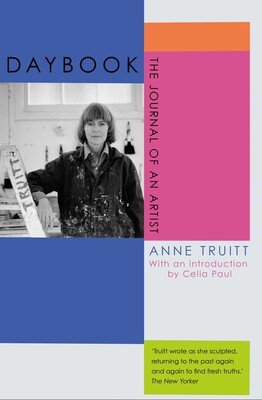
Anne Truitt, Daybook: The Journal of an Artist, Scribner UK, 2023, originally published 1982 by Pantheon Books
American artist Anne Truitt began keeping a journal in 1974 at age 53, after a retrospective of her work took place at the Whitney Museum in New York and at the Corcoran Gallery of Art in Washington DC. Covering a period of about 18 months and published eventually in 1982, Daybook documents Truitt’s daily life, shifting between studio concerns and family commitments as she attempts to balance her identities as an artist and mother. Writing every morning, sometimes whilst in bed, Truitt seeks to reconcile the abstraction she pursued throughout her long career with her life experiences – which she believed were ‘the ground out of which art grows.’
‘The terms of the experience and the terms of the work itself are totally different. But if the work is successful— I cannot ever know whether it is or not – the experience becomes the work and, through the work, is accessible to others with its original force.’
Daybook was followed by three more volumes: Turn (1986), Prospect (1996) and Yield (2022).
Anne Truitt, Daybook: The Journal of an Artist, Scribner UK, 2023, originally published 1982 by Pantheon Books.
American artist Anne Truitt began keeping a journal in 1974 at age 53, after a retrospective of her work took place at the Whitney Museum in New York and at the Corcoran Gallery of Art in Washington DC. Covering a period of about 18 months and published eventually in 1982, Daybook documents Truitt’s daily life, shifting between studio concerns and family commitments as she attempts to balance her identities as an artist and mother. Writing every morning, sometimes whilst in bed, Truitt seeks to reconcile the abstraction she pursued throughout her long career with her life experiences – which she believed were ‘the ground out of which art grows.’
‘The terms of the experience and the terms of the work itself are totally different. But if the work is successful— I cannot ever know whether it is or not – the experience becomes the work and, through the work, is accessible to others with its original force.’
Daybook was followed by three more volumes: Turn (1986), Prospect (1996) and Yield (2022).
George Orwell
The Orwell Diaries
Daily domestic happenings, travels, wartime and his own health crises are recorded in notebooks mostly small enough to fit into a pocket.
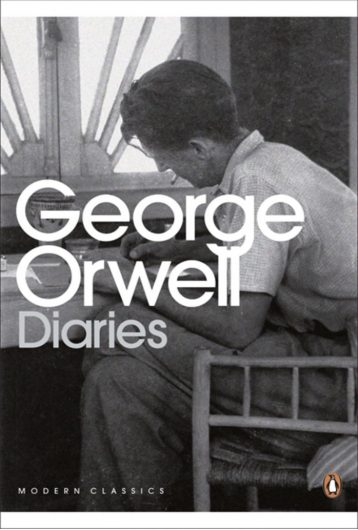
George Orwell, ed Peter Davison, The Orwell Diaries, Penguin, 2010
Daily domestic happenings, travels, wartime and his own health crises are recorded in notebooks mostly small enough to fit into a pocket. One accompanied George Orwell during his tramping summer in the Kent hop fields, another around the industrial North and a third in Marrakech. Orwell used other notebooks to record the minutiae of daily domestic life in his Suffolk and Jura homes where he is revealed to have been a dedicated smallholder and observer of nature. With an eye to publication, Orwell also charts the lead up to, and the first years of the Second World War. Entries in one notebook are interspersed with the small matters of daily life: ‘4.7.39. Fighting reported on Manchukuo Mongolian border’ or ‘5.7.39. Hot. A short shower in the evening.’ While the diaries show Orwell to have been an inveterate note-maker, after his The Road to Wigan Pier notebook, he gives little away about his feelings, only recording aspects of his personal life in occasional sparse sentences.
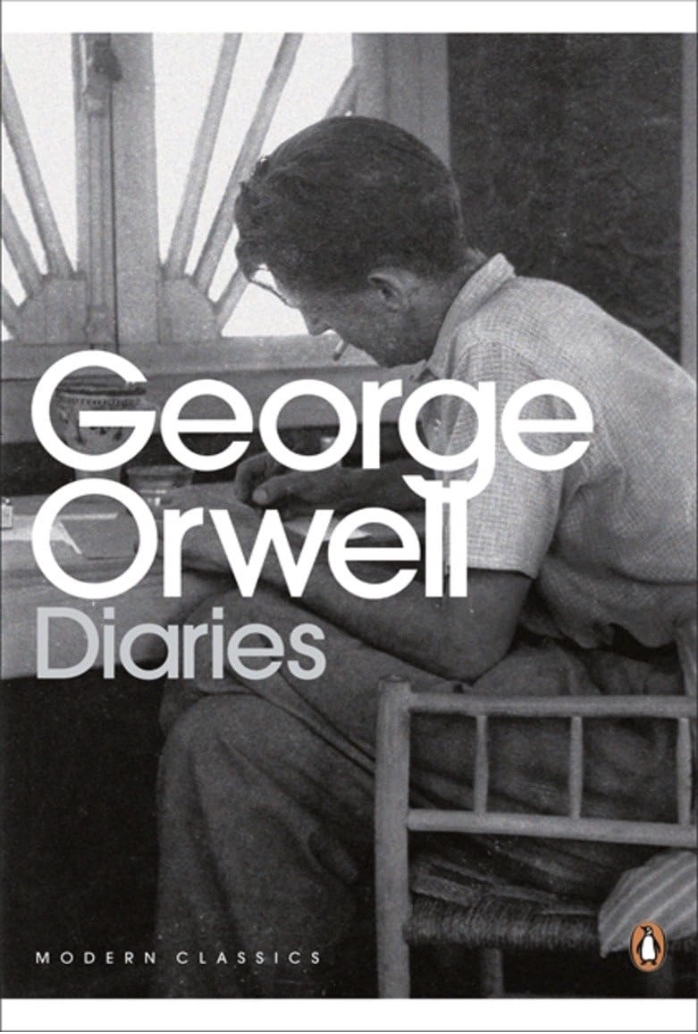
George Orwell, ed Peter Davison, The Orwell Diaries, Penguin, 2010
Daily domestic happenings, travels, wartime and his own health crises are recorded in notebooks mostly small enough to fit into a pocket. One accompanied George Orwell during his tramping summer in the Kent hop fields, another around the industrial North and a third in Marrakech. Orwell used other notebooks to record the minutiae of daily domestic life in his Suffolk and Jura homes where he is revealed to have been a dedicated smallholder and observer of nature. With an eye to publication, Orwell also charts the lead up to, and the first years of the Second World War. Entries in one notebook are interspersed with the small matters of daily life: ‘4.7.39. Fighting reported on Manchukuo Mongolian border’ or ‘5.7.39. Hot. A short shower in the evening.’ While the diaries show Orwell to have been an inveterate note-maker, after his The Road to Wigan Pier notebook, he gives little away about his feelings, only recording aspects of his personal life in occasional sparse sentences.
Andreas Eschbach
The Hair Carpet Weavers
Knotting, cutting, and looping is the daily work of the head of each household who weaves their wives’ and daughters’ hair into a single magnificent carpet.
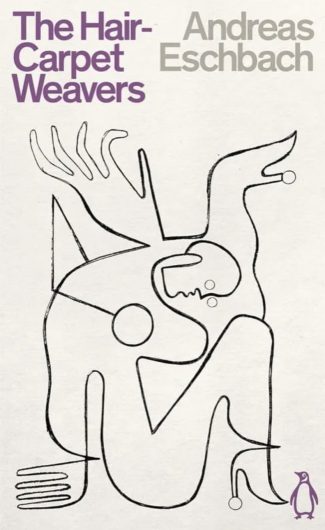
Andreas Eschbach, The Hair Carpet Weavers, (1995), translated by Doryl Jenson, Penguin Classics, 2005
Knotting, cutting, and looping is the daily work of the head of each household who weaves their wives’ and daughters’ hair into a single magnificent carpet. When finally cut from the frame at the end of the weaver’s working life, the carpet is sent from Gheera to adorn the all-seeing Emperor’s palace on a distant galaxy. Told initially from the viewpoints of different professions, a picture of a stable if autocratic society emerges, whose economy is organised around the hair carpet trade. The story then shifts to other galaxies, offering different perspectives across distance and time to that which the Gheereans have of themselves. And so, Eschbach intertwines the age-old universal craft of weaving with science fiction, questioning notions of loyalty, faith and doubt, the importance of memory and how beliefs shape our lives.
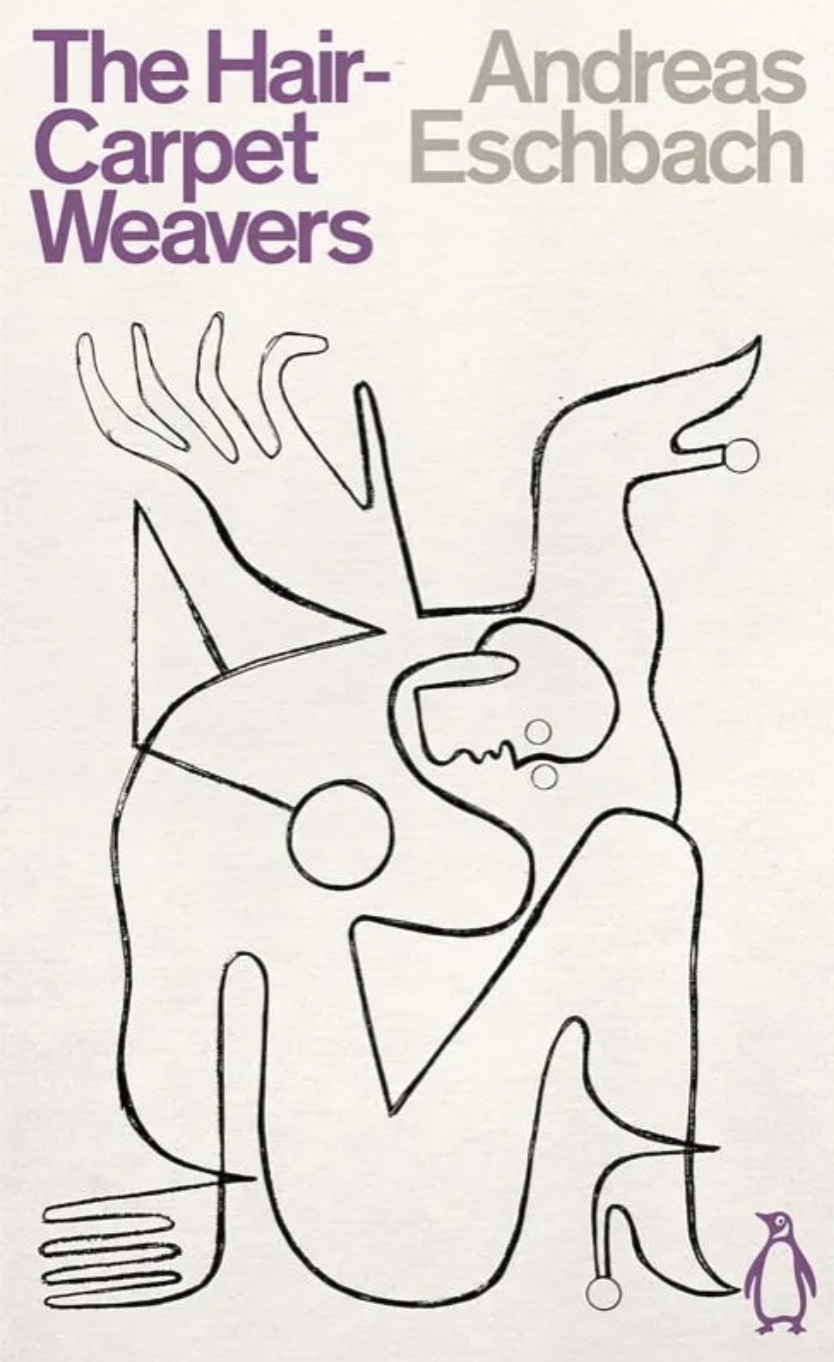
Andreas Eschbach, The Hair Carpet Weavers, (1995), translated by Doryl Jenson, Penguin Classics, 2005
Knotting, cutting, and looping is the daily work of the head of each household who weaves their wives’ and daughters’ hair into a single magnificent carpet. When finally cut from the frame at the end of the weaver’s working life, the carpet is sent from Gheera to adorn the all-seeing Emperor’s palace on a distant galaxy. Told initially from the viewpoints of different professions, a picture of a stable if autocratic society emerges, whose economy is organised around the hair carpet trade. The story then shifts to other galaxies, offering different perspectives across distance and time to that which the Gheereans have of themselves. And so, Eschbach intertwines the age-old universal craft of weaving with science fiction, questioning notions of loyalty, faith and doubt, the importance of memory and how beliefs shape our lives.