

Autumn 2026
The unbound world
Porosity
Biomorphism
Wonder
Luminosity
Transference
Duality
Copies of all the books included in our summer 15 Reads are available to browse at CAMPLE LINE or to borrow through Dumfries and Galloway Libraries
These new 15 Reads explore seven concepts inspired by our current exhibition, Aimée Parrott’s The green fuse drives the flower. At the core of this list of reads is a sense of wonder in the unbound world in all its guises. This is not a romanticised wonder but rather an acknowledgement of the beauty and the strangeness of the world when we are closely attuned or attentive to it.
Conditions or categories that we often take to be separate or even oppositional—myth and daily life; human, animal and nonhuman; harsh reality and transcendent experience—are revealed in some of these reads to be porous and entangled. In other reads, we encounter dual or parallel experiences across generations, practices and territories—of place, displacement and childhood—leading to a fundamental recognition between beings, of one in the other.
As always, these reads are informed by our commitment to women’s voices, writing from marginalised communities, authors in translation and independent publishers. During this national year of reading, this list also celebrates world classics.
Jean Giono
The Serpent of Stars
The shepherd arrives with the moon, joining Jean Giono and a potter called Césaire Escoffier with hands like ‘gnarled tree roots.’ There in the elemental landscape of Provence with its ‘slow pulsing granite’, ‘ferocious burning sun’, ‘cooling grass’ and ‘air flat as a knife’, Giono listens to the shepherd’s life story.
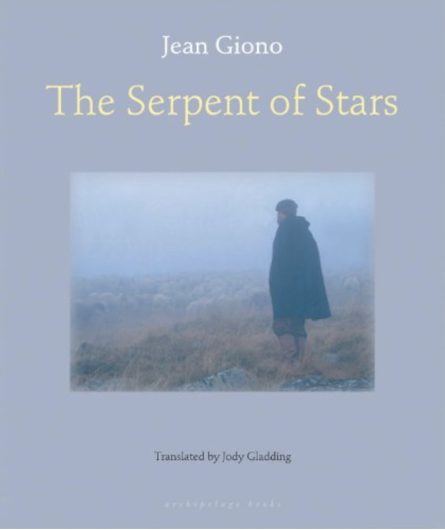
Jean Giono, The Serpent of Stars, (1933), translated from French by Jody Gladding, Archipelago Books, 2026
The shepherd arrives with the moon, joining Jean Giono and a potter called Césaire Escoffier with hands like ‘gnarled tree roots.’ There in the elemental landscape of Provence with its ‘slow pulsing granite’, ‘ferocious burning sun’, ‘cooling grass’ and ‘air flat as a knife’, Giono listens to the shepherd’s life story. The narrative then shifts to an annual gathering of shepherds and sheep on the great plateau for the summer solstice where Giono bears witness to an improvised shepherd’s play about the birth of the earth ‘born from the belly of the sky’. It conjures a pantheistic and primeval world as raw and elemental as it is beautiful and divine; a wild, sensual world where human, animal and landscape are indissoluble from each other.
Yet there is a tension too, between human dependency and struggle, between the brutality of landscape and climate and states of blessed wonder. Here, ‘under that light curtain of flesh, blue rocks, clay pits, quivering eyelids of sand, throbs the interior of the world’ —touched by the shepherd-actors and audience alike for those few fleeting hours during the shortest night of the year.
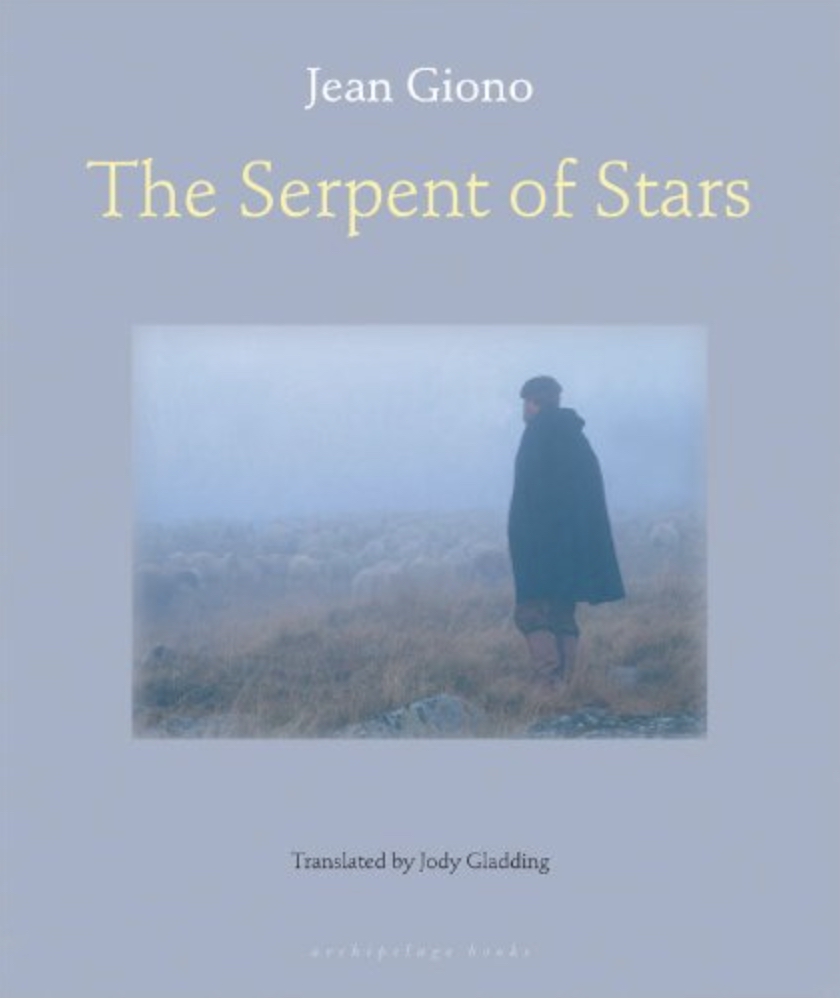
Jean Giono, The Serpent of Stars, (1933), translated from French by Jody Gladding, Archipelago Books, 2026
The shepherd arrives with the moon, joining Jean Giono and a potter called Césaire Escoffier with hands like ‘gnarled tree roots.’ There in the elemental landscape of Provence with its ‘slow pulsing granite’, ‘ferocious burning sun’, ‘cooling grass’ and ‘air flat as a knife’, Giono listens to the shepherd’s life story. The narrative then shifts to an annual gathering of shepherds and sheep on the great plateau for the summer solstice where Giono bears witness to an improvised shepherd’s play about the birth of the earth ‘born from the belly of the sky’. It conjures a pantheistic and primeval world as raw and elemental as it is beautiful and divine; a wild, sensual world where human, animal and landscape are indissoluble from each other.
Yet there is a tension too, between human dependency and struggle, between the brutality of landscape and climate and states of blessed wonder. Here, ‘under that light curtain of flesh, blue rocks, clay pits, quivering eyelids of sand, throbs the interior of the world’ —touched by the shepherd-actors and audience alike for those few fleeting hours during the shortest night of the year.
Rebecca Tamás Strangers: Essays on the Human and Nonhuman
There is as much discomfort and strangeness as there is wonder and visceral pleasure in the world Rebecca Tamás shows us in these eight essays.
Rebecca Tamás, Strangers: Essays on the Human and Nonhuman (2020), Makina Books, 2023
There is as much discomfort and strangeness as there is wonder and visceral pleasure in the world Rebecca Tamás shows us in these eight essays. Drawing upon histories, myth, religion, and close readings of the writing and imagery of other creative practitioners, Tamás explores notions of a radical equality where, rather than seeking to dissolve the perceived boundaries between human and nonhuman, a certain kind of porosity occurs which only avails itself in a non-demanding human respect for the animal and the nonhuman. Tamás shows us the folly of the reductive, human-centric perspective of the coloniser, while also illuminating a world in which ‘many more forms of thinking [are] available to us – of joy, of freedom, of pleasure, of community, of self-worth, and love. Love for things that are nothing like us, and which may not love us back.’
Rebecca Tamás, Strangers: Essays on the Human and Nonhuman (2020), Makina Books, 2023
There is as much discomfort and strangeness as there is wonder and visceral pleasure in the world Rebecca Tamás shows us in these eight essays. Drawing upon histories, myth, religion, and close readings of the writing and imagery of other creative practitioners, Tamás explores notions of a radical equality where, rather than seeking to dissolve the perceived boundaries between human and nonhuman, a certain kind of porosity occurs which only avails itself in a non-demanding human respect for the animal and the nonhuman. Tamás shows us the folly of the reductive, human-centric perspective of the coloniser, while also illuminating a world in which ‘many more forms of thinking [are] available to us – of joy, of freedom, of pleasure, of community, of self-worth, and love. Love for things that are nothing like us, and which may not love us back.’
Linnea Axelson
Ædnan: An Epic
The ancient bonds between land, reindeer and human are broken when international borders are closed, a river is damned and land industrialised, rendering impossible the necessary seasonal movement of reindeer and Samí herders.
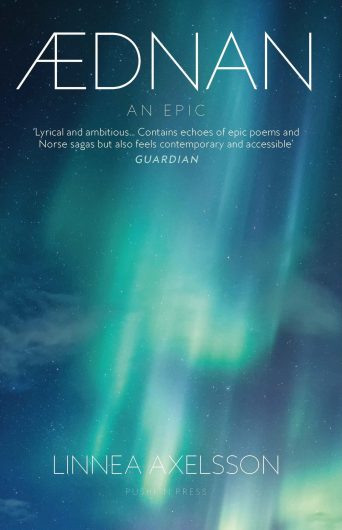
Linnea Axelson, Ædnan: An Epic, (2018), translated from Swedish by Saskia Vogel, Pushkin Press, 2024
The ancient bonds between land, reindeer and human are broken when international borders are closed, a river is damned and land industrialised, rendering impossible the necessary seasonal movement of reindeer and Samí herders. No longer can these ancient interdependences exist, where ‘the herd’s bodies / become our bodies’, where the natural world is inseparable from the self, where even after life, a person lives on in the sea, the mist, the forest, the reindeer’s pelt. Beginning in 1913, this is a story written in lyrical free verse over the course of a century. Episodes from the lives of two indigenous families, iterated by different generations, recount stories of loss and new beginnings, of the blood-desire to return to a nomadic way of life and the fight for the reclamation of Samí rights. Perhaps the ethos of the novel is best reflected in its title, for ædnan in Northern Samí describes the land, the earth and my mother.
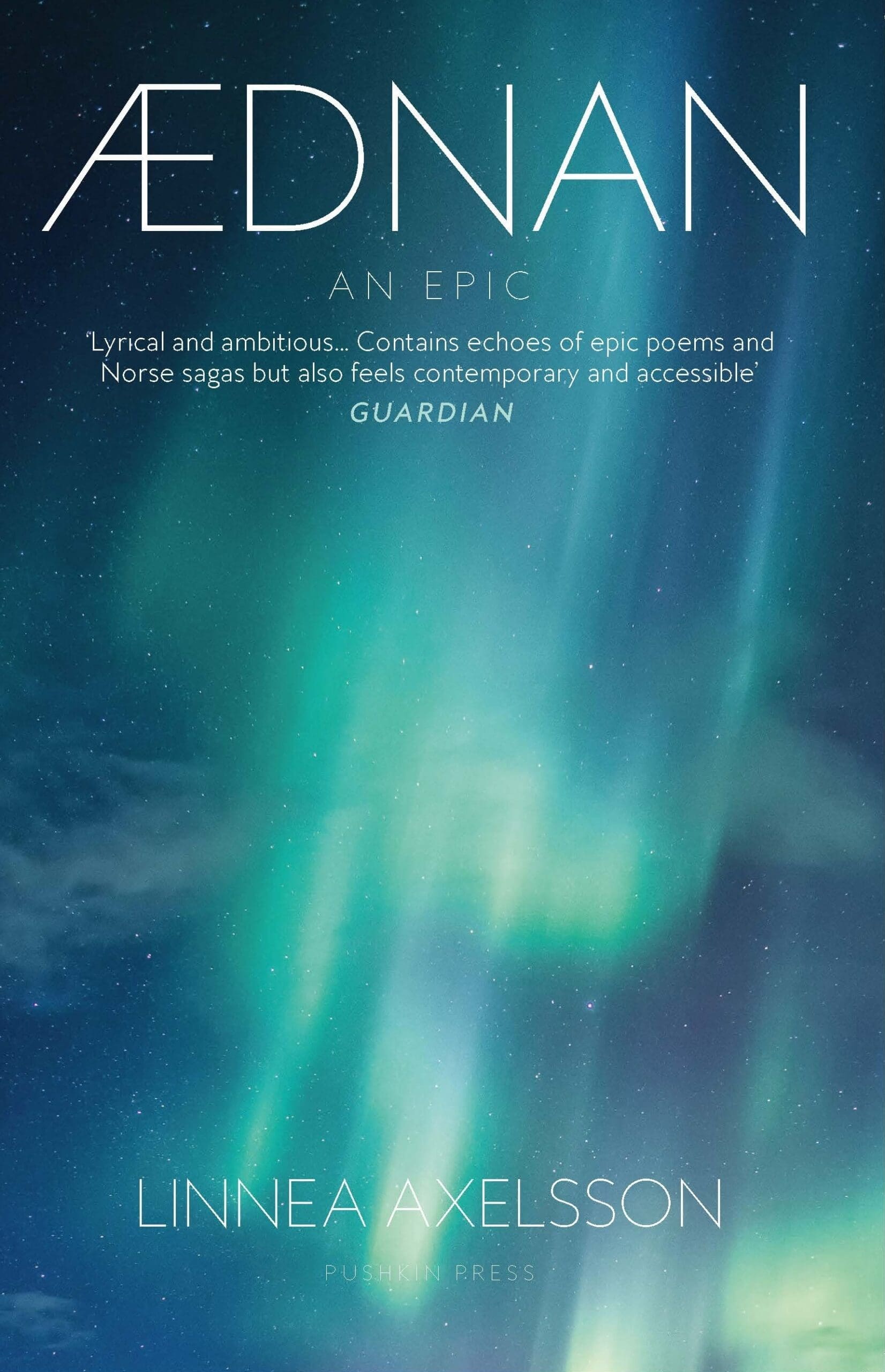
Linnea Axelson, Ædnan: An Epic, (2018), translated from Swedish by Saskia Vogel, Pushkin Press, 2024
The ancient bonds between land, reindeer and human are broken when international borders are closed, a river is damned and land industrialised, rendering impossible the necessary seasonal movement of reindeer and Samí herders. No longer can these ancient interdependences exist, where ‘the herd’s bodies / become our bodies’, where the natural world is inseparable from the self, where even after life, a person lives on in the sea, the mist, the forest, the reindeer’s pelt. Beginning in 1913, this is a story written in lyrical free verse over the course of a century. Episodes from the lives of two indigenous families, iterated by different generations, recount stories of loss and new beginnings, of the blood-desire to return to a nomadic way of life and the fight for the reclamation of Samí rights. Perhaps the ethos of the novel is best reflected in its title, for ædnan in Northern Samí describes the land, the earth and my mother.
Jacquetta Hawkes
A Land
Jacquetta Hawkes herself referred to A Land as an ‘uncommon type of book’. Written in the late 1940s and first published in 1951, Hawkes explained in her introduction: ‘I have used the findings of the two sciences of geology and archaeology for purposes altogether unscientific. I have tried to use them evocatively, and the image I have sought to evoke is of an entity, the land of Britain…’
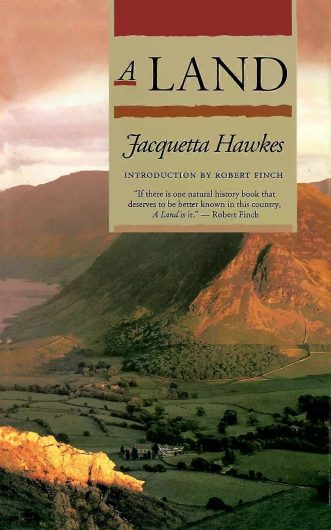
Jacquetta Hawkes, A Land, Beacon Press, Boston, 1991
Jacquetta Hawkes herself referred to A Land as an ‘uncommon type of book’. Written in the late 1940s and first published in 1951, Hawkes explained in her introduction: ‘I have used the findings of the two sciences of geology and archaeology for purposes altogether unscientific. I have tried to use them evocatively, and the image I have sought to evoke is of an entity, the land of Britain…’ The book begins with the striking image of Hawkes lying on a thin patch of grass in her back garden in London: ‘I lie here and feel Earth resulting through space, its rotundity between me and the sun, the shadow above me acting as a searchlight to reveal the stars whose light left them long before there were eyes on this planet to receive it.’ Vivid, enlivening, encompassing and daring in its scope and its prose style, it has been re-read in recent years as an early work of nature writing, though it remains in many ways a reflection of its post-war time, with the reader balancing what Robert Macfarlane has described as the book’s ‘island patriotism and its planetary holism.’
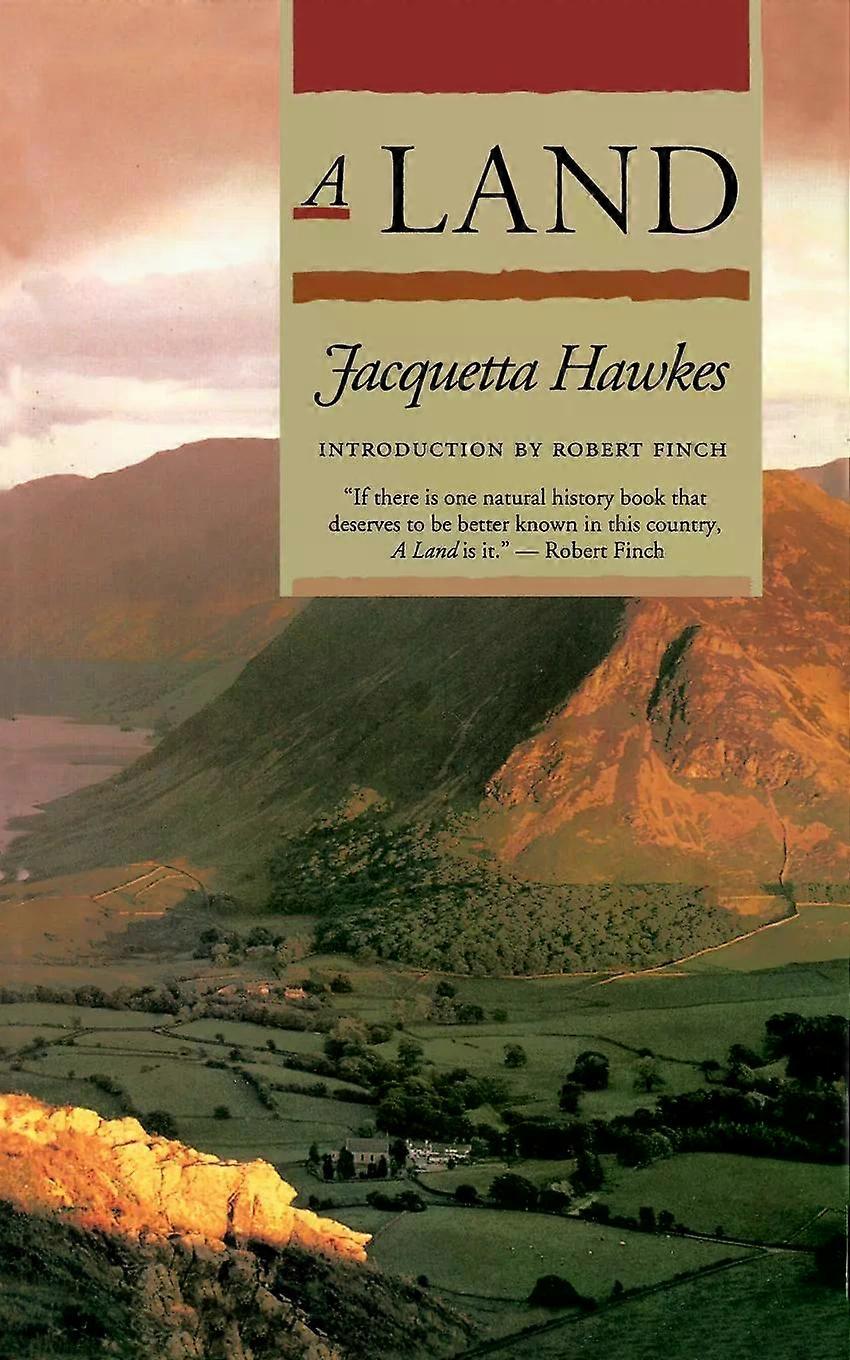
Jacquetta Hawkes, A Land, Beacon Press, Boston, 1991
Jacquetta Hawkes herself referred to A Land as an ‘uncommon type of book’. Written in the late 1940s and first published in 1951, Hawkes explained in her introduction: ‘I have used the findings of the two sciences of geology and archaeology for purposes altogether unscientific. I have tried to use them evocatively, and the image I have sought to evoke is of an entity, the land of Britain…’ The book begins with the striking image of Hawkes lying on a thin patch of grass in her back garden in London: ‘I lie here and feel Earth resulting through space, its rotundity between me and the sun, the shadow above me acting as a searchlight to reveal the stars whose light left them long before there were eyes on this planet to receive it.’ Vivid, enlivening, encompassing and daring in its scope and its prose style, it has been re-read in recent years as an early work of nature writing, though it remains in many ways a reflection of its post-war time, with the reader balancing what Robert Macfarlane has described as the book’s ‘island patriotism and its planetary holism.’
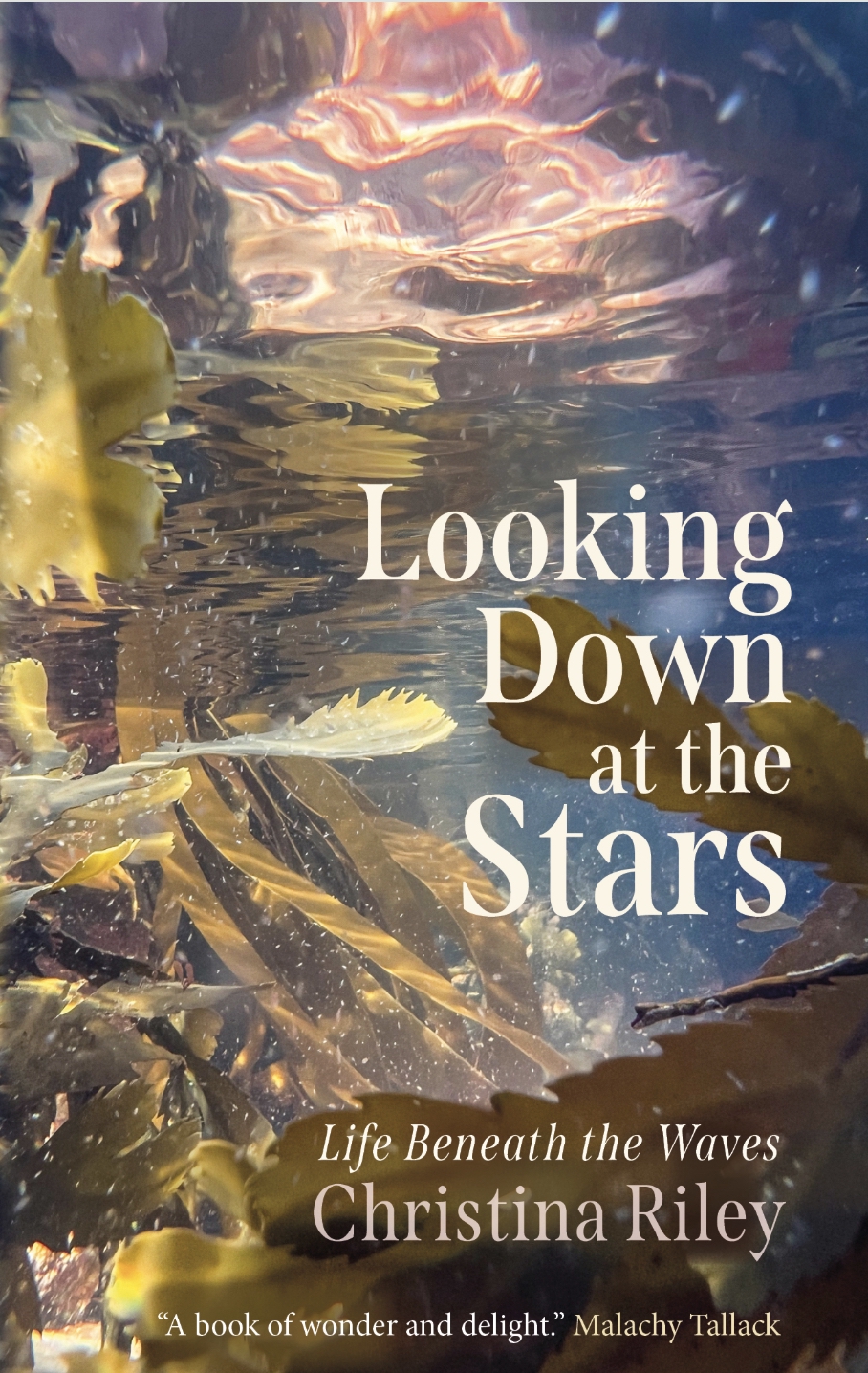
Christina Riley, Looking Down at the Stars. Life Beneath the Waves
As an underwater artist in residence, Christina Riley spent her time submerged among the marine life in the protected Mission Blue Hope Spot on the Argyll coast.
Christina Riley, Looking Down at the Stars. Life Beneath the Waves, Saraband, 2025
As an underwater artist in residence, Christina Riley spent her time submerged among the marine life in the protected Mission Blue Hope Spot in Argyll. This is her account of that world: the characteristics of the creatures she observes, the feelings and thoughts they inspire in her and the search for a language which can go some way to expressing the wonder she feels during these encounters. As Riley shifts her focus from wonder inspired curiosity to the evident destruction of creatures and habitats, we understand that this is not a romanticised accounting, but rather an acknowledgement of all the forces at play: natural and human-made. As such her writing calls for collective action and shared knowledge: ‘I believe in my heart of hearts’, she tells us, ‘that considered attention to these landscapes, or to any landscapes, makes space for more inter-species wonder, from which a greater care of the Earth can bloom’.
Christina Riley, Looking Down at the Stars. Life Beneath the Waves, Saraband, 2025
As an underwater artist in residence, Christina Riley spent her time submerged among the marine life in the protected Mission Blue Hope Spot in Argyll. This is her account of that world: the characteristics of the creatures she observes, the feelings and thoughts they inspire in her and the search for a language which can go some way to expressing the wonder she feels during these encounters. As Riley shifts her focus from wonder inspired curiosity to the evident destruction of creatures and habitats, we understand that this is not a romanticised accounting, but rather an acknowledgement of all the forces at play: natural and human-made. As such her writing calls for collective action and shared knowledge: ‘I believe in my heart of hearts’, she tells us, ‘that considered attention to these landscapes, or to any landscapes, makes space for more inter-species wonder, from which a greater care of the Earth can bloom’.
For younger readers
Antoine de Saint-Exupéry
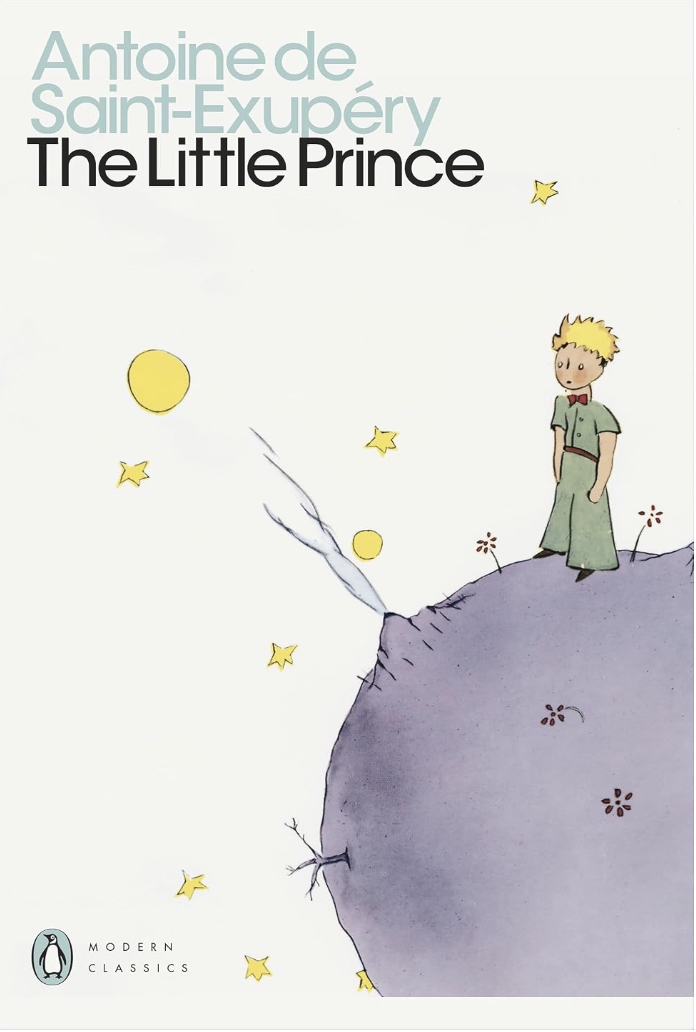
The Little Prince
Grounded in the Sahara Desert, an aviator is awoken from sleep by a small boy—a little prince— asking him to draw a sheep. Each discovers that the other has ‘dropped from the sky’ into this alien world of sand.
Antoine de Saint-Exupéry, The Little Prince, (1943), translated from French by Kathleen Woods, Farshore, 2017
Grounded in the Sahara Desert, an aviator is awoken from sleep by a small boy—a little prince— asking him to draw a sheep. Each discovers that the other has ‘dropped from the sky’ into this alien world of sand. Each also discovers the storyteller in the other: the aviator through his drawings, the little prince with tales of his own far away planet and other planets he visited on his journey to earth. As the little prince describes the people and creatures he encountered and the lessons he learnt, the aviator re-awakens to the wonders of his own world and the necessity to care for all that is held dear especially in the face of loss.
Dedicated to children and to the child within each of us, this parable may be read both as a fairytale and as an allegory of love, war and human fallibility.
Antoine de Saint-Exupéry, The Little Prince, (1943), translated from French by Kathleen Woods, Farshore, 2017
Grounded in the Sahara Desert, an aviator is awoken from sleep by a small boy—a little prince— asking him to draw a sheep. Each discovers that the other has ‘dropped from the sky’ into this alien world of sand. Each also discovers the storyteller in the other: the aviator through his drawings, the little prince with tales of his own far away planet and other planets he visited on his journey to earth. As the little prince describes the people and creatures he encountered and the lessons he learnt, the aviator re-awakens to the wonders of his own world and the necessity to care for all that is held dear especially in the face of loss.
Dedicated to children and to the child within each of us, this parable may be read both as a fairytale and as an allegory of love, war and human fallibility.
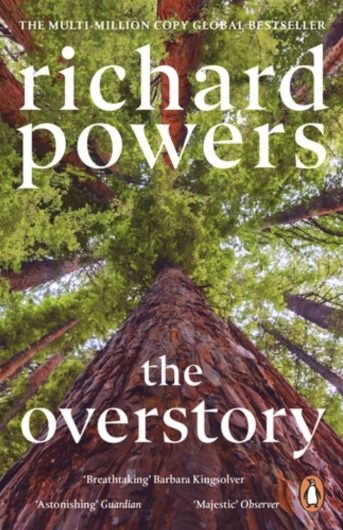
Richard Powers The Overstory
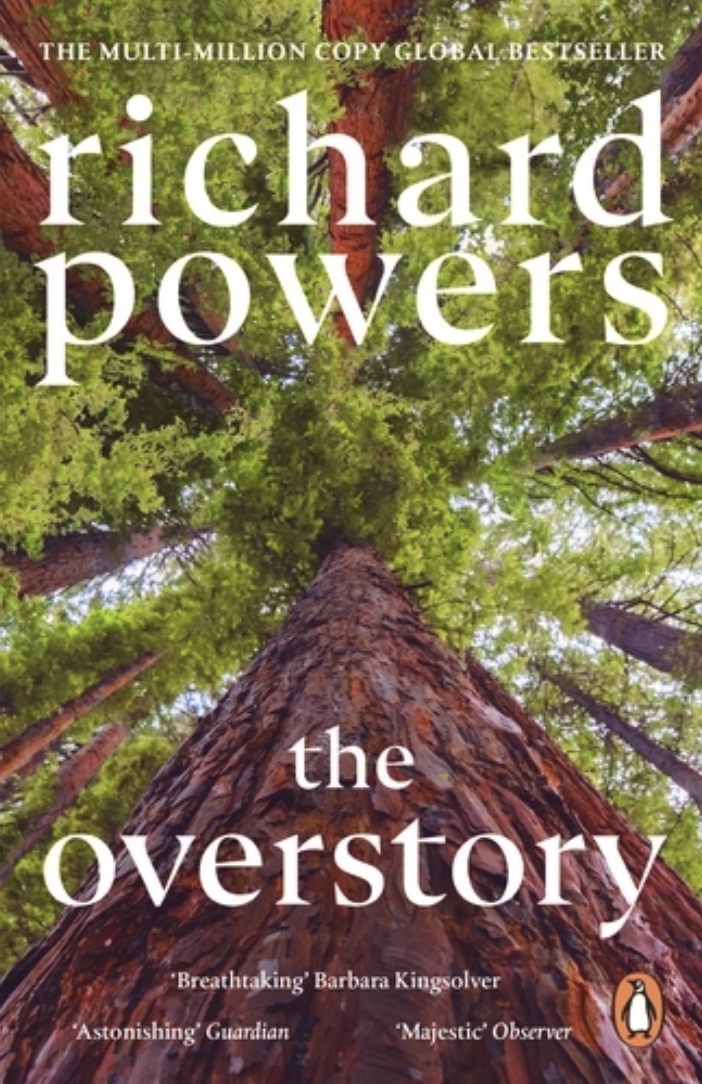
Rhizomatic synergies develop between the lives of trees and the lives of the nine characters that populate Richard Powers’ episodic novel.
Richard Powers, The Overstory, (2018), Penguin, 2024
Rhizomatic synergies develop between the lives of trees and the lives of the nine characters that populate Richard Powers’ episodic novel. As their individual stories unfold, connect and fragment, another story emerges which is greater than that of any individual: the connectedness of things both living and virtual, human and non-human as exemplified in arboreal symbiosis. And this is the point: for humankind to survive we must relearn the wondrous ways of trees: how they feed and nurture each other and, by extension, us; how each is a necessary link within vast mutually beneficial interdependent communities; how trees can show us other ways of being if only we can learn to value them as living entities and listen to them in time.
Richard Powers, The Overstory, (2018), Penguin, 2024
Rhizomatic synergies develop between the lives of trees and the lives of the nine characters that populate Richard Powers’ episodic novel. As their individual stories unfold, connect and fragment, another story emerges which is greater than that of any individual: the connectedness of things both living and virtual, human and non-human as exemplified in arboreal symbiosis. And this is the point: for humankind to survive we must relearn the wondrous ways of trees: how they feed and nurture each other and, by extension, us; how each is a necessary link within vast mutually beneficial interdependent communities; how trees can show us other ways of being if only we can learn to value them as living entities and listen to them in time.
Małgorzata Lebda
Mer de Glace
Małgorzata Lebda runs the length of the Vistula River, recording transferences between her body and the environment. In so doing, in brief poetic glimpses reflective of a runner’s passing perspective, she describes the ecosystems through which she runs.
Małgorzata Lebda, Mer de Glace (2021), translated from Polish by Mira Rosenthal, Fitzcarraldo Editions, 2026
The consciousness of the body: hunger and fatigue—running, running—; the body passing through the world—running, running—; mountains, vineyards, glaciers—running, running—; summer heat and autumn coolness—running, running—; full moon, bright stars and the wonder of it all—running, running—; taste, touch, sound, smell—running, running. And so Małgorzata Lebda runs the length of the Vistula River, recording transferences between her body and the environment. In so doing, in brief poetic glimpses reflective of a runner’s passing perspective, she describes the ecosystems through which she runs, which awakens in her an awareness that she is inextricably a part of these places as they momentarily are of her.
Małgorzata Lebda, Mer de Glace (2021), translated from Polish by Mira Rosenthal, Fitzcarraldo Editions, 2026
The consciousness of the body: hunger and fatigue—running, running—; the body passing through the world—running, running—; mountains, vineyards, glaciers—running, running—; summer heat and autumn coolness—running, running—; full moon, bright stars and the wonder of it all—running, running—; taste, touch, sound, smell—running, running. And so Małgorzata Lebda runs the length of the Vistula River, recording transferences between her body and the environment. In so doing, in brief poetic glimpses reflective of a runner’s passing perspective, she describes the ecosystems through which she runs, which awakens in her an awareness that she is inextricably a part of these places as they momentarily are of her.
Elizabeth-Jane Burnett
Of Sea
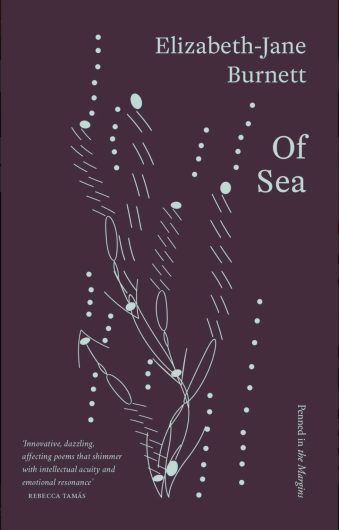
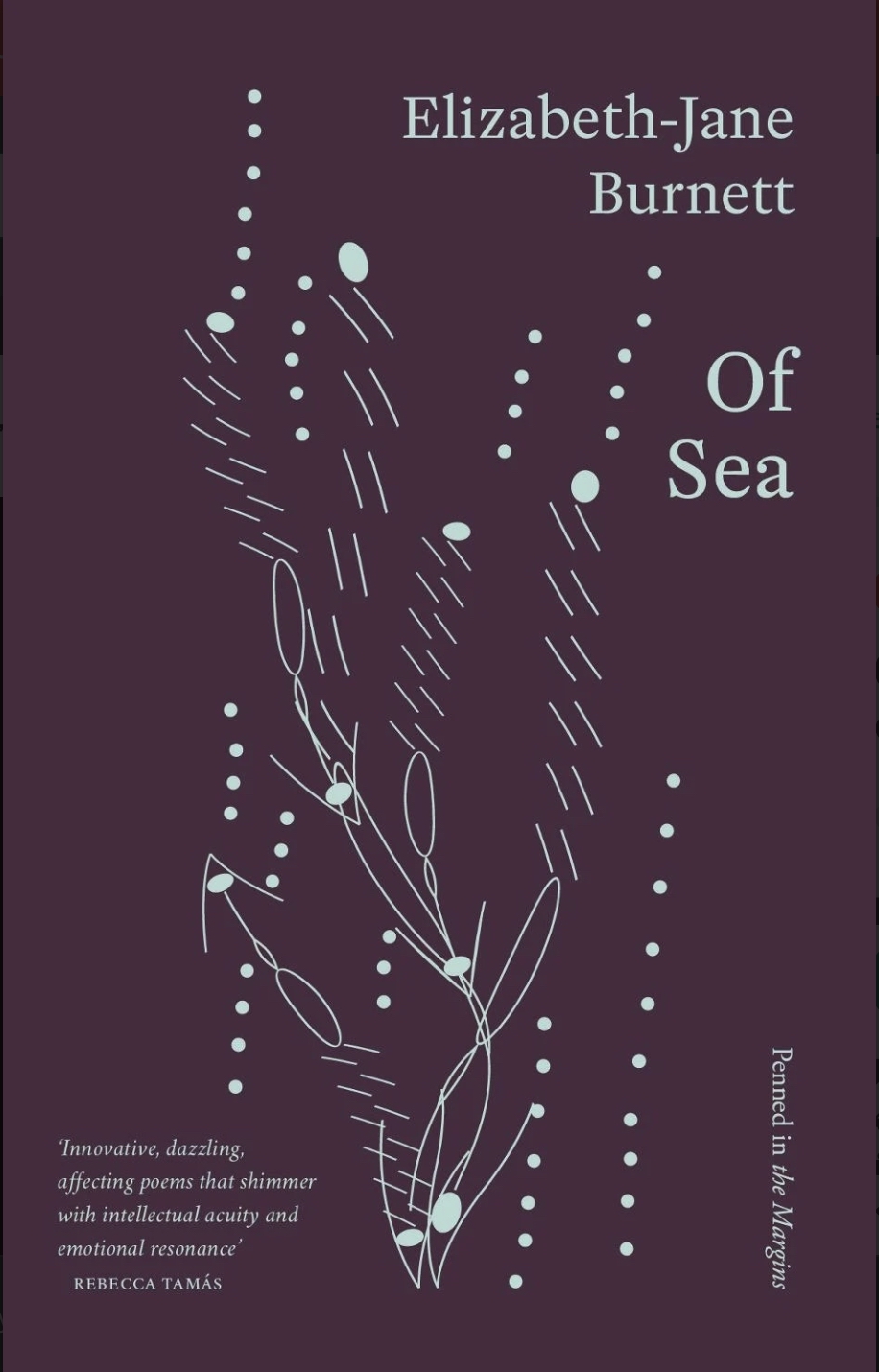
‘she / half sand / she both sea / (…) /she is a both-formed thing’ reads ‘Sea Anemone’, a poem by Elizabeth-Jane Burnett from Of Sea, a collection of 46 poems, which overflow with life below and above the sea and land, and in between.
Elizabeth-Jane Burnett, Of Sea, Penned in the Margins, 2021
‘she half sand, she both sea… she is a both-formed thing’ reads Sea Anemone, a poem by Elizabeth-Jane Burnett from Of Sea, a collection of 46 poems, which overflow with life below and above the sea and land, and in between (‘the not-sea, in the not-land, in the mizzle’). We meet Mud Shrimp (she swam, only at night, on the spring tide), a Prickly Cockle (a sunrise in a shell), hoverfly (a whole sky clearing your throat), Murky-legged Legionnaire Fly (darkling deep), and Ground Beetle, whose poem we are instructed should be ‘sung/clicked/slicked’. Invertebrates hover, dart, surface, swim and burrow amongst the pages, words sometimes scattering too. The pulse of life and its intricacies (encountered, Burnett suggests, by swimming) is captured in all its wonder.
Elizabeth-Jane Burnett, Of Sea, Penned in the Margins, 2021
‘she half sand, she both sea… she is a both-formed thing’ reads Sea Anemone, a poem by Elizabeth-Jane Burnett from Of Sea, a collection of 46 poems, which overflow with life below and above the sea and land, and in between (‘the not-sea, in the not-land, in the mizzle’). We meet Mud Shrimp (she swam, only at night, on the spring tide), a Prickly Cockle (a sunrise in a shell), hoverfly (a whole sky clearing your throat), Murky-legged Legionnaire Fly (darkling deep), and Ground Beetle, whose poem we are instructed should be ‘sung/clicked/slicked’. Invertebrates hover, dart, surface, swim and burrow amongst the pages, words sometimes scattering too. The pulse of life and its intricacies (encountered, Burnett suggests, by swimming) is captured in all its wonder.
William Shakespeare The Tempest
Here indeed is an isle of wonder, an unbound world of ethereal music and invisible spirits ruled over by Prospero, the exiled duke of Milan. Here too is Miranda his beautiful daughter, Caliban his slave, and just recently arrived, a motley crew of Italian nobility, royalty and sailors shipwrecked by a violent storm.
William Shakespeare, edited and introduced by Martin Butler, The Tempest, Penguin Classics, 2015
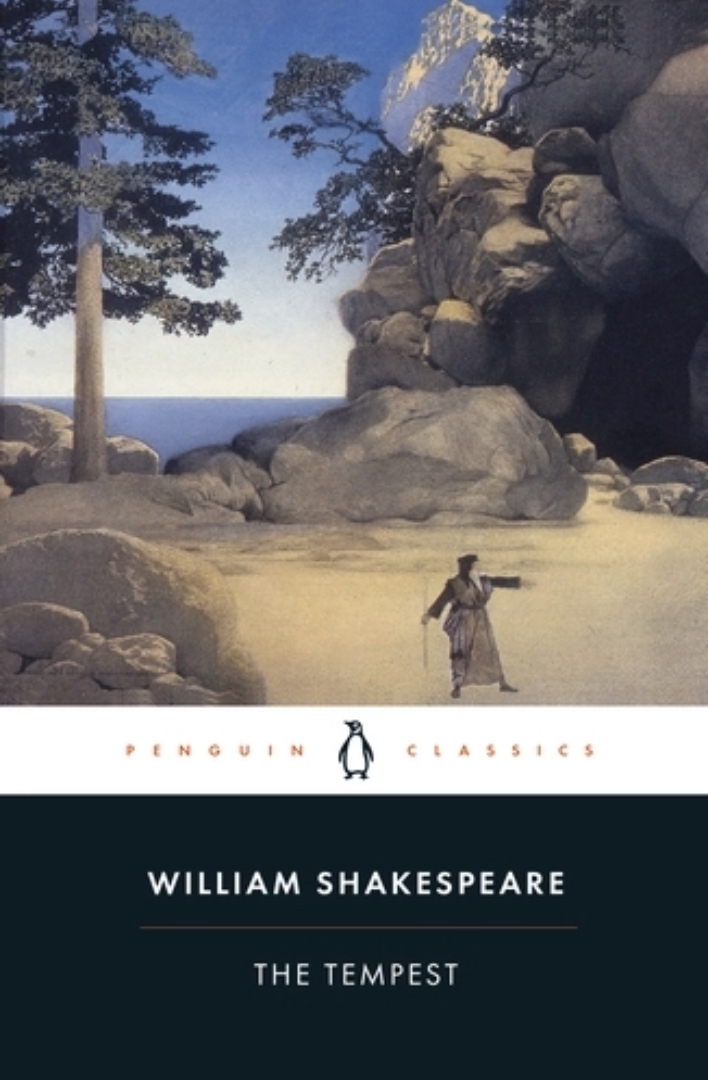
Here indeed is an isle of wonder, an unbound world of ethereal music and invisible spirits ruled over by Prospero, the exiled duke of Milan. Here too is Miranda his beautiful daughter, Caliban his slave, and just recently arrived, a motley crew of Italian nobility, royalty and sailors shipwrecked by a violent storm Prospero conjured to bring his brother to a reckoning in this, Prospero’s island court. We enter a world in which losing and finding, loyalty and betrayal, beneficence and revenge, power and ultimately freedom are simultaneously held and played out. Under Prospero’s mercurial sway, the borders between human and nonhuman are unsettled, so that all is ‘torment, trouble, wonder and amazement’, and where of course all is ultimately resolved —well almost. For a counter-narrative of the enslaved Caliban and Prospero’s occupation of the isle, see Aimé Césare’s A Tempest.
William Shakespeare, edited and introduced by Martin Butler, The Tempest, Penguin Classics, 2015
Here indeed is an isle of wonder, an unbound world of ethereal music and invisible spirits ruled over by Prospero, the exiled duke of Milan. Here too is Miranda his beautiful daughter, Caliban his slave, and just recently arrived, a motley crew of Italian nobility, royalty and sailors shipwrecked by a violent storm Prospero conjured to bring his brother to a reckoning in this, Prospero’s island court. We enter a world in which losing and finding, loyalty and betrayal, beneficence and revenge, power and ultimately freedom are simultaneously held and played out. Under Prospero’s mercurial sway, the borders between human and nonhuman are unsettled, so that all is ‘torment, trouble, wonder and amazement’, and where of course all is ultimately resolved —well almost. For a counter-narrative of the enslaved Caliban and Prospero’s occupation of the isle, see Aimé Césare’s A Tempest.
Iman Mersal
Traces of Enayat
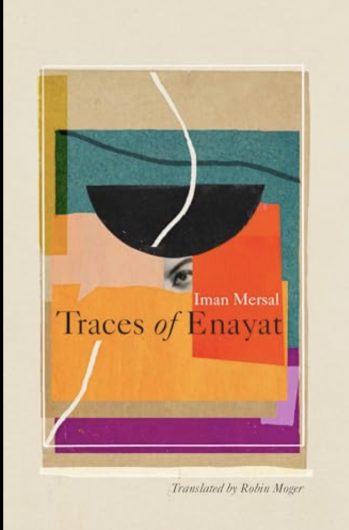
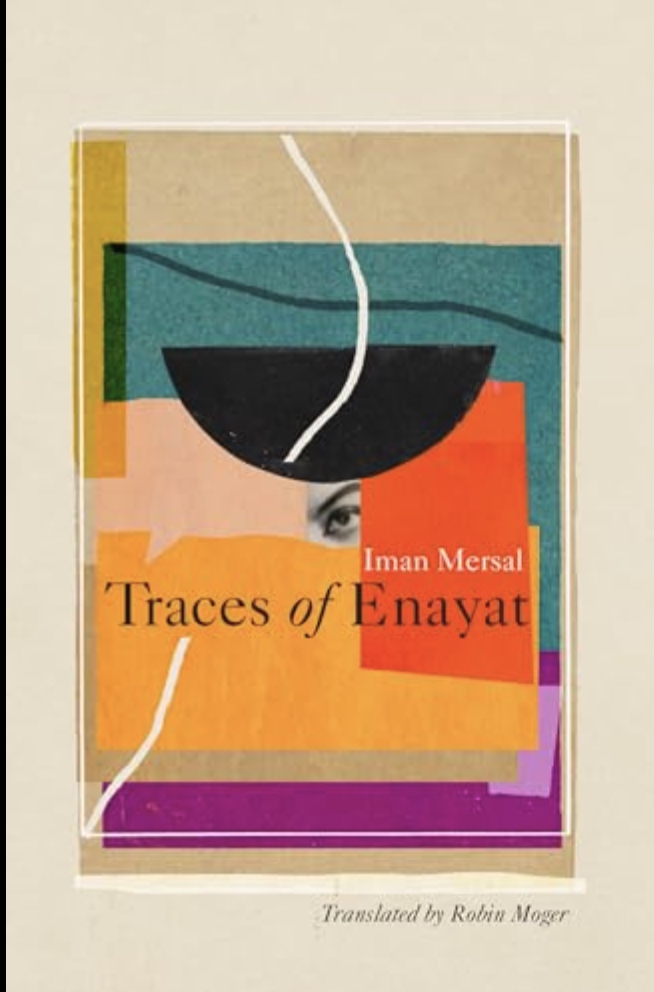
Iman Mersal’s research into the life and suicide of Egyptian writer Enayat al-Zayat encompasses a sympathetic rediscovery of the surviving remnants of Enayat’s work and life and an accounting of women’s struggles for freedom in 1960s Egypt
Iman Mersal, Traces of Enayat, (2019), translated from Arabic by Robin Moger, Transit Books, 2023
Why is one writer drawn to researching another? Is it purely intellectual interest or are there deeper more personal reasons, which only become truly evident once the work is complete? As a poet and essayist, Iman Mersal’s research into the life and suicide of Egyptian writer Enayat al-Zayat encompasses a sympathetic rediscovery of the surviving remnants of Enayat’s work and life and an accounting of women’s struggles for freedom in 1960s Egypt.
In Mersal’s writing is also a discovery of shared conditions which perhaps explains her persistence in uncovering Enayat’s story. As such, we meet both women: both mothers, both writers, both born into Cairo’s bourgeoisie, both fascinated by lives of the overlooked. Addressing Enayat directly in the book’s closing pages, Mersal acknowledges these synergies: ‘You will always be part of my journey’, ‘You are present in the alienation we both have lived, each in our time. And you are a part of writing, which has given to us and taken away’.
Iman Mersal, Traces of Enayat, (2019), translated from Arabic by Robin Moger, Transit Books, 2023
Why is one writer drawn to researching another? Is it purely intellectual interest or are there deeper more personal reasons, which only become truly evident once the work is complete? As a poet and essayist, Iman Mersal’s research into the life and suicide of Egyptian writer Enayat al-Zayat encompasses a sympathetic rediscovery of the surviving remnants of Enayat’s work and life and an accounting of women’s struggles for freedom in 1960s Egypt.
In Mersal’s writing is also a discovery of shared conditions which perhaps explains her persistence in uncovering Enayat’s story. As such, we meet both women: both mothers, both writers, both born into Cairo’s bourgeoisie, both fascinated by lives of the overlooked. Addressing Enayat directly in the book’s closing pages, Mersal acknowledges these synergies: ‘You will always be part of my journey’, ‘You are present in the alienation we both have lived, each in our time. And you are a part of writing, which has given to us and taken away’.
Colm Toíbin
On Elizabeth Bishop
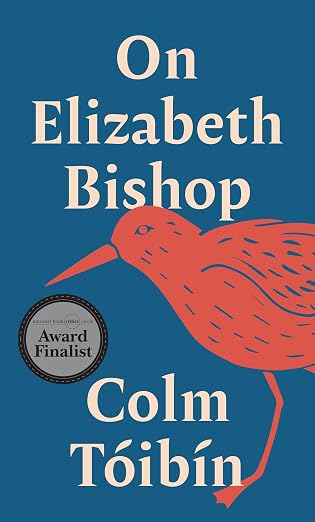
‘Writing for Bishop was not self-expression but there was a self somewhere,’ Colm Toíbin tells us, resonating with all that remains unsaid in her writing, which seeps into the reader’s consciousness all the same.
Colm Toíbin, On Elizabeth Bishop, Princeton University Press, 2015
‘Writing for Bishop was not self-expression but there was a self somewhere,’ Colm Toíbin tells us, recognising, no, resonating with all that remains unsaid in her writing, which seeps into the reader’s consciousness all the same. He finds Elizabeth Bishop through his close reading of letters she exchanged with Robert Lowell, Marianne Moore and Thom Gunn, showing how at times each reflected and reacted to the other and how each borrowed from or subverted the other’s writing. Toíbin also addresses his own writerly relationship with Bishop, described by Eavan Boland in his book review as a ‘call and response’ between the two. Toíbin’s and Bishops’ dual experiences of place, displacement and childhood are perhaps best expressed in Bishop’s ‘Poem’: ‘[…] our looks, two looks: / art ‘copying from life’ and life itself, / life and the memory of it so compressed / they’ve turned into each other.’
Colm Toíbin, On Elizabeth Bishop, Princeton University Press, 2015
‘Writing for Bishop was not self-expression but there was a self somewhere,’ Colm Toíbin tells us, recognising, no, resonating with all that remains unsaid in her writing, which seeps into the reader’s consciousness all the same. He finds Elizabeth Bishop through his close reading of letters she exchanged with Robert Lowell, Marianne Moore and Thom Gunn, showing how at times each reflected and reacted to the other and how each borrowed from or subverted the other’s writing. Toíbin also addresses his own writerly relationship with Bishop, described by Eavan Boland in his book review as a ‘call and response’ between the two. Toíbin’s and Bishops’ dual experiences of place, displacement and childhood are perhaps best expressed in Bishop’s ‘Poem’: ‘[…] our looks, two looks: / art ‘copying from life’ and life itself, / life and the memory of it so compressed / they’ve turned into each other.’
Annie Ernaux
A Man’s Place
A Woman’s Story
Begun after the death of each parent, Annie Ernaux searches for truths about her mother and father in these two books, truths she tells us that could arise only through the act of writing. She discovers her parents to be two people whose determination to rise out of the rural poverty they were born into.
Annie Ernaux, A Man’s Place (1983), 2023 and A Woman’s Story (1998), 2026, both translated from French by Tanya Leslie, Fitzcaraldo Editions
Begun after the death of each parent, Annie Ernaux searches for truths about her mother and father in these two books, truths she tells us that could arise only through the act of writing. She discovers her parents to be two people whose determination to rise out of the rural poverty they were born into resulted in Ernaux’s university education and her subsequent teaching/writing life; a life that ultimately and unavoidably estranged her from both of them.
As she pieces their histories together, Ernaux rediscovers her mother as a confident, gregarious, ambitious woman, an avid churchgoer and reader, knowledgeable in the art of thrifty housekeeping honed over generations. In her father she finds a man of habit who spoke in dialect at home, liked a quiet domestic life and who was intimidated by Ernaux’s learning. In these accounts, she recognises how their lives together linked her to the child she once was and how with their deaths that bond was finally broken.
Annie Ernaux, A Man’s Place (1983), 2023 and A Woman’s Story (1998), 2026, both translated from French by Tanya Leslie, Fitzcaraldo Editions
Begun after the death of each parent, Annie Ernaux searches for truths about her mother and father in these two books, truths she tells us that could arise only through the act of writing. She discovers her parents to be two people whose determination to rise out of the rural poverty they were born into resulted in Ernaux’s university education and her subsequent teaching/writing life; a life that ultimately and unavoidably estranged her from both of them.
As she pieces their histories together, Ernaux rediscovers her mother as a confident, gregarious, ambitious woman, an avid churchgoer and reader, knowledgeable in the art of thrifty housekeeping honed over generations. In her father she finds a man of habit who spoke in dialect at home, liked a quiet domestic life and who was intimidated by Ernaux’s learning. In these accounts, she recognises how their lives together linked her to the child she once was and how with their deaths that bond was finally broken.
For younger readers
V. S. Naipul
Miguel Street
Neighbours wander in and out of each other’s yards. Nobody’s business is private. All of life spills onto this Port of Spain slum street in 1940s Trinidad where it is observed or overhead by a young boy and his neighbours. Living so closely together no one is safe from commentary or ridicule.
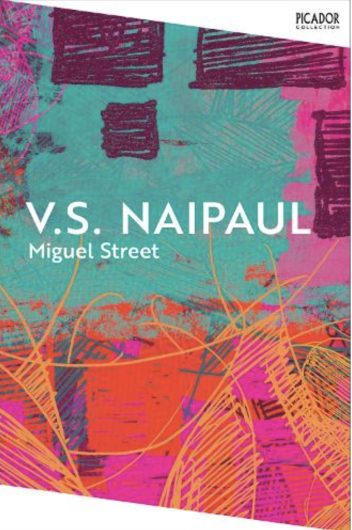
V. S. Naipul, Miguel Street, Picador, 2026
Neighbours wander in and out of each other’s yards. Nobody’s business is private. All of life spills onto this Port of Spain slum street in 1940s Trinidad where it is observed or overhead by a young boy and his neighbours. Living so closely together no one is safe from commentary or ridicule. There on the street we meet B. Wordsworth who is forever writing the greatest poem the world will ever see; the carpenter who works away making ‘the thing without a name’; the tailor who never made a suit; or Patience the card player who later became known as Bogart, and without whom no carnival was complete. With raw comedy that can quickly turn to violence or tragedy, Miguel Street is an auto-fictional account of Naipul’s childhood home whose characters reappear in other guises in his later novels.
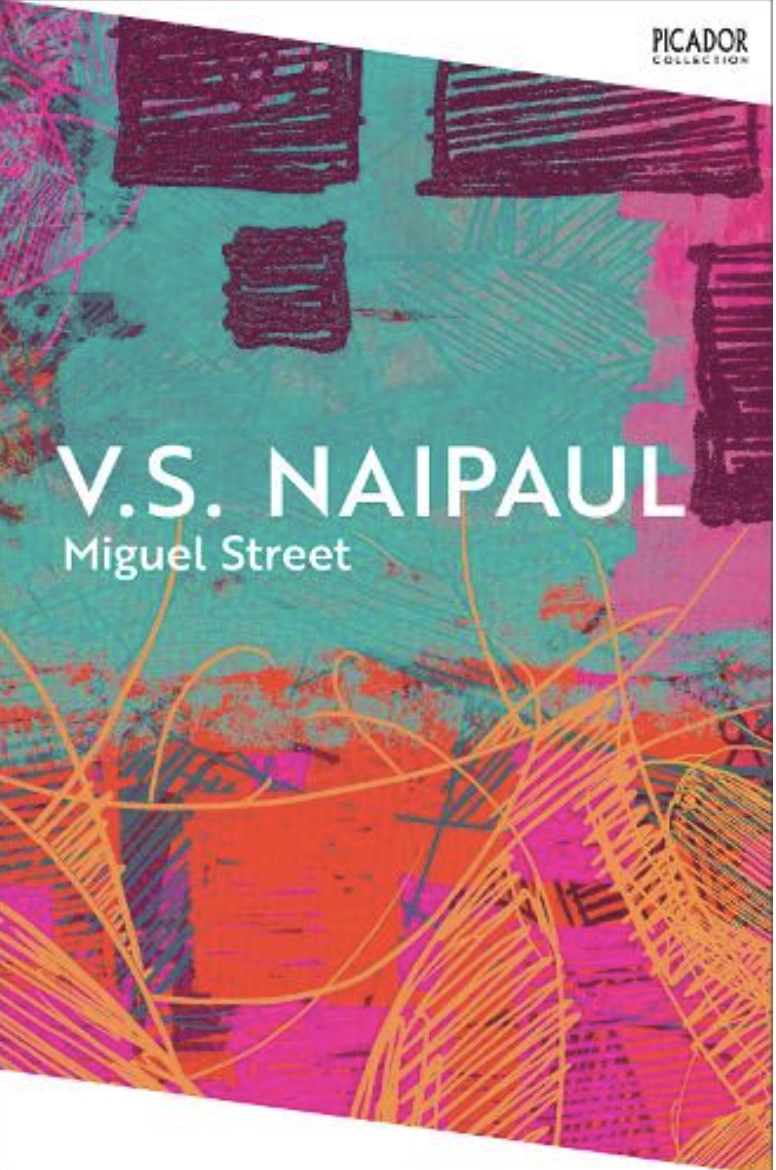
V. S. Naipul, Miguel Street, Picador, 2026
Neighbours wander in and out of each other’s yards. Nobody’s business is private. All of life spills onto this Port of Spain slum street in 1940s Trinidad where it is observed or overhead by a young boy and his neighbours. Living so closely together no one is safe from commentary or ridicule. There on the street we meet B. Wordsworth who is forever writing the greatest poem the world will ever see; the carpenter who works away making ‘the thing without a name’; the tailor who never made a suit; or Patience the card player who later became known as Bogart, and without whom no carnival was complete. With raw comedy that can quickly turn to violence or tragedy, Miguel Street is an auto-fictional account of Naipul’s childhood home whose characters reappear in other guises in his later novels.
Saneh Sangsuk
Venom
A young disabled boy who dreams of becoming a great performer entertains his friends with a shadow puppet show, using the setting sun as his light and the jungle as his screen. His recitation disturbs a female king cobra.
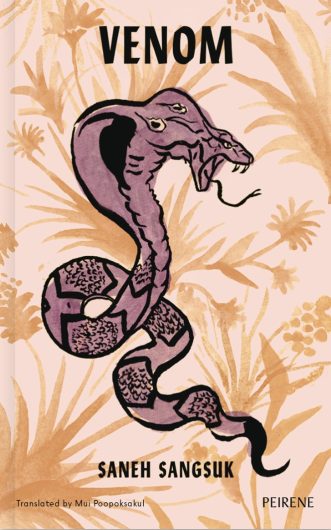
Saneh Sangsuk, Venom, (2001), translated from Thai by Mui Poopoksakul, Peirene Press, 2023
A young disabled boy who dreams of becoming a great performer entertains his friends with a shadow puppet show, using the setting sun as his light and the jungle as his screen. His recitation disturbs a female king cobra who attacks and as his friends run for safety a struggle for survival ensues. Snake and boy locked together, the boundaries between creature and human are breached, attack and defence become indistinguishable, while the cost in surrender is a high price to pay.
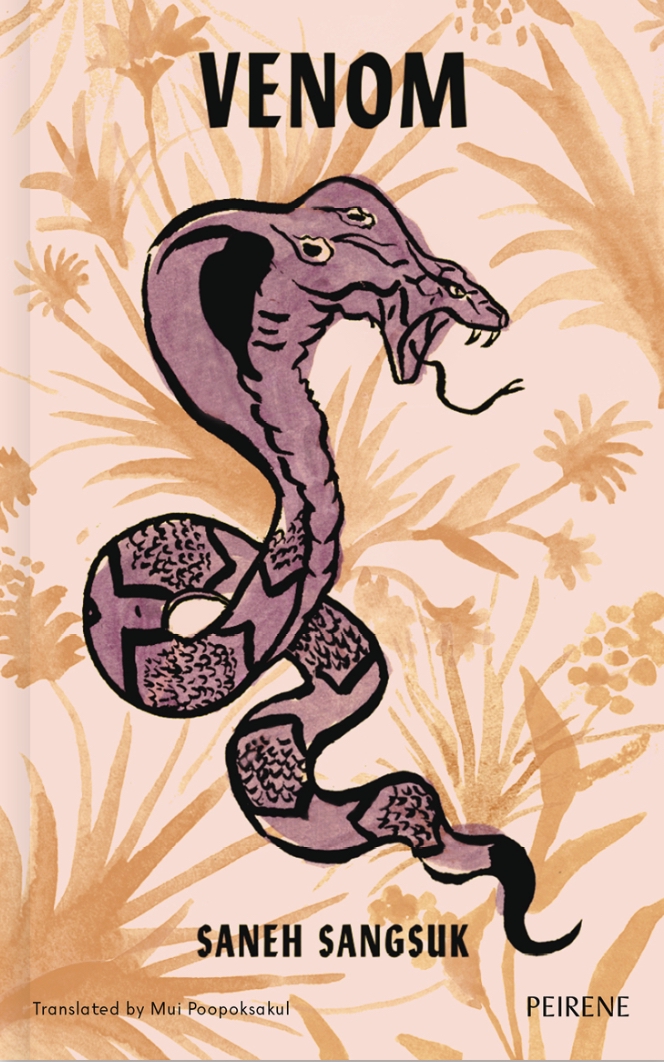
Saneh Sangsuk, Venom, (2001), translated from Thai by Mui Poopoksakul, Peirene Press, 2023
A young disabled boy who dreams of becoming a great performer entertains his friends with a shadow puppet show, using the setting sun as his light and the jungle as his screen. His recitation disturbs a female king cobra who attacks and as his friends run for safety a struggle for survival ensues. Snake and boy locked together, the boundaries between creature and human are breached, attack and defence become indistinguishable, while the cost in surrender is a high price to pay.