Anderson Borba
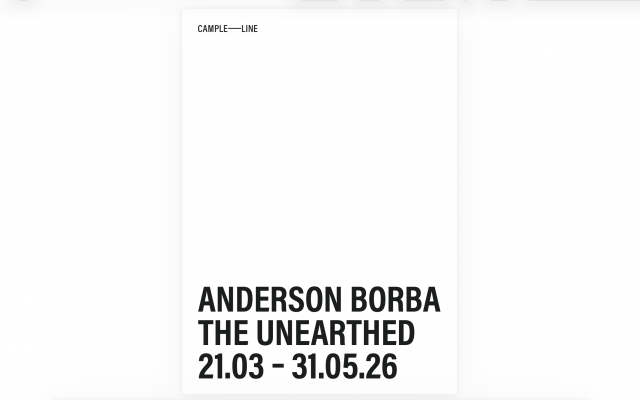
The Unearthed
21 March – 31 May 2026
Open Thurs-Sun, 11am-4pm
Or by appointment outside of those times
Entry is free
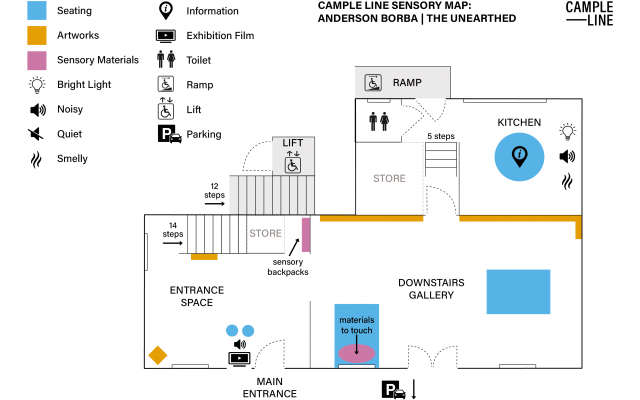
The exhibition is wheelchair accessible
Exhibition preview
Sat 21 March, 1.30-4.30pm
Please join Borba and our team
All are welcome
Anderson Borba
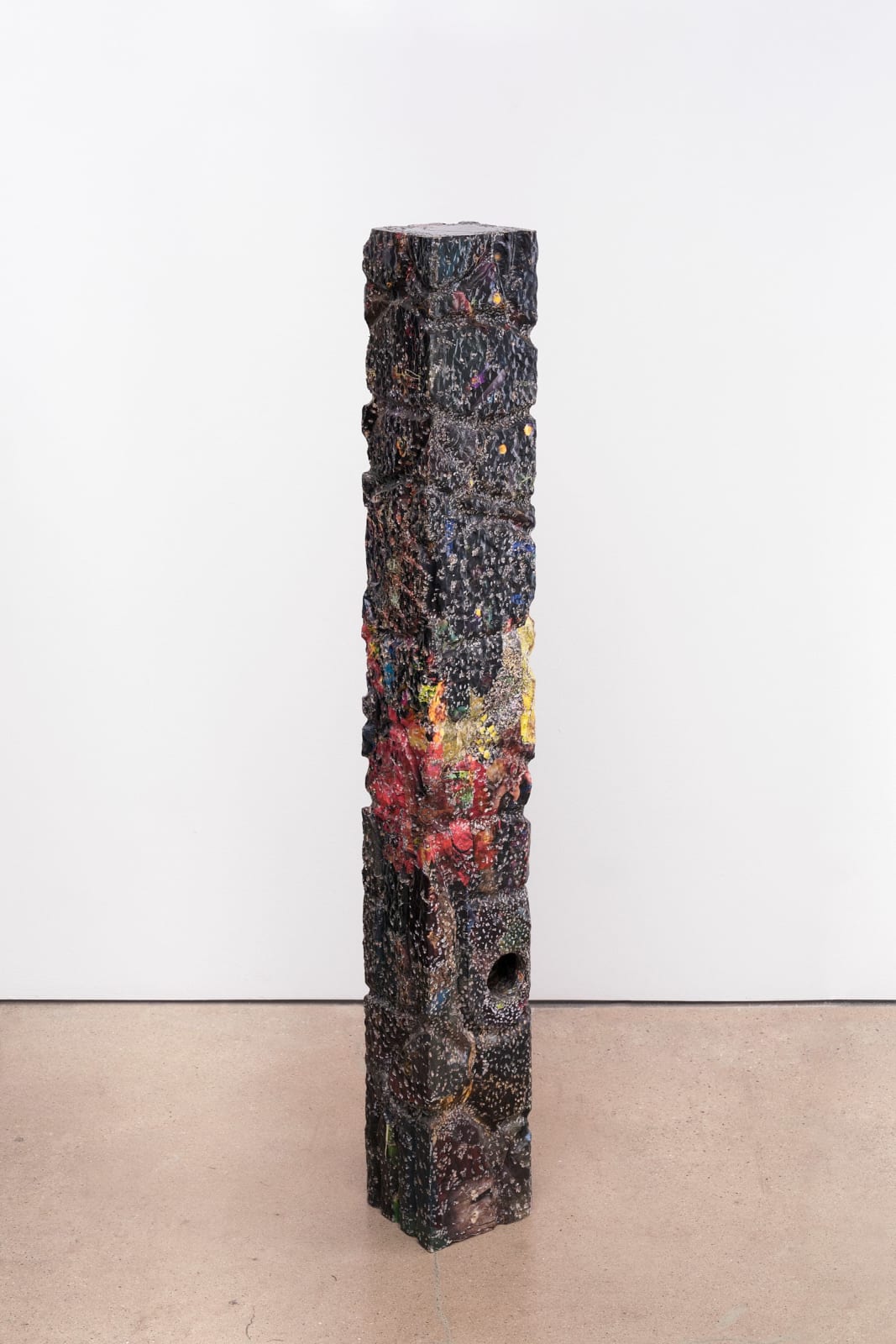
Laptower, 2024
Wood, paper, shellac and linseed oil
44 x 6 x 6 inches
113 x 14 x 14 cm
Image Fran Oisegebaly
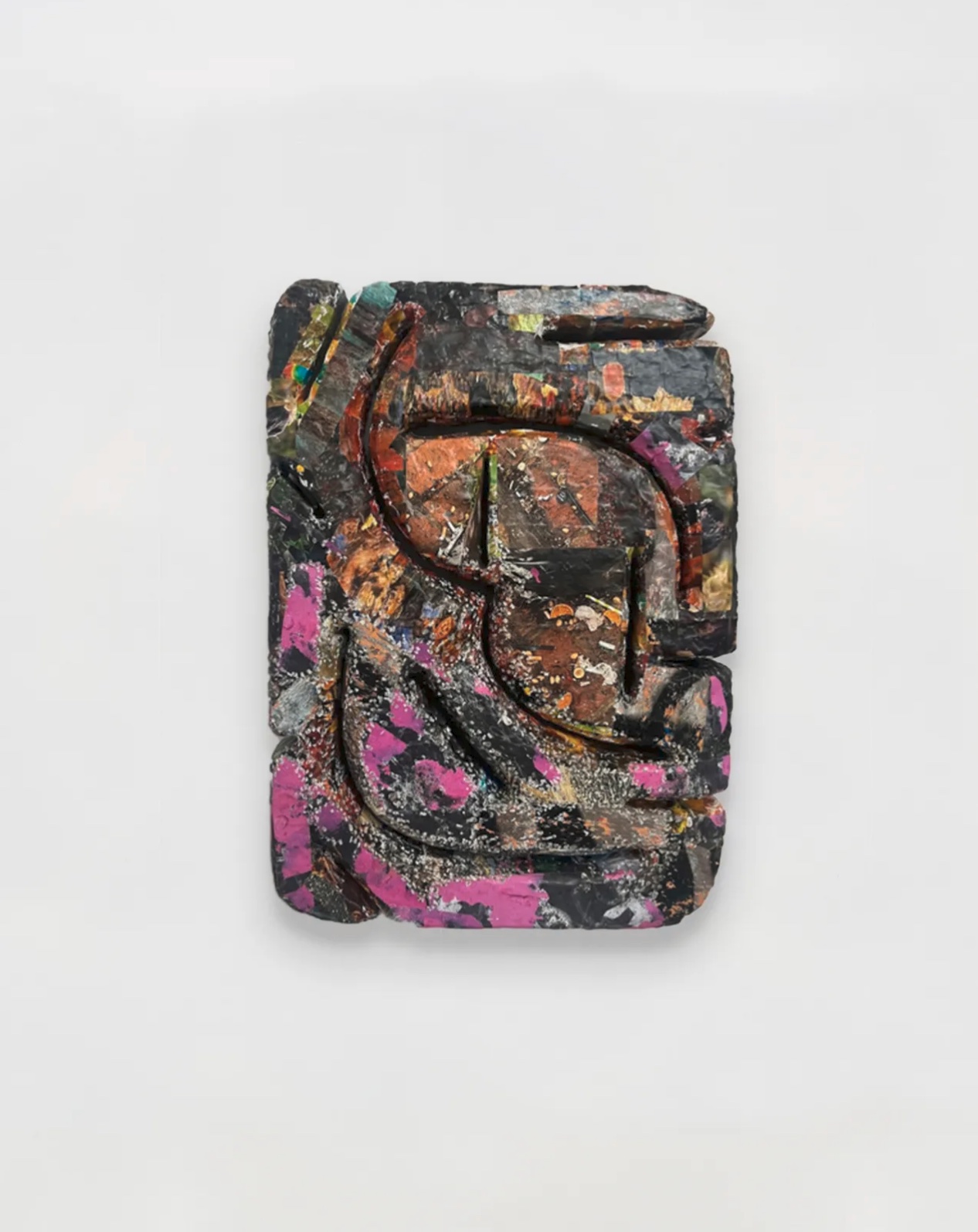
Anderson Borba
Snaps Triviais (Trivial snaps/BM), 2023
Wood, paper, linseed oil and varnish
21 3/10 × 15 × 2 2/5 in
54 × 38 × 6 cm
Anderson Borba (b. 1972, Santos, Brazil) lives and works in London, UK, and in São Paulo, Brazil. He is represented by The approach, London and Fortes D’Aloia & Gabriel, São Paulo.
Anderson Borba (b. 1972, Santos, Brazil) lives and works in both London, UK, and São Paulo, Brazil. He is represented by The approach, London and Fortes D’Aloia & Gabriel, São Paulo.
Recent solo and two person exhibitions include: Secret Ceremony, The approach, London, UK (2025), Harvest (with Marta Jakobovits), Elizabeth Xi Bauer, London, UK (2025); Thinking Hands (with Gokula Stoffel), Francois Ghebaly, New York, USA; Anderson Borba + Dudi Maia Rosa, auroras, São Paulo, Brazil (2024); Anderson Borba + Erika Verzutti, Pivô, São Paulo, Brazil (2023).
Group exhibitions include: Quebracorpo, Fortes D’Aloia & Gabriel, Rio de Janeiro, Brazil (2025); Passages | 10th Anniversary Exhibition, Encounter, Lisbon, Portugal; Eu não confio, Galeria Cavalo, Rio de Janeiro, Brazil; Ghosts in Sunlight, Thirsk Hall, North Yorkshire, UK; On feeling, The approach, London, UK; Woodworks, Lamb Gallery, London, UK (all 2024).

This spring we are pleased to launch our 2026 exhibition programme with The Unearthed, a solo presentation by Brazilian artist Anderson Borba.
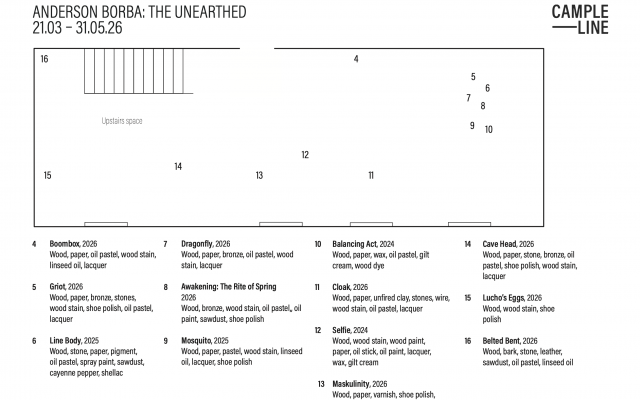
The exhibition will feature up to 13 sculptures in wood, including new work that Borba has made over the winter in his studio in Barra Funda in São Paulo, alongside two or three works from his recent show Secret Ceremony at The approach in London. The exhibition will straddle the gallery’s upstairs and downstairs spaces, with Borba also making a small work that will be placed outdoors in CAMPLE LINE’s greenspace.
Borba works primarily with found wood that he sources locally, alongside other materials such as cardboard, textile, plaster, and found images from books, magazines, and other photography. These serve as starting points for processes that involve carving, hollowing, scorching, pressing, painting and gluing. His practice is defined by a constant negotiation with his materials, resulting in heavily worked, enigmatic forms that bear richly textured and layered surfaces and feature occasional adornments or embedded objects such as stones or small bronze elements.
Curator Bernardo José de Souza has referred to Borba’s sculptural practice as an ‘imagined cosmology.’ His sculptures are either freestanding or wall-based and combine allusions to European and Brazilian modernist practices with references to self-taught artists of inner Brazil and to ancestral belief systems. De Souza has suggested that Borba’s practice is also informed by the ritual traditions and material culture of Umbanda, a syncretic religion of which his family are followers, which brings together elements of Spiritism with influences from Roman Catholicism and Afro-Brazilian religions like Candomblé.
At CAMPLE LINE, Borba’s work will resonate with the intimate scale of the spaces and their close connection with the outdoors. His sculptures frequently seem to inhabit a heightened natural order that is entirely their own. Installed in response to each other, they will charge the building with a preternatural energy. As de Souza has said: ‘in assembly, they are no longer sculptural bodies, but totemic entities—summoning visitors into the gravity of a secret rite, where presence becomes entanglement.’
This exhibition is supported by Creative Scotland.
A newly commissioned essay by Bernando José de Souza, a curator and writer based in Madrid and Rio de Janeiro, will accompany the exhibition.