
Alanis Obomsawin: Christmas at Moose Factory & Other Early Films 1971-1977
This film will screen with English subtitles in-house
Saturday 13 December
7.00-8.30pm
Doors open 6.30pm
Tickets on a sliding scale:
£9 / £5 / £2.50
See our Sliding Scale Ticket Guide for rate information
Each ticket includes a mulled wine or juice, along with festive treats to enjoy as we gather before the screening
Doors open at 6.30pm. Please join us for festive refreshments before the film begins.
With a short introduction by our director, Tina Fiske.
As we bring our 2025 programme to a close, we invite you to join us for a special Christmas screening. We are delighted to present four documentary films from the 1970s by Abenaki Canadian-American filmmaker, artist, and activist Alanis Obomsawin, who, at 92, remains one of the most influential figures in Canadian documentary film and Indigenous advocacy.
Obomsawin came to filmmaking through music, storytelling, and activism. She began performing as a singer and songwriter in the 1960s, motivated in part by her own painful childhood experiences in school and a desire to connect Indigenous children with their culture and heritage. She was hired by the National Film Board of Canada as a consultant in 1967, and by 1971 she was directing her first film, Christmas at Moose Factory. She became a permanent member of staff at the NFB in 1977, and in the decades since has made more than 64 films that elevate the voices and experiences of Indigenous peoples — including landmark works such as Incident at Restigouche (1984), Kanehsatake: 270 Years of Resistance (1993), and We Can’t Make the Same Mistake Twice (2016).
“Documentary film is the one place that our people can speak for themselves,” Obomsawin has said. “I feel that the documentaries I’ve been working on have been very valuable for our people to look at ourselves… and through that be able to make changes that really count for the future of our children to come.”
The four early films presented here, made between 1971 and 1977, mark the foundations of her long career. In these works, she documents the everyday lives, traditions, and cultural practices of a number of First Nations communities with deep attentiveness and care.
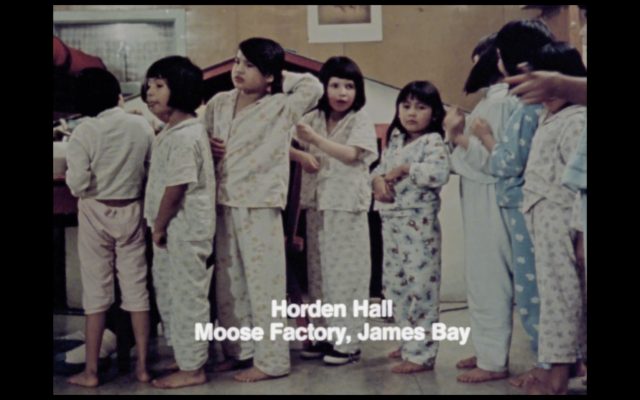
Christmas at Moose Factory emerged from regular Christmas-time visits Obomsawin made to Cree children living at the Horden Hall Student Residence on Moose Factory Island, at the southern end of James Bay in Northern Ontario. Told through children’s drawings and their own voices, the film offers a sensitive, intimate portrait of their experiences and memories.
Partridge and Farming form part of Obomsawin’s Manawan and L’il’wata series, which focused respectively on those communities. These brief studies observe daily practices and land-based knowledge, expressed through the rhythms of work and tradition.
Her first longer-form film, Mother of Many Children, features women of all ages from Cree, Métis, Ojibway, and Manawan communities. Intended as a broader reflection on the cycle of life guided by women’s knowledge, the film moves from a newborn child — with whom it begins — to Agata Marie Godine, a Cree woman who was 107 or 108 years old at the time of filming.
As we enter the final weekend of our autumn exhibition, Amalia Pica’s Keepsake, these early works by Obomsawin gently echo themes in Pica’s practice — particularly their shared interest in children’s creativity, the expressive power of drawing, and the ways communities pass knowledge from one generation to the next.
Alanis Obomsawin was born near Lebanon, New Hampshire, in 1932 and grew up on the Odanak Reserve east of Montreal. Deeply connected to the histories and musical traditions of her people, her early work in film focused on the traces of heritage found in everyday life. Since 1971 she has made more than 64 documentaries that bring attention to the complex issues affecting the lives of Indigenous peoples. Interweaving interviews, drawings, music, and song, her films are defined by their meticulous attention to historical detail and the trust and intimacy established with her collaborators onscreen.
Music has remained a central part of Obomsawin’s artistic life; she has an extensive history of performing for political and humanitarian causes dating back to the 1960s. She is also a printmaker, creating works on paper that depict human and animal spirits in ways that recall lived histories and ancestral events.
As a renowned Abenaki director, Obomsawin has received numerous international honours. A recent major retrospective, The Children Have to Hear Another Story: Alanis Obomsawin, curated by Richard William Hill and Hila Peleg, travelled between Haus der Kulturen der Welt, the Art Museum at the University of Toronto, Vancouver Art Gallery, MAC Montréal, and MoMA PS1 in New York.
Film Programme
Christmas at Moose Factory
Dir. Alanis Obomsawin
Canada, 1971, 13 mins
English with descriptive subtitles
Partridge
Dir. Alanis Obomsawin
Canada, 1972, 2 mins
English
Farming
Dir. Alanis Obomsawin
Canada, 1975, 2 mins
English
Mother of Many Children
Dir. Alanis Obomsawin
Canada, 1977, 57 mins
English and Indigenous languages
Watch a short film about Alanis Obomsawin’s work and life (4 mins)
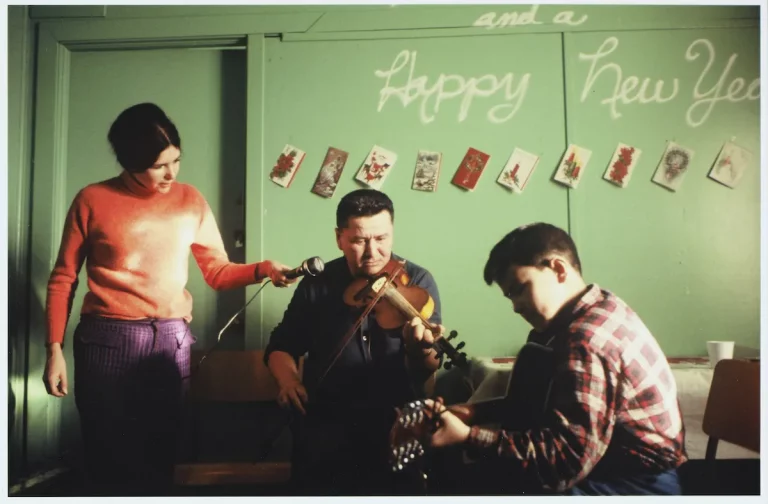
Alanis Obomsawin (L) while filming Christmas at Moose Factory (1971). Courtesy of the National Film Board of Canada and Obomsawin